
Opinion|Videos|August 18, 2026
Reimbursement as a Barrier to CAR T-Cell Access
Dr. Graff details how rural geography and unfavorable payer reimbursement compound to limit which community oncology practices can safely and sustainably offer T-cell engaging therapies.
Advertisement
Episodes in this series
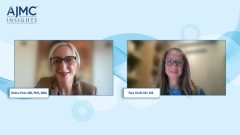
This episode, "Reimbursement as a Barrier to CAR-T Access," features the panel examining why proximity to care is only half the battle.
Dr. Graff explains that many community sites within networks like the Exigent Research Network already run fully functional bispecific antibody and clinical trial programs, carrying the same CRS and neurotoxicity risks CAR T presents. Even so, FACT accreditation often determines whether those sites can actually deliver CAR T, because unlike large academic institutions, physician-owned community practices depend directly on reimbursement to keep their doors open. When a practice cannot get reimbursed, or cannot stock certain medications, patients who live nearby suddenly face two, four, or six-hour drives depending on where they live. Geography becomes a major logistical and financial threat to practices trying to keep care close to home.
Dr. Patt describes T-cell engaging therapy as a multidisciplinary undertaking that requires tight coordination between community practices, hospital systems, and multiple team members. She expects this coordination to grow easier as clinicians gain more experience managing toxicities and as newer, less toxic agents become available, even off the shelf. Today, though, she identifies reimbursement as the major limitation diminishing community oncology access. Outpatient administration costs roughly a third of the hospital setting, she notes, yet payers remain reluctant to contract in a way that keeps practices financially whole.
For an independent, physician-owned private practice, she explains, taking on the risk and the millions of dollars in debt required to stand up this therapy is often too great a leap. That financial exposure, more than clinical readiness, is what keeps many practices from building CAR T programs at all.
Dr. Graff adds this isn't purely a rural problem: patients near a major metropolitan area can also lose access if their local site loses drug supply or reimbursement standing, since proximity to a city no longer guarantees proximity to care.
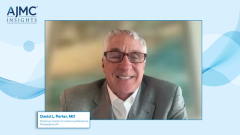
Up next, in "Access Barriers in CAR T-Cell Therapy," Dr. David Porter frames access as CAR T-cell therapy's central challenge, outlining the safety, efficacy, and affordability gains still needed.
Advertisement
Related to this article

Panelists engaged in a debate regarding using complement inhibitors in geographic atrophy, gauging public sentiment with a deciding vote.

A session at AAO 2026 highlighted how big data and minimally invasive glaucoma surgery (MIGS) could be utilized to help patients receive peak care.

The opening session of AAO 2026 featured a keynote speech discussing how artificial intelligence (AI) will play a part in health care.

Incidence of diabetic macular edema and the need for glaucoma surgery were reduced after treatment with glucagon-like peptide-1 receptor agonists.

Medicaid expansion was associated with lower colorectal cancer mortality, with the largest reductions in Hispanic patients and stage IV disease.

TP53 mutations occurred in 3% of myeloproliferative neoplasms (MPNs) but 10% of myelofibrosis or blast-phase cohorts in a review of 11 cohort studies.
Amanda Velazquez, MD, discusses GLP-1 formulary strategies, overcoming prior authorization hurdles, and building scalable obesity care infrastructure.
Cepheid's Connie Savor, MD, MBA, explains where its 13-pathogen respiratory panel fits in diagnostic stewardship and antibiotic decisions.
Advertisement
Advertisement
Trending on AJMC
1
MASH Fibrosis, Not Resolution, Predicts Mortality: Zobair Younossi, MD
2
Keynote Address Tackles AI’s Role in Health Care, Eye Care
3
Full POLARGO Data Reveal OS, Safety for Pola-R-GemOx in DLBCL
4
NEI Director Highlights Pediatric Advances, AI’s Promise in Eye Care
5