
Opinion|Videos|September 14, 2026
Why More Sites Are Treating CAR T Without FACT Accreditation
As non-FACT-accredited sites increasingly treat patients, the panel examines the calculus practices use to weigh reimbursement risk against growing patient need for CAR T-cell therapy.
Advertisement
Episodes in this series

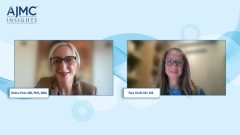
"Why More Sites Are Treating CAR T Without FACT Accreditation" takes up a shift Dr. Graff is watching play out across community oncology.
Dr. Graff describes a growing number of community sites choosing to treat CAR T patients before securing FACT accreditation. Some treat a handful of patients and then apply, some pursue both simultaneously, and others wait to see how reimbursement trends shift, though she notes not every practice can absorb that risk. With more therapies emerging across lymphoma, multiple myeloma, and now TIL therapies for solid tumors, she says the number of patients needing treatment is growing faster than the roughly one hundred FACT-accredited sites can accommodate. She compares the mismatch to having three houses for eight hundred people.
Some practices, she explains, sidestep the accreditation question entirely by treating patients through CAR T clinical trials, which do not require FACT accreditation, before applying once they have a handful of treated patients under their belt. She acknowledges that the first denied reimbursement claim is still a real blow to a practice, and hopes that the Community Oncology Alliance, physicians, and pharmaceutical partners like BMS and Kite can work together on a solution, since manufacturers need sites willing and able to treat patients.
She warns that if the reimbursement dynamic does not change, community physicians who are reluctant to refer patients elsewhere will simply continue relying on bispecifics and antibody-drug conjugates instead of a potentially curative one-time therapy. Dr. Patt adds that patients themselves often prefer not to travel, and may not be able to even if they wanted to. Dr. Graff questions why payers would resist covering a single, potentially curative CAR T infusion given the alternative: years of ongoing treatment costs, repeated hospitalizations, and a lower overall quality of life for the patient.
In "New ASCO Data on CAR T-Cell Therapy Outcomes by Site Type," the panel will connect this on-the-ground experience to new ASCO data comparing outcomes by accreditation status.
Advertisement
Related to this article

A session at AAO 2026 highlighted how big data and minimally invasive glaucoma surgery (MIGS) could be utilized to help patients receive peak care.

The opening session of AAO 2026 featured a keynote speech discussing how artificial intelligence (AI) will play a part in health care.

Incidence of diabetic macular edema and the need for glaucoma surgery were reduced after treatment with glucagon-like peptide-1 receptor agonists.

Medicaid expansion was associated with lower colorectal cancer mortality, with the largest reductions in Hispanic patients and stage IV disease.

TP53 mutations occurred in 3% of myeloproliferative neoplasms (MPNs) but 10% of myelofibrosis or blast-phase cohorts in a review of 11 cohort studies.
Amanda Velazquez, MD, discusses GLP-1 formulary strategies, overcoming prior authorization hurdles, and building scalable obesity care infrastructure.
Cepheid's Connie Savor, MD, MBA, explains where its 13-pathogen respiratory panel fits in diagnostic stewardship and antibiotic decisions.

Older adults on Medicare report the best access to care among 10 countries but more cost-related problems and higher out-of-pocket spending.
Advertisement
Advertisement
Trending on AJMC
1
MASH Fibrosis, Not Resolution, Predicts Mortality: Zobair Younossi, MD
2
Keynote Address Tackles AI’s Role in Health Care, Eye Care
3
Full POLARGO Data Reveal OS, Safety for Pola-R-GemOx in DLBCL
4
NEI Director Highlights Pediatric Advances, AI’s Promise in Eye Care
5