
Opinion|Videos|August 24, 2026
Access Barriers in CAR T-Cell Therapy
Author(s)David L. Porter, MD
Dr. Porter frames access as CAR T-cell therapy's central challenge, outlining the safety, efficacy, and affordability gains still needed before outpatient administration can meaningfully close the gap for patients.
Advertisement
Episodes in this series
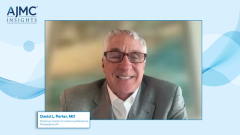
Welcome back to another AJMC Insights series. In "Access Barriers in CAR T-Cell Therapy," David Porter, MD opens the series by outlining what still limits access to CAR T-cell therapy access.
Dr. Porter, director of the Center for Cell Therapy and Transplant at the University of Pennsylvania and immediate past president of American Society for Transplantation and Cellular Therapy, frames access as CAR T-cell therapy's foremost unmet need. He clarifies that true access does not mean every patient receives treatment; it means every appropriate patient has it available as an option. Closing that gap requires moving therapy closer to where patients live, so they can reach a center with cell-therapy expertise without traveling long distances. Dr. Porter identifies three parallel priorities: continued safety improvements, since toxicity management is still being refined; sustained efficacy gains; and cost-effectiveness, since an unaffordable therapy limits access for patients, health systems, and society regardless of clinical benefit.
Turning to outpatient administration, Dr. Porter describes adoption as historically slow but now accelerating. He argues the early caution was appropriate: clinicians and health systems needed time to master administration and toxicity management while risks were still poorly understood. As therapies have grown safer and easier to deliver, interest in outpatient care has grown quickly.
Real barriers remain, he says. CAR T-cell therapy is not comparable to routine chemotherapy, where any covering clinician can manage a side effect or refer a patient to the emergency room. It demands specialized personnel available around the clock, plus a physical space equipped to manage patients outside standard emergency care, which he notes is built for acute crises rather than CAR T-specific toxicities. Meeting both requirements, Dr. Porter explains, takes substantial institutional commitment: dedicated funding for staff and space, plus administrative support to build a functioning outpatient program. He predicts continued growth in outpatient CAR T-cell therapy as safety and efficacy keep improving and institutions gain confidence managing patients outside the hospital.
Up next, in "Revisiting FACT Accreditation Standards for CAR T-Cell Delivery," the panel traces FACT accreditation back to its transplant-era origins and asks whether its requirements have kept pace with a decade of safety improvements.
Advertisement
Related to this article

A session at AAO 2026 highlighted how big data and minimally invasive glaucoma surgery (MIGS) could be utilized to help patients receive peak care.

The opening session of AAO 2026 featured a keynote speech discussing how artificial intelligence (AI) will play a part in health care.

Incidence of diabetic macular edema and the need for glaucoma surgery were reduced after treatment with glucagon-like peptide-1 receptor agonists.

Medicaid expansion was associated with lower colorectal cancer mortality, with the largest reductions in Hispanic patients and stage IV disease.

TP53 mutations occurred in 3% of myeloproliferative neoplasms (MPNs) but 10% of myelofibrosis or blast-phase cohorts in a review of 11 cohort studies.
Amanda Velazquez, MD, discusses GLP-1 formulary strategies, overcoming prior authorization hurdles, and building scalable obesity care infrastructure.
Cepheid's Connie Savor, MD, MBA, explains where its 13-pathogen respiratory panel fits in diagnostic stewardship and antibiotic decisions.

Older adults on Medicare report the best access to care among 10 countries but more cost-related problems and higher out-of-pocket spending.
Advertisement
Advertisement
Trending on AJMC
1
MASH Fibrosis, Not Resolution, Predicts Mortality: Zobair Younossi, MD
2
Keynote Address Tackles AI’s Role in Health Care, Eye Care
3
Full POLARGO Data Reveal OS, Safety for Pola-R-GemOx in DLBCL
4
NEI Director Highlights Pediatric Advances, AI’s Promise in Eye Care
5