
Opinion|Videos|September 7, 2026
The True Cost of Running a Community CAR T-Cell Program
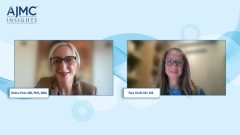
Behind every CAR T program is a real cost structure, staffing, drug stocking, and around-the-clock monitoring, that Dr. Graff breaks down as a practical barrier independent of clinical readiness.
Advertisement
Episodes in this series

In "The True Cost of Running a Community CAR T-Cell Program," the panel turns to the financial side of building CAR-T infrastructure.
Dr. Patt points to Community Oncology Alliance playbooks on administering these therapies in the outpatient setting, developed with leaders in the field, as a resource for practices considering the space. Dr. Graff agrees that ongoing education is essential. She personally hosts quarterly in-services for chemotherapy nurses, physician-aligned nurses, and advanced practice providers, since staff turnover and new therapies constantly change what teams need to know. Her practice maintains checklists for physician teams and patient education, home monitoring equipment, and phone check-ins with patients every six hours during step-up dosing. She notes the CRS and neurotoxicity window for bispecifics is actually more predictable and shorter than commonly assumed, framing bispecifics as a bridge that prepares community oncologists for CAR T.
She suggests that documenting these safety measures for FACT or payers could justify a temporary or accommodated accreditation status for practices with a proven track record. Dr. Patt notes FACT has already begun piloting probationary or preliminary status for practices entering the space, though she believes more support is still needed.
Asked about the operational costs involved, Dr. Graff explains that safety requires real spending: staffing, the FACT application process itself, and stocking tocilizumab, which can run $11,000 to $13,000 per dose even with a biosimilar available, with at least two doses kept on hand. Overnight and weekend monitoring calls, off-hours clinic visits, and ongoing staff education all add cost. When a patient has an overnight event that doesn't require a hospital visit, her team opens the clinic in the middle of the night rather than send the patient to the emergency room, which keeps them out of the hospital but still carries a real staffing cost. For physician-owned groups, she says, that expense can be prohibitive, which is why some practices still avoid bispecifics entirely.
Our next episode, "Scaling CAR T-Cell Therapy to Community Hospital Sites," turns to the practical mandates behind building a community program from the ground up.
Advertisement
Related to this article

Legal and clinical experts examined the US medical aid in dying framework, its limits, and ethical debates.

Myeloma faculty from UT Southwestern Medical Center and pharmacy leaders from Texas Oncology discussed how teclistamab- and talquetamab-based regimens are reshaping early relapse in multiple myeloma. Observation-stay economics and physician comfort, not clinical data, are slowing delivery closer to home.

Speakers at IDWeek 2026 urged shifting global health partnerships from donor-recipient models to shared, locally led ownership as funding contracts.

Insmed launches once-daily brensocatib in Japan, the country's only approved treatment for noncystic fibrosis bronchiectasis.
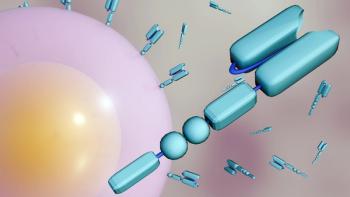
Off-the-shelf CTX110 allogeneic CD19 CAR T shows responses in relapsed/refractory B-cell lymphoma, with manageable cytokine release syndrome.

Declining serum GFAP during MS treatment was tied to lower PIRA risk, supporting its use as a biomarker for treatment response.
David G. Mitchell, PharmD, MBA, CSP, FCPhA, of UC Davis Health, explains how AI-assisted prior authorizations have reduced denials and staff time without replacing pharmacist judgment.

Nearly half of working-age adults were inadequately insured in 2026, and half went without needed care due to cost, a Commonwealth Fund survey found.
Advertisement
Advertisement
Trending on AJMC
1
Bepirovirsen Approval Offers New Option for Chronic HBV Treatment
2
Extension Studies in TPIP Show Promise in PAH, PH-ILD
3
Inhaled Amikacin Raises Culture Conversion in New MAC Lung Disease
4
Bronchiectasis GWAS Highlights Candidate Targets Shared With COPD
5