






Advances in multi-omics have led to large scale studies that can provide a better prediction method for adequate therapy choices in patients with chronic lymphocytic leukemia (CLL).
Advances in multi-omics have led to large scale studies that can provide a better prediction method for adequate therapy choices in patients with chronic lymphocytic leukemia (CLL).

This new analysis provides an optimistic outlook on the future of chronic lymphocytic leukemia (CLL) treatment and discoveries into the background behind CLL transformation into Richter syndrome.

The patient continued to test positive for COVID-19, but intravenous immunoglobulin eventually led to his recovery.

A patient with chronic lymphocytic leukemia (CLL) who experience persistent exaggerated responses to insect bites was successfully treated with dupilumab.

In younger patients with chronic lymphocytic leukemia (CLL), treatment with ibrutinib plus fludarabine, cyclophosphamide, and rituximab (iFRC) led to strong progression-free survival (PFS) and durable remission years after treatment.
Investigators say the findings could lead to new therapeutic targets.

Patients with chronic lymphocytic leukemia (CLL) who discontinued ibrutinib had higher rates of adverse events compared with those who continued the therapy, the authors found.

No difference in overall survival was observed between patients of different races who had chronic lymphocytic leukemia/small lymphocytic lymphoma (CLL/SLL) and received cancer care or had access to a hematologist/oncologist.

The study was the first of its kind to analyze social deprivation among CLL patients and observe the underlying reasons behind their clinical outcomes.

Ten of 13 patients with leukemic pulmonary infiltrates (LPI) and chronic lymphocytic leukemia (CLL) had single or multiple nodular/mass-like opacities, authors found.

Ann LaCasce, MD, MMSc, director of the Dana-Farber/Mass General Brigham Fellowship in Hematology/Oncology and chair of the Lymphoma Research Foundation’s scientific advisory board, discussed the changing lymphoma treatment landscape and highlighted potentially game changing treatments.
The data also show how the economic burden of chronic lymphocytic leukemia/small lymphocytic lymphoma (CLL/SLL) is increasing.
Investigators found patients receiving chemotherapy had a greater risk of a secondary primary malignancy (SPM) compared with those treated with targeted therapies or those whose chronic lymphocytic leukemia (CLL) was left untreated.

Efficacy against chronic lymphocytic leukemia (CLL) was seen when tested as both a single agent and in combination with antitumor antibody.
Ann LaCasce, MD, MMSc, director of the Dana-Farber/Mass General Brigham Fellowship in Hematology/Oncology and chair of the Lymphoma Research Foundation’s Scientific Advisory Board, discusses potential shifts in the lymphoma space in the year ahead.
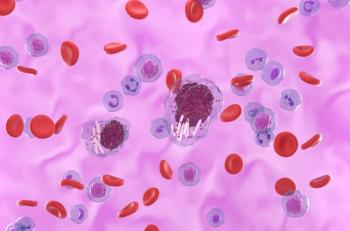
Investigators say attempts to overcome mutational resistance to Bruton’s tyrosine kinase (BTK) inhibitors have had mixed results among patients who have chronic lymphocytic leukemia (CLL).

A new report compared the blood immune repertoires of patients with chronic lymphocytic leukemia (CLL) who received chemoimmunotherapy and those who received ibrutinib.

Abstracts from the 65th American Society of Hematology (ASH) Annual Meeting and Exposition provided new insight into multiple treatments for patients with multiple myeloma (MM), chronic lymphocytic leukemia (CLL), and follicular lymphoma (FL).

Researchers found that venetoclax, either alone or post treatment with a Bruton tyrosine kinase inhibitor (BTKi), was safe and effective for patients with chronic lymphocytic leukemia (CLL).

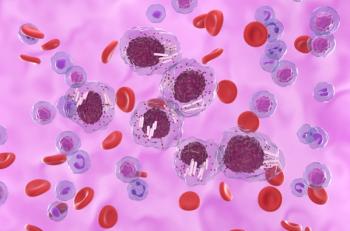
A real-world study found that patients treated with Bruton tyrosine kinase inhibitors had lower rates of treatment discontinuation and health care resource utilization compared with other first- and second-line treatment regimens.
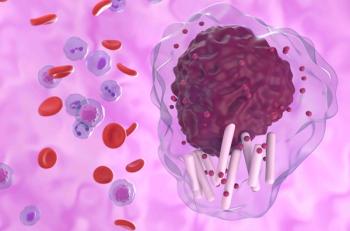
Findings from the phase 3 SEQUOIA trial favored zanubrutinib over bendamustine plus rituximab in most biomarker-based subgroups of patients with chronic lymphocytic leukemia (CLL) or small lymphocytic lymphoma (SLL) without deletion of the 17p chromosome.
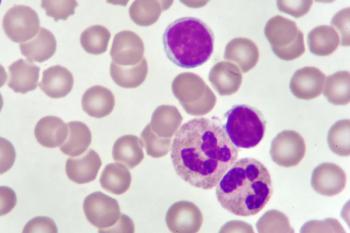
An abstract presented at the 2023 American Society of Hematology Annual Meeting and Exposition suggests that patients with chronic lymphocytic leukemia (CLL) treated in the era of novel agents might be less likely to experience Richter transformation compared with those treated prior to this era.
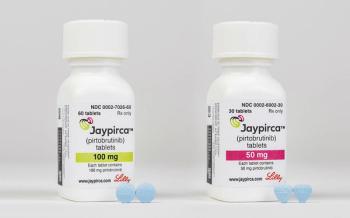
The therapy is already approved for certain patients with relapsed/refractory mantle cell lymphoma.