



COPD
Latest News
Advertisement
Latest Videos



Advertisement
More News
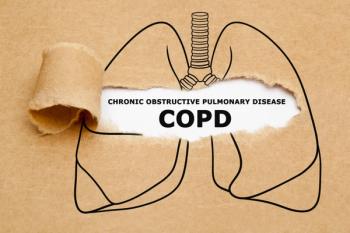
The chosen studies featured various methods to assess medication use initiation, implementation, and/or persistence in patients with chronic obstructive pulmonary disease (COPD).

The researchers found that social frailty was prevalent in 36.8% of patients with chronic obstructive pulmonary disease (COPD) in the study population.
New data on dupilumab demonstrate the drug’s potential usefulness in treating type 2 inflammation, a role central to respiratory diseases, including chronic obstructive pulmonary disease (COPD).

Researchers found that approximately 17% of respondents with chronic obstructive pulmonary disease (COPD) and no lifetime history of depression developed depression during the early stages of the COVID-19 pandemic, while approximately 52% who had COPD and a history of depression experienced a recurrence of depressive symptoms.

Among adults 40 years and older with chronic obstructive pulmonary disease (COPD), there is a higher prevalence of cardiovascular diseases (CVDs) compared with a general population without COPD.

Researchers noted that the relationships between smoking, chronic obstructive pulmonary disease (COPD), and depression must be recognized to effectively manage the complicated care needs for this patient population.

The researchers demonstrated how to jointly examine prevalence estimates of chronic obstructive pulmonary disease (COPD) from PLACES and social vulnerability measures from the Social Vulnerability Index developed by the CDC and the Agency for Toxic Substances and Disease Registry.

Researchers found that 57% of nursing home residents with chronic obstructive pulmonary disease (COPD) had depression, 37.2% had anxiety, and 27.5% had both.

The risk of developing chronic obstructive pulmonary disease (COPD) increased in young people who smoke cigarettes more frequently, indicating smoking is an important COPD risk factor.
Researchers found that patients with chronic obstructive pulmonary disorder (COPD) with higher Systemic Immune-Inflammation Index (SII) levels have a greater risk of all-cause mortality.
Theory-based smoking cessation interventions helped to motivate patients with chronic obstructive pulmonary disease (COPD) who smoke to quit, ultimately improving their quality of life and lung function.

The researchers conducted this study as previous ones have not assessed death rate variations among patients with chronic obstructive pulmonary disease (COPD) across the urban-rural gradient.
Most chronic obstructive pulmonary disease (COPD) exacerbations were observed in those not treated with controller medications, but less than half of patients in the study received controller medications, even after exacerbations.

Select lifestyle practices can help to reduce particulate matter (PM) concentrations and exposure in patients with chronic obstructive pulmonary disease (COPD), which can affect clinical outcomes.
Patients with both chronic obstructive pulmonary disease (COPD) and severe pain are at an almost 40% predicted probability of falling, indicating the potential interaction between the conditions.

Researchers found young patients with chronic obstructive pulmonary disease (COPD) have a higher risk of all-cause mortality than those without COPD.

Researchers analyzed 22 studies to discover whether biomarkers help explain particulate matter (PM) exposure effects in patients with chronic obstructive pulmonary disease (COPD).

Researchers explained that educational level, duration of disease, and inhaler type may affect adherence in patients with chronic obstructive pulmonary disease (COPD).

Individuals with serum vitamin D concentrations of approximately 55 nmol/L appeared to be at the lowest risk of chronic obstructive pulmonary disease (COPD).

This new questionnaire could help physicians more easily detect sedentary behaviors among patients with chronic obstructive pulmonary disease (COPD), which standard questionnaires have had difficulty identifying.

Researchers found that health care professionals who refer patients with chronic obstructive pulmonary disease (COPD) to pulmonary rehabilitation have a negative bias toward smoking and a positive bias toward exercising, which could affect how they present rehabilitation options.

"Our research is unique in its attempt to describe a high-need, high-cost patient population who might benefit from increased monitoring or intervention,"Ann Cameron, PhD, says.

Researchers found that those with both type 2 diabetes and chronic obstructive pulmonary disease (COPD) had lower all-cause and respiratory-cause mortality survival probabilities than those without COPD.

A video-based teach-to-goal (TTG) intervention was able to improve inhaler technique over time among patients with chronic obstructive pulmonary disease (COPD) and asthma, according to a randomized controlled trial.
The findings provide further support of recommendations in the clinical guidelines to favor one therapy over the other.
Advertisement
Advertisement
Trending on AJMC
1
Tozorakimab Curbs Multiple COPD Inflammatory Pathways, ERS Data Show
2
Primary Care Capacity Gaps Threaten Respiratory Prevention
3
COPERNICOS Trial: Eosinophil-Guided ICS Reduction Safe in COPD, Vestbo Says
4
FDA Approves Camizestrant for ER+, HER2– mBC With ESR1 Mutations
5