





Mantle Cell Lymphoma
Latest News

Advertisement
Latest Videos
Advertisement
More News
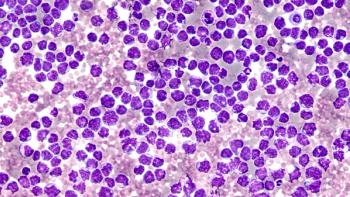
China survey reveals what R/R mantle cell lymphoma patients and doctors value after BTK failure—overall survival tops trade-offs despite CRS risk.

There are significant, and uneven, knowledge gaps among physicians treating patients with mantle cell lymphoma and chronic lymphocytic leukemia across countries and settings, a survey finds.

After CAR T-cell therapy relapse in mantle cell lymphoma, an antibody drug conjugate regimen adapted from DLBCL shows durable remission.

Matched real-world MCL data shows acalabrutinib and zanubrutinib lower atrial fibrillation vs ibrutinib, with fewer bleeding events.

Low-dose CAR T drives durable responses in mantle cell lymphoma, DLBCL and multiple myeloma when CD27⁻CD39⁻ effector cells meet a key threshold.

DLBCL and MCL patients spotlight fatigue, pain, and emotional burden while backing PRO surveys to shape quality-of-life trial endpoints.
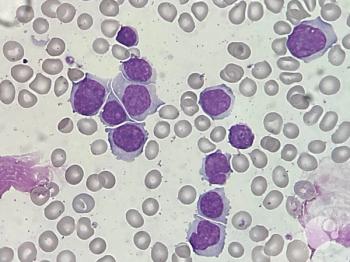
Case series suggests glofitamab bridges relapsed mantle cell lymphoma to CAR T, with strong responses and mostly low-grade CRS.

EBMT updates mantle cell lymphoma guidance: TP53-based risk stratification drives BTK inhibitor use and CAR T therapy (Tecartus, Breyanzi), reshaping transplant timing.

Chemo-free zanubrutinib plus rituximab in phase 3 MANGROVE cuts progression/death risk 43% vs BR for frontline mantle cell lymphoma.

As SYMPATICO publishes final data for ibrutinib–venetoclax relapsed mantle cell lymphoma, a new commentary discusses how combinations with zanubrutinib and sonrotoclax-era could take over.

SEER and Medicare data project rising DLBCL and MCL cases through 2032, intensifying payer strain and demand for Brukinsa, Calquence, and CAR-T access.

Anita Kumar, MD, of Memorial Sloan Kettering Cancer Center details evolving mantle cell lymphoma care: ECHO acalabrutinib-BR and chemo-free zanubrutinib BOVen triplets challenge standards.

The bispecific T-cell engager could fulfill an unmet need among patients with mantle cell lymphoma who progress after treatment with a BTK inhibitor.
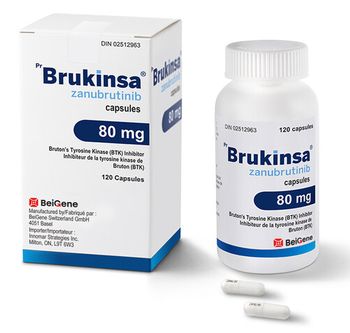
Analyses to be presented at ASCO show zanubrutinib offers improved survival benefits and longer time to the next treatment over another BTK inhibitor in 2 common indications.

The next-generation BCL2 inhibitor is approved for adults with relapsed or refractory MCL who have received at least 2 lines of systemic treatment

The complexity of MCL calls for personalized therapeutic strategies, but prior authorization protocols may not recognize distinct patient needs.
Real-world data show zanubrutinib cuts atrial fibrillation, major bleeding, and mortality versus ibrutinib in B‑cell cancers—guiding safer BTK inhibitor choices.

Mosunetuzumab, a bispecific, plus polatuzumab vedotin, an antibody-drug conjugate, deliver high response rates in relapsed MCL, potentially enabling outpatient community oncology treatment and wider patient access.

A new study suggests that incorporating proteomic data can help refine risk stratification in mantle cell lymphoma (MCL).

Adults can undergo CAR T-cell therapy for relapsed or refractory mantle cell lymphoma after the full approval of the treatment.

Dual inhibition of BIRC5 and MCL-1 showed strong synergistic activity in preclinical models of MCL.

The study covers the period of 2015-2019 in Germany, before approvals for CAR T-cell therapy, pirtobrutinib, and the arrival of less toxic BTK inhibitors.

UK real-world data show that bridging therapy before brexu-cel in mantle cell lymphoma boosts responses but also increases cytopenias and early mortality.

Meta-analysis across B-cell lymphomas shows zanubrutinib (Brukinsa) delivers higher ORR/CR than acalabrutinib (Calquence) or ibrutinib among BTK inhibitors.
Investigators in China touted durable responses seen in a phase 2 study of the CAR T-cell therapy relma-cel, which has a similar mechanism of action as liso-cel. At present, there are no approved CAR T-cell therapies for relapsed/refractory mantle cell lymphoma in China.
Advertisement
Advertisement
Trending on AJMC
1
MASH Fibrosis, Not Resolution, Predicts Mortality: Zobair Younossi, MD
2
FDA Approves Once-Monthly Subcutaneous Olanzapine for Schizophrenia
3
Multi-Hit TP53 Linked to Shorter Survival in Chronic-Phase MPN Cohorts
4
Navigating GLP-1 Access & Prior Authorizations: Amanda Velazquez, MD
5