


Multiple Myeloma
Latest News


Patients With Multiple Myeloma Lack Awareness of CAR T-Cell Therapy, Research Says
Advertisement
Experts Weigh in on Multiple Myeloma
Explore the expanding role of bispecific antibody therapies and strategies for managing cytokine release syndrome and infection risks. Dive into real-world data on teclistamab and talquetamab, and uncover new approaches to optimize patient outcomes.
Latest Videos







CME Content


Advertisement
More News

A cohort study of 65 clinical trials in multiple myeloma found that toxic effects are often described with subjective terminology that may not reflect adverse event rates reported in the studies.
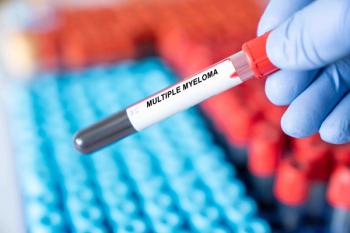
The study findings provide the first in-depth look at the relationship between chromosomal changes in tumor cells and immune components of the tumor microenvironment.

The findings suggest the presence of CHIP before HCT may have potential to serve as a biomarker for CVD risk after HCT in patients with multiple myeloma.
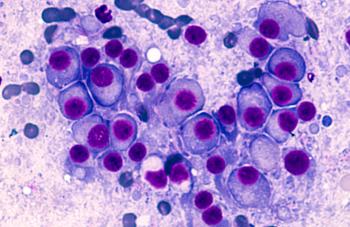
While response and safety may vary across racial and ethnic subgroups, progression-free survival and overall survival does not appear to differ when chimeric antigen receptor T-cell therapy is used in the treatment of patients with multiple myeloma.

Investigators found that myeloma cells may lose or change targets and subsequently go undetected by these therapies, suggesting that screening for such changes regularly could help guide treatment.
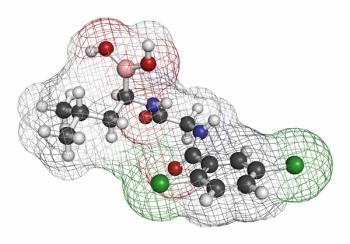
A study of patients with relapsed or refractory (R/R) multiple myeloma who received ixazomib-based therapy in real-world settings found the treatment effective and tolerable in clinical practice.
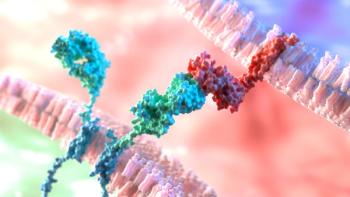
Patients with multiple myeloma exhibiting poor prognostic features, such as high-risk cytogenetics, soft-tissue plasmacytoma, ISS stage III disease, and triple-class exposure, experienced significant progression-free survival benefit with ciltacabtagene autoleucel.
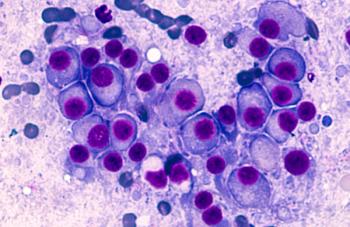
Researchers identified an optimal early relapse time point to incorporate into traditional risk features and formed a novel prognostic classification utilizing both static and dynamic risk.
A recent study suggests that more intensive triplet therapy is more effective than less intensive doublet therapy in frail patients with newly diagnosed multiple myeloma (MM), and that more intensive treatment may even improve frailty itself.
BCMA and GPRC5D loss in patients with multiple myeloma may lead to resistance to continuous treatment with anti–BCMA and anti–GPRC5D agents.
A recent study suggests that a patient’s immune microenvironment plays a key role in the depth and duration of response to multiple myeloma treatment.

Exercises such as resistance training and walking were safe and effective interventions that were associated with improved frailty scores and patient-reported outcomes (PROs) in patients with multiple myeloma receiving systemic treatment.
Bispecific antibodies may be more broadly applicable as treatment for patients with multiple myeloma in the short-term, according to Ajai Chari, MD.
In a real-world study using data from patients diagnosed with multiple myeloma between 2009 and 2021, second primary malignancies adversely impacted survival outcomes in the modern era of therapeutics.

The combination therapy is the first FDA approved for the mobilization of hematopoietic stem cells prior to autologous transplantation in patients with multiple myeloma.

Jordan Berlin, MD, FASCO, of Vanderbilt University Medical Center, explained how patient preferences and new treatments are considered, as well as what he is currently working on and his biggest takeaway from The American Journal of Managed Care®’s Institute for Value-Based Medicine® held in Nashville, TN on August 17, 2023.

Joseph Mikhael, MD, MEd, FRCPC, FACP, chief medical officer of the International Myeloma Foundation, highlights several potential strategies to address the historic lack of diversity in multiple myeloma clinical trial populations.
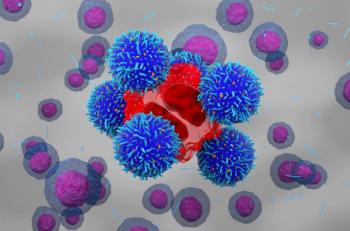
A retrospective analysis of the CARTITUDE-1 trial suggests that patients who have undergone allogeneic stem cell transplant (allo-SCT) prior to receiving chimeric antigen receptor (CAR) T-cell therapy for multiple myeloma experience comparable outcomes to allo-SCT–naïve patients.
Researchers and organizations must collaborate to address the persistent disparities in access to treatments for multiple myeloma, explained Joseph Mikhael, MD, MEd, FRCPC, FACP, chief medical officer of the International Myeloma Foundation.

The FDA has granted accelerated approval to elranatamab-bcmm (Elrexfio) for the treatment of adult patients with relapsed or refractory multiple myeloma who have previously received at least 4 lines of therapy, including a proteasome inhibitor, an immunomodulatory agent, and an anti-CD38 monoclonal antibody.

Patients with relapsed/refractory multiple myeloma may now receive talquetamab following the agent’s accelerated approval by the FDA.

The study also found that patients with a later best confirmed response to therapy demonstrated improved outcomes compared with patients who experienced an early best confirmed response.

Fewer patients opt to skip therapy for their multiple myeloma (MM) despite progressive disease than previously thought, a new study suggests.

The individual first received their multiple myeloma (MM) diagnosis in 2019.
Bispecific antibodies or chimeric antigen receptor (CAR) T-cell therapies are both associated with an increased risk of infection for patients with multiple myeloma (MM), explained Hans Lee, MD, of The University of Texas MD Anderson Cancer Center.
Advertisement
Advertisement
Trending on AJMC
1
TrumpRx Launch Brings Savings—and Uncertainty
2
How Do GLP-1 Agonists Fit Into Stroke Care?
3
Aligning Treatment Goals in IgA Nephropathy: Applying KDIGO’s Dual-Pathway Framework to Clinical Decision-Making
4
5 Things to Know About the Oral GLP-1 Era
5