




Oncology
Latest News
Advertisement
Latest Videos







Advertisement
More News

A review of studies found that the time from symptom onset to confirmation of diagnosis of multiple myeloma can be significantly reduced. Currently, many patients experience a more than 3-month delay until their diagnosis is confirmed.

Although most practices participating in CMS' Oncology Care Model (OCM) are among the most sophisticated in the country, they've run into challenges and have identified areas for adjustment in the 5-year pilot.

Atezolizumab, in combination with chemotherapy, significantly reduced the risk of disease progression and mortality in patients with metastatic triple-negative breast cancer.

Mixed methods research incorporating interviews found a high concordance between patient-reported qualitative data and assessed tumor response in patients with Merkel cell carcinoma.

It’s been years since a large portion of colon cancer patients have seen any innovations in treatment. However, there are dietary and physical behavioral changes individuals can make that positively impact colon cancer survival said Leonard Saltz, MD, executive director of Clinical Value and Sustainability, head of Colorectal Oncology Section, Memorial Sloan Kettering Cancer Center.
In an interview with Rare Disease Report®, Nicholas J. Robert, MD, of McKesson Specialty Health, discussed the challenges and advances involving treating with treating Merkel cell carcinoma.

Based on trial results that showed glasdegib, an investigational oral smoothened inhibitor, nearly doubled overall survival (OS) in patients with previously untreated acute myeloid leukemia (AML), the FDA has granted the Pfizer drug a Priority Review.

John Schorge, MD, associate editor of The Green Journal, and Gynecologic Oncologist at Tufts Medical Center, discusses different prevention methods in ovarian cancer.

We've rounded up the top 5 most read articles of June, including trial results from the 2018 American Society of Clinical Oncology Annual Meeting and a FDA breakthrough therapy designation for a gene therapy.
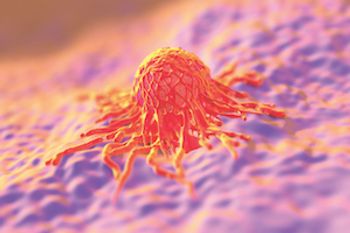
Drug manufacturer AbbVie, and a nonprofit drug discovery division of Scripps Research, Calibr, announced earlier this week that they are partnering to develop chimeric antigen receptor (CAR-T) cell therapies primarily aimed at treating cancer, particularly, solid tumors.

Coverage of our peer-reviewed research and news reporting in the healthcare and mainstream press.

Dr Sara M. Tolaney: Standard of Care, Novel Approaches for Treatment of HER2-Positive Breast Cancer
By
There are a lot of new and exciting agents that are being explored for metastatic HER2-positive disease, explained Sara M. Tolaney, MD, MPH, instructor of medicine, Harvard Medical School, attending physician of medical oncology, Dana-Farber Cancer Institute.
Jamie Bakkum-Gamez, MD, associate professor of obstetrics and gynecology and Gynecologic oncologist at Mayo Clinic, discusses her research on developing an early detection test for endometrial cancer.

This week, drug maker Roche released positive data from its phase 3 IMpower133 study that investigated an immunotherapy-based combination of atezolizumab (Tecentriq) and chemotherapy in the treatment of extensive-stage small cell lung cancer (ES-SCLC).
From the role of data in treatment decisions to the use of apps in tracking patient responses, technology is now front-and-center in cancer care. A special issue of Evidence-Based Oncology™, a publication of The American Journal of Managed Care®, explores the rise of point-of-care tools.

Cancer cells can take advantage of the BCL-2 protein to survive chemotherapy, but a drug that suppresses BCL-2 may have promise in patients with leukemia who produce too much of the protein.

During this year's American Society of Clinical Oncology (ASCO) annual meeting, we sat down with 4 physicians to discuss their experiences with precision medicine, how it's changing oncology care, challenges associated with the shift, and where they think the future of precision medicine is headed.

Immune therapies, or check point inhibitors, have been very successful in a subset of patient with multiple different types of malignancies and has changed their trajectory tremendously, explained Victoria Villaflor, MD, associate professor of Medicine, hematology and oncology, Northwestern University.

As radiation oncologists met with policy makers in Congress as part of the 15th annual American Society of Radiation Oncology Advocacy Day, the need for a radiation oncology–specific alternative payment model (APM) was one of the key topics of discussion.

First-line treatment with atezolizumab plus chemotherapy helped patients with previously untreated extensive-stage small cell lung cancer (SCLC) live significantly longer than those treated with chemotherapy alone.
During remarks at the National Comprehensive Cancer Network Policy Conference, FDA Commissioner Scott Gottlieb, MD, called for more data sharing and explained how the FDA is working to modernize the clinical trial process.
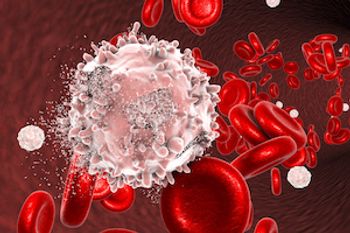
During the European Hematology Association’s 23rd Congress, held from June 14 to 17 in Stockholm, Sweden, researchers announced that the ELOQUENT-3 phase 2 study, evaluating elotuzumab with pomalidomide and low-dose dexamethasone in patients with relapsed/refractory multiple myeloma, met its primary endpoint in showing a statistically significant, clinically meaningful improvement in progression-free survival.
Every week, The American Journal of Managed Care® recaps the top managed care news of the week, and you can now listen to it on our podcast, Managed Care Cast.
Clinical guidelines that direct care at Joslin Diabetes Center, the world-renowned institution for diabetes treatment, research, and education, are now published in Evidence-Based Diabetes Management™, a publication of The American Journal of Managed Care®

This week in managed care, the top stories included Atul Gawande, MD, being named the CEO of the Amazon–Berkshire Hathaway–JPMorgan Chase healthcare venture; the Trump administration finalized rules for creating association health plans; an analysis found some cancer types are represented more than others in the Oncology Care Model.
Advertisement
Advertisement
Trending on AJMC
1
Bepirovirsen Approval Offers New Option for Chronic HBV Treatment
2
Inhaled Amikacin Raises Culture Conversion in New MAC Lung Disease
3
Extension Studies in TPIP Show Promise in PAH, PH-ILD
4
Bronchiectasis GWAS Highlights Candidate Targets Shared With COPD
5