

Clinical trial recruitment and management strategies for diverse populations are among the challenges that affect dermatology care quality and access, according to panelists at the 2022 American Academy of Dermatology (AAD) Annual Meeting.
Clinical trial recruitment and management strategies for diverse populations are among the challenges that affect dermatology care quality and access, according to panelists at the 2022 American Academy of Dermatology (AAD) Annual Meeting.

Panelists reviewed the latest advancements in clinical testing for melanoma, targeted therapy implications, and strategies for patient selection at a session on genetic and molecular testing at the 2022 American Academy of Dermatology (AAD) Annual Meeting.
David Rosmarin, MD, vice chair of research and education, Department of Dermatology, Tufts Medical Center, discusses best practices for choosing biologics, as well as his late-breaking findings on ruxolitinib cream for vitiligo at the 2022 American Academy of Dermatology (AAD) Annual Meeting.

Robert Sidbury, MD, MPH, chief, Division of Dermatology, Seattle Children's Hospital, sat down to discuss comorbidities newly associated with atopic dermatitis at the 2022 American Academy of Dermatology Annual Meeting.

A panel discussion at the 2022 American Academy of Dermatology Annual Meeting addressed the association between food and skin manifestations, as well as dietary triggers and recommendations in the management of a myriad of dermatologic conditions.

Late-breaking findings at the 2022 American Academy of Dermatology Annual Meeting showed ruxolitinib cream was associated with clinically significant improvement in facial and total body repigmentation vs vehicle in the treatment of adolescent and adult patients with nonsegmental vitiligo over 52 weeks.

Jonathan Silverberg, MD, PhD, MPH, discusses key differences regarding epidemiology, genetic risk factors, and clinical manifestations of pediatric and adult-onset atopic dermatitis, as well as recommended therapeutic approaches for adult patients.
Alan Menter, MD, chairman of dermatology, Baylor University Medical Center, discussed some of the updated psoriasis guidelines at the 2022 American Academy of Dermatology Annual Meeting.
The lack of racial representation in dermatology education prompted the launch of Project IMPACT, explained Art Papier, MD, dermatologist, CEO, VisualDx at the 2022 American Academy of Dermatology Annual Meeting.
Emerging research on therapeutics and practical approaches to managing a myriad of dermatological conditions, as well as a growing focus on diversity, equity, and inclusion will be explored at the 2022 American Academy of Dermatology (AAD) Annual Meeting, which will take place March 25-29, in Boston, Massachusetts.

Linda Stein Gold, MD, director of dermatology clinical research at Henry Ford Health System, incoming vice president, American Academy of Dermatology (AAD), previews AAD 2022 and what she looks forward to both learning and teaching others.

Skin cancer is one of the most common diseases dermatologists deal with on a daily basis, and as global rates increase, it is clear that climate change is a contributory factor, said Eva R. Parker, MD, FAAD, assistant professor of dermatology, Vanderbilt University Medical Center, during her session at the American Academy of Dermatology Virtual Meeting Experience.

There is likely not directly infectious replicating skin in a condition known as "COVID toes," and that’s important to reassure patients, said Christine Ko, MD, professor of dermatology and pathology at Yale University.

Unsurprisingly, the use of telemedicine grew exponentially during the COVID-19 pandemic, but those changes are not here to stay without major policy changes, according to speakers at the American Academy of Dermatology Virtual Meeting Experience 2021.

Patients want better control of their atopic dermatitis, and we don’t want them to acquiesce to their disease, explained Lawrence F. Eichenfield, MD, chief of pediatric and adolescent dermatology at Rady Children's Hospital-San Diego.

With immunosuppression, self-regulatory mechanisms may start to decrease, and these are the patients who develop skin cancers more frequently, said Rajiv Nijhawan, MD, UT Southwestern Medical Center.
Posters presented at the American Academy of Dermatology Virtual Meeting Experience show ruxolitinib cream was effective at treating atopic dermatitis (AD) regardless of previous treatments and in patients with more severe disease.
Topical application of ruxolitinib cream significantly, and rapidly, decreases pruritus, noted Andy Blauvelt, MD, MBA, dermatologist and clinical study investigator at Oregon Medical Research Center, a dedicated clinical trial site.
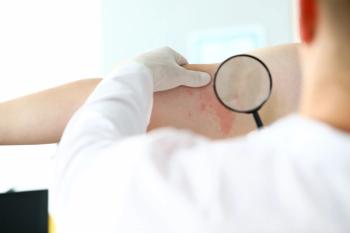
Until now, treatments for atopic dermatitis have had safety concerns, but a new understanding of the disease has led to novel and exciting agents being developed, according to Emma Guttman, MD, PhD, of Mount Sinai.

Posters presented at the American Academy of Dermatology Virtual Meeting Experience highlighted that ruxolitinib cream is effective in patients with more severe atopic dermatitis, and even showed clinically relevant improvements in patients who only had a partial response.
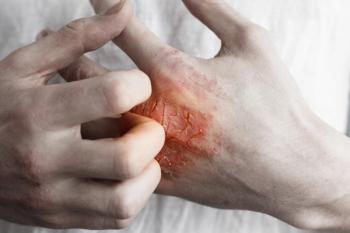
Patients with atopic dermatitis (AD) who received ruxolitinib cream experienced a rapid, clinically meaningful, and sustained improvement in their itch.

For cases of advanced skin cancer that are not candidates for surgery or radiation therapy, we have Hedgehog pathway inhibitors and PD-1 inhibitors, each of which has 2 approved medications, noted Todd Schlesinger, MD, FAAD.

Washout periods are necessary to flush out any lingering effects of drugs that patients are taking before a study, explained Jonathan Silverberg, MD, PhD, MPH, associate professor of dermatology, George Washington University School of Medicine and Health Sciences.
Rajiv Nijhawan, MD, is associate professor of dermatology and Mohs surgeon at UT Southwestern (UTSW) Medical Center and director of the UTSW High Risk Skin Cancer Transplant Clinic, both in Dallas, Texas.
Christine Ko, MD, is professor of dermatology and pathology at Yale University and a presenter of “What's New in Dermatopathology” at this year’s American Academy of Dermatology Virtual Meeting Experience (AAD VMX).
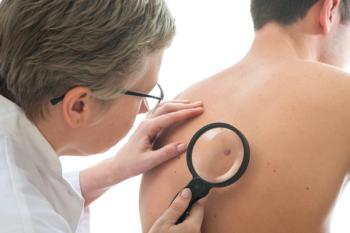
The upcoming 2021 virtual meeting of the American Academy of Dermatology (AAD) will offer more than 75 sessions. Some of the topics to keep an eye out for include treating minority populations, the impact of COVID-19, and patients with cancer.

A changing climate affects every organ system of the body, individual patients, and population-based health, noted Misha Rosenbach, MD, associate professor of dermatology and internal medicine at the University of Pennsylvania.
Atopic dermatitis has a tremendous affect on quality of life, so it’s nice to have more options to treat patients in a different way, noted Lawrence F. Eichenfield, MD, chief of pediatric and adolescent dermatology at Rady Children's Hospital-San Diego.
Jonathan Silverberg, MD, PhD, MPH, is an author of the poster, “Efficacy of Ruxolitinib Cream Among Patients With Atopic Dermatitis Based on Previous Medication History: Pooled Results From Two Phase 3 Studies,” which will be presented at this year’s American Academy of Dermatology Virtual Meeting Experience (AAD VMX).