

Jeff Stark, MD, vice president and head of medical immunology, UCB, shares phase 3 study results of bimekizumab-bkzx given for up to 48 weeks in patients with moderate to severe hidradenitis suppurativa (HS).
Jeff Stark, MD, vice president and head of medical immunology, UCB, shares phase 3 study results of bimekizumab-bkzx given for up to 48 weeks in patients with moderate to severe hidradenitis suppurativa (HS).

Experts at the American Academy of Dermatology Annual Meeting shared results of research into various topical and systemic therapies for atopic dermatitis (AD) and hidradenitis suppurativa during a late-breaking abstract session.

Presented posters showed that moderate to severe atopic dermatitis (AD) in skin of color can be treated with either biologic or topical therapies.

In patients with moderate to severe atopic dermatitis, nemolizumab demonstrated good durability of response, explained Jonathan Silverberg, MD, PhD, MPH, FAAD, of George Washington University School of Medicine and Health Sciences.

Treating pediatric and adult patients with hidradenitis suppurativa (HS) who are in socioeconomically underserved areas can be done through collaboration with the patient, their family, and other clinicians in the field.

Pictures of darker skin with vitiligo make up more than three-quarters of Google searches for pictures of vitiligo, according to posters.

Monica Li, MD, medical and cosmetic dermatologist and clinical assistant professor, University of British Columbia, discusses how microneedling can address both aesthetic and medical dermatological needs across different skin types.

Robert Sidbury, MD, MPH, FAAD, division head of dermatology at Seattle Children's Hospital and professor of pediatrics at the University of Washington School of Medicine, discusses what makes a dermatology practice successful and the challenges that come with running a practice.

There are key factors to consider when selecting which patients with atopic dermatitis (AD) are suitable candidates for oral Janus kinase (JAK) inhibitors, explained Raj Chovatiya, MD, PhD, associate professor at the Rosalind Franklin University Chicago Medical School and founder and director of the Center for Medical Dermatology and Immunology Research.

Amy S. Paller, MD, chair of dermatology, Feinberg School of Medicine at Northwestern University, discusses aspects of this year's American Academy of Dermatology (AAD) conference she is most excited about.

While melanoma is one of the most aggressive cancers, making early detection crucial for outcomes, because it is visible on the surface, there are opportunities to catch it early, said Sancy Leachman, MD, PhD, professor and chair in the Department of Dermatology and director of the Melanoma Research Program at the Knight Cancer Institute at Oregon Health and Science University.

Dermatology lends itself well to telemedicine, particularly as a screening tool to reduce wait times and increase access to care for patients with high-risk melanoma, said Erik Jaklitsch, second-year medical student at the University of Pittsburgh.

A panel assembled at the American Academy of Dermatology 2023 Annual Meeting encouraged the audience of dermatologists to advocate together for needed changes in payment, access, and practice.

With both biologics and Janus kinase (JAK) inhibitors available to treat atopic dermatitis, providers have more options for patients, said Emma Guttman-Yassky, MD, PhD, FAAD, of Mount Sinai.

Posters presented at the American Academy of Dermatology 2023 Annual Meeting provided a snapshot of disparities in dermatology care, both in terms of geographic differences in access to care and collection of race/ethnicity data in clinical trials.

A pair of posters presented at the American Academy of Dermatology 2023 Annual Meeting showed the efficacy of ruxolitinib cream in improving symptoms of vitiligo on the face, both as assessed by investigators and by how noticeable the patients felt their vitiligo was.

Using the DataDerm database has uncovered disparities in prescription patterns, but it’s still early in the process of understanding why those disparities might exist, said Robert Dellavalle, MD, PhD, MSPH, and Ramiro Rodriguez, MD, both of University of Colorado School of Medicine.

There are certain considerations when choosing which patient is the best fit for a biologic to treat hidradenitis suppurativa, said Haley Naik, MD, FAAD, associate professor of dermatology, University of California, San Francisco, School of Medicine.

Once thought of as the result of an imbalance in bodily humors, inflammatory skin diseases are now understood to arise from types of immune responses, opening the door to targeted therapies and personalized medicine, according to speakers at the American Academy of Dermatology 2023 Annual Meeting.

Treatable skin diseases in the transgender population can be overlooked and not managed, despite how they can negatively impact quality of life, according to researchers.

Amid a packed roster of of late-breaking research at the American Academy of Dermatology 2023 Annual Meeting, investigators presented findings from long-term extensions of the Topical Ruxolitinib Evaluation in Vitiligo phase 3 studies.

Similar to other therapies, approximately 40% of patients with vitiligo who stopped treatment with ruxolitinib cream relapsed, but they achieved repigmentation once treatment was reinitiated, explained John Harris, MD, PhD, FAAD, director of the Vitiligo Clinic and Research Center at UMass Chan Medical School.

Speakers at the American Academy of Dermatology 2023 Annual Meeting highlighted the potential of DataDerm to tell the story of dermatological care in the United States, but some also cautioned that the registry only reflects those who have access to care in the first place.

At the American Academy of Dermatology annual meeting there will be multiple presentations on hot topics and the latest advances in microneedling, explained Monica Li, MD, clinical instructor, Department of Dermatology and Skin Science, University of British Columbia.

A symposium at the American Academy of Dermatology 2023 Annual Meeting convened speakers who presented current data on the use of Janus kinase (JAK) inhibitors in dermatology, including in atopic dermatitis and vitiligo.
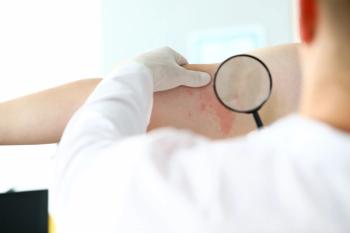
The 2023 American Academy of Dermatology Annual Meeting, held in New Orleans, Louisiana, from March 17-21, 2023, will feature research and presentations exploring the mechanisms, presentation, and treatment of dermatological disorders.
There is a lot to talk about in the vitiligo space at this year’s annual meeting of the American Academy of Dermatology (AAD), said John Harris, MD, PhD, FAAD, director of the Vitiligo Clinic and Research Center at UMass Chan Medical School.

A Monday session at the 2022 American Academy of Dermatology Annual Meeting discussed strategies for risk stratification and therapeutic management of nonmelanoma skin cancers.

Jonathan Kentley, MBBS, MSc, research fellow at Memorial Sloan Kettering Cancer Center, explains ways artificial intelligence (AI) is being used in dermatology, including smartphone applications, at the 2022 American Academy of Dermatology Annual Meeting.

Bernice Kwong, MD, clinical professor of dermatology, Stanford University, expands on her session about graft-versus-host disease diagnosis and management presented at the 2022 American Academy of Dermatology Annual Meeting, emphasizing the importance of the relationship between patients and doctors.