

Presentations at the European Hematology Association (EHA) 2024 Congress were encouraging for their data on innovations within the hematology/oncology space that are reshaping treatment outcomes.
Presentations at the European Hematology Association (EHA) 2024 Congress were encouraging for their data on innovations within the hematology/oncology space that are reshaping treatment outcomes.
In part 1 of our interview with Anna Sureda, MD, PhD, president of the European Group for Blood and Marrow Transplantation, she summarized the current treatment landscape for relapsed/refractory diffuse large B-cell lymphoma (R/R DLBCL) and follicular lymphoma (FL).
Ryan Jacobs, MD, lymphoma division director at Atrium Health Levine Cancer Institute, explains the design and objectives of the phase 2 CAPTIVATE study comparing ibrutinib and venetoclax in patients with chronic lymphocytic leukemia (CLL).
In this interview from our coverage of the European Hematology Association 2024 Congress, we spoke with Brian Koffman, MDCM, DCFP, FCFP, DABFP, MSEd, executive vice president and chief medical officer of the CLL Society and himself a survivor of chronic lymphocytic leukemia (CLL), to discuss treatment advancements and the importance of addressing both unmet needs and patient treatment preferences.
Ibrahim Aldoss, MD, of City of Hope, discusses promising phase 2 results of the WU-CART-007 trial, demonstrating high efficacy manageable safety for W-T7 in relapsed/refractory T-cell acute lymphoblastic leukemia (ALL)/lymphoblastic lymphoma (LBL).
Anna Sureda, MD, PhD, of the Catalan Institute of Oncology, discusses the evolving treatment landscape for patients with relapsed/refractory diffuse large B-cell lymphoma (DLBCL) or follicular lymphoma.
In the final part of our interview with Joseph Mikhael, MD, MEd, FRCPC, FACP, he addresses how patients who experience an early relapse of their multiple myeloma are predisposed to worse outcomes.

In part 2 of our interview with Suzanne Lentzsch, MD, PhD, Columbia University's College of Physicians and Surgeon, she touches on potential new therapies, important clinical considerations, and treatment challenge for relapsed/refractory multiple myeloma.
In this interview from our coverage of the European Hematology Association 2024 Congress, Joseph Mikhael, MD, MEd, FRCPC, FACP, International Myeloma Foundation, discusses the complex principles that underlie treating multiple myeloma (MM) in the US.
Experts share their biggest takeaways from the European Hematology Association (EHA) 2024 Congress.
Suzanne Lentzsch, MD, PhD, of Columbia University, presented promising results of linvoseltamab for treating relapsed/refractory multiple myeloma (RRMM) at the European Hematology Association 2024 Congress.

Enthusiasm abounded at the recent European Hematology Association 2024 Congress about whether European regulators will begin to consider minimal residual disease (MRD) as an end point.
Ana Lacerda, MD, MSc, of the Portuguese Institute of Oncology, advocates for early palliative care integration in pediatric patients with hematologic diseases.
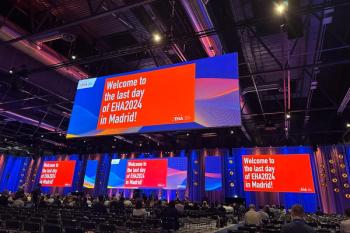
The late-breaking oral session at the European Hematology Association (EHA) 2024 Congress featured new data from abstracts submitted after the deadline, including both interventional and foundational science.
Mohamad Mohty, MD, PhD, of Saint-Antoine Hospital and Sorbonne University, highlights how immunotherapies are offering various effective treatment options for patients with multiple myeloma and improving quality of life for relapsed/refractory patients.
Joseph Mikhael, MD, MEd, FRCPC, FACP, of the International Myeloma Foundation, HonorHealth, and TGen, notes that US physicians have more flexibility when treating patients with early relapsed/refractory multiple myeloma, whereas those in Europe must follow stricter protocols.
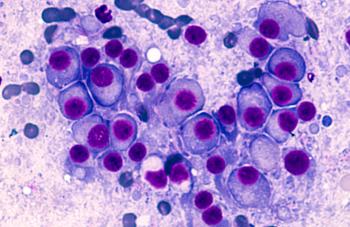
At a session of the European Hematology Association 2024 Congress, presenters shared updates from trials of treatment strategies for newly diagnosed multiple myeloma (MM).
Jennifer Vidrine, MBBS, MRCP, of Newcastle upon Tyne Hospitals, stresses the importance of providing personalized, beneficial end-of-life care for patients with hematologic diseases.

At a friendly debate held at the European Hematology Association 2024 Congress, hemophilia experts argued for and against wider access to gene therapy for patients living with the condition.
Ryan Jacobs, MD, of Atrium Health Levine Cancer Institute, explains that the phase 2 CAPTIVATE study's fixed-duration treatment cohort shows long-term progression-free survival for patients with chronic lymphocytic leukemia (CLL) who received the first-line treatment of ibrutinib and venetoclax.

Abstracts presented at the 2024 European Hematology Association Congress deliver results on regimens involving venetoclax for chronic lymphocytic leukemia (CLL).

Results presented at the 2024 European Hematology Association Congress suggest that chimeric antigen receptor (CAR) T-cell therapy can be feasibly and safely delivered in the outpatient setting as treatment for lymphoma.
Brian Koffman, MDCM, DCFP, FCFP, DABFP, MSEd, of CLL Society, details the comprehensive multidisciplinary support for patients with chronic lymphocytic leukemia (CLL) at the European Hematology Association (EHA) 2024 Congress.
Marta Rodríguez Martínez, PhD, sustainability officer of the European Molecular Biology Laboratory, highlights the primary sources of scientific research waste and how to reduce them.

At a YoungEHA session at the 2024 European Hematology Association (EHA) Congress, speakers discussed the prevalence of waste in laboratories, research, and clinical practice, as well as ways attendees can effect change for a more sustainable future.

Experts share what they are looking forward to most at this year's European Hematology Association (EHA) Congress.

The 2024 European Hematology Association (EHA) Congress, convening virtually and in Madrid, Spain, from June 13-16, 2024, will feature practice-changing findings in hematology and oncology, as well as ample networking opportunities and conversations about the future of the field.
Data from the Survey of Unmet Needs in Chronic Myeloid Leukemia (CML SUN) trial show that quality of life (QOL) and shared decision-making are priorities for patients, said Fabian Lang, MD, of Goethe University Hospital in Frankfurt, Germany.
Wojciech Jurczak, MD, PhD, head of the Department of Oncology at Maria Sklodowska-Curie National Research Institute of Oncology, discusses the changing therapy landscape for relapsed or refractory diffuse large B-cell lymphoma (DLBCL).
Martin Griesshammer, MD, PhD, Johannes Wesling University Clinic, discusses past and current efforts to improve treatment options for patients with polycythemia vera.