

Experts sparred over the feasibility and appropriateness of using minimal residual disease (MRD) to determine the duration of first-line CLL treatment.
Experts sparred over the feasibility and appropriateness of using minimal residual disease (MRD) to determine the duration of first-line CLL treatment.
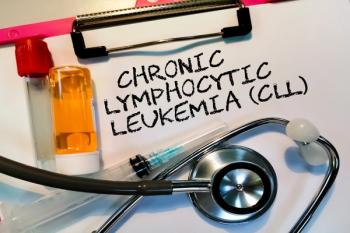
Final results of the CLL14 study reveal the efficacy of 1-year venetoclax-obinutuzumab therapy for chronic lymphocytic leukemia.
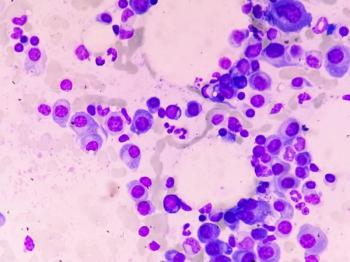
Longer patient survival times require a shift toward earlier surrogate end points, with measurable residual disease (MRD) providing robust evidence of its utility for accelerating access to myeloma treatment.

SC isatuximab via OBI earned EU approval in multiple myeloma, showing less than 1% IRR rates, strong reliability, and potential for at-home use.

A thriving gut microbiome is associated with better clinical outcomes after CAR T-cell therapy for lymphoma and myeloma.

Shannon L. Maude, MD, PhD, highlighted promising long-term disease-free survival and MRD negativity with tisagenleucel in high-risk pediatric ALL.

Ziftomenib plus intensive chemotherapy produced high response and MRD negativity rates with manageable safety in newly diagnosed AML.

Long-term LUNA3 data showed rilzabrutinib delivered durable platelet responses, reduced bleeding and fatigue, and maintained safety in ITP.

The 2026 EHA Congress, convening in Stockholm next week, will bring the global hematology community together for 4 days of science, debate, and discovery.

Highlights from EHA 2025 included use of bispecific antibodies in more settings and novel approaches for improving outcomes in hard-to-treat patients.

Continuing his interview about these results, CEPHEUS lead investigator Saad Z. Usmani, MD, MBA, FACP, FASCO, highlights the minimal residual disease negativity findings.

María Díez Campelo, MD, PhD, concludes by highlighting imetelstat’s real-world quality of life benefits for patients with lower-risk myelodysplastic syndromes (MDS) and the need for improved patient-reported outcome tools and caregiver-focused research.
Imetelstat (Rytelo; Geron) significantly improved and sustained health-related quality of life in patients with lower-risk myelodysplastic syndromes (MDS), with benefits linked directly to the drug rather than patient characteristics.
The phase 3 IMerge trial (NCT02598661) evaluated how treatment with imetelstat impacts health-related quality of life in patients with lower-risk myelodysplastic syndromes (MDS), according to María Díez Campelo, MD, PhD.

Carrie Kitko, MD, explains that axatilimab maintains strong response rates in patients with chronic graft-versus-host disease (GVHD) regardless of previous treatment lines and emphasizes the need to explore combination therapies.
The post hoc analysis of the AGAVE-201 trial found that axatilimab demonstrated consistent response rates in patients with chronic graft-vs-host disease (GVHD), regardless of the number or type of prior therapies.

AZD0486 demonstrated encouraging safety and dose-dependent efficacy in heavily pretreated adolescent and adult patients with relapsed/refractory B-cell acute lymphoblastic leukemia (ALL), according to early findings from the phase 1/2 SYRUS trial and Ibrahim Aldoss, MD, of City of Hope.

A post hoc analysis of the phase 3b JUMP trial supports the real-world use of ruxolitinib with anemia supportive care to maintain dosing and clinical outcomes in patients with myelofibrosis, offering a practical strategy that does not compromise efficacy.
Ibrahim Aldoss, MD, discusses the potential of AZD0486 for treating relapsed or refractory B-cell acute lymphoblastic leukemia (ALL) and outlines the SYRUS study objectives.
A post-hoc analysis of the phase 3b JUMP trial found that ruxolitinib plus anemia supportive care maintained efficacy and reduced transfusion needs in patients with myelofibrosis.

Caregivers and patients with acute leukemia face unique challenges, prioritizing treatment preferences that impact quality of life and emotional well-being.

INCA33989 continues to show strong safety and early signs of disease modification in essential thrombocythemia, according to John Mascarenhas, MD, with next steps focused on optimizing dosing and delivery scheduling.
A post-hoc analysis of the phase 3b JUMP trial assessed outcomes in patients with myelofibrosis and baseline anemia who were treated with ruxolitinib alongside anemia-supportive therapies, according to Pankit Vachhani, MD.
John Mascarenhas, MD, discusses phase 1 data showing that INCA33989 is a well-tolerated therapy for calreticulin–mutant essential thrombocythemia, with early signs of efficacy and potential disease modification.
John Mascarenhas, MD, discusses the rationale, mechanism, and design of the phase 1 INCA33989-101 and -102 trials investigating a CAL-R–targeted antibody for patients with essential thrombocythemia.
On-body delivery systems for subcutaneous isatuximab could enable patient self-administration, according to Xavier Leleu, MD, PhD, improving convenience and transforming treatment for relapsed/refractory multiple myeloma.
The phase 3 IRAKLIA trial found that subcutaneous isatuximab delivered via an on-body system was as effective and safe as intravenous (IV) administration in relapsed/refractory multiple myeloma, according to Xavier Leleu, MD, PhD.
Patients with relapsed/refractory myeloma from lower socioeconomic groups face worse quality of life, even in countries with universal health care, according to Francesco Sparano, MSc, of the Italian-based GIMEMA Foundation.
Long-term CARTITUDE-1 data show ciltacabtagene autoleucel (cilta-cel) may offer lasting remission and survival in relapsed/refractory multiple myeloma, according to Sundar Jagannath, MBBS, of the Icahn School of Medicine at Mount Sinai.
The Beat AML Master Trial found high remission rates and promising safety with triplet therapy in patients with acute myeloid leukemia (AML), according to Ashley Yocum, PhD.