
In a disease such as chronic myeloid leukemia (CML), shared treatment decision-making between providers and patients is key, said Fabian Lang, MD, of Goethe University Hospital in Frankfurt, Germany.
In a disease such as chronic myeloid leukemia (CML), shared treatment decision-making between providers and patients is key, said Fabian Lang, MD, of Goethe University Hospital in Frankfurt, Germany.
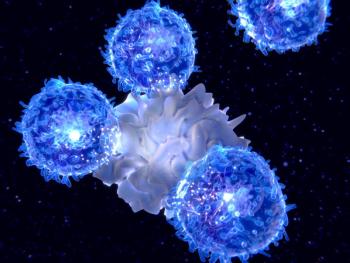
Data presented at the 2023 European Hematology Association Annual Meeting showed positive outcomes in patients with follicular lymphoma and large B-cell lymphoma, and further evaluation in diffuse large B-cell lymphoma is ongoing.
Courtney DiNardo, MD, MSCE, the lead author on a study presented at EHA 2023 evaluating a new therapy for chronic myelomonocytic leukemia and acute myeloid leukemia, discusses the FDA Fast Track Designation for IO-202 and strategies for raising awareness and improving diversity in clinical trials.

Panelists provided a wide-ranging view of the current avenues being investigated to optimize the treatment of chronic lymphocytic leukemia (CLL), including minimal residual disease assessment, combination regimens, and chimeric antigen receptor T-cell therapy.
Martin Griesshammer, MD, PhD, from the Johannes Wesling University Clinic, spoke on the current unmet needs in treating polycythemia vera (PV) and how multistakeholder collaboration can help address them.
More data is emerging on the efficacy of several triplet therapies to treat single-class refractory multiple myeloma (MM), potentially giving patients more therapy options than ever before, according to Tel-Aviv Sourasky Medical Center's Yael Cohen, MD, at the European Hematology Association 2023 Congress.
Wojciech Jurczak, MD, PhD, lead researcher on the L-MIND study evaluating a new treatment combination in diffuse large B-cell lymphoma (DLBCL), gave an overview of the trial results that were presented at the European Hematology Association 2023 Congress.

The late-breaking oral session at the European Hematology Association (EHA) 2023 Congress featured newly emerged data from abstracts submitted after the deadline, including outcomes from trials in polycythemia vera, acute myeloid leukemia, and more.

Newly presented data reveal disparities between Black and White patients in both the characteristics of and the decision-making around treatment for chronic lymphocytic leukemia (CLL) and multiple myeloma, respectively.

With the number of treatment options in hematology and oncology rapidly expanding, so too are the strategies for determining and ensuring cost-effectiveness, according to session speakers at the European Hematology Association (EHA) 2023 Congress.
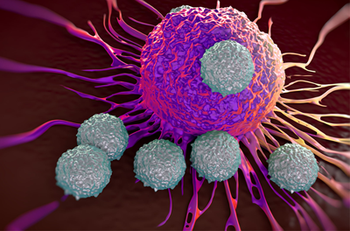
The first phase 3 results from the CARTITUDE-4 trial of ciltacabtagene autoleucel (cilta-cel) vs standard of care in lenalidomide-refractory multiple myeloma (MM) demonstrated the former’s convincing superiority in several key outcomes.

Results from the ASPEN and ALPINE trials of zanubrutinib showed greater improvements in quality of life (QOL) vs ibrutinib.
Jennifer Brown, MD, PhD, Dana-Farber Cancer Institute, shared her thoughts on the current research regarding Bruton tyrosine kinase (BTK) and B-cell lymphoma 2 (BCL-2) inhibitors in chronic lymphocytic leukemia (CLL) and what providers should keep in mind before prescribing them.
MD Anderson Cancer Center's Hans Lee, MD, shared considerations for possible infection risk associated with bispecific therapies used to treat relapsed/refractory multiple myeloma (MM) at the European Hematology Association 2023 Congress

A friendly debate held at the European Hematology Association 2023 Congress focused on the potential for real-world data to improve the generalizability of clinical trial results but also acknowledged the limitations and current challenges with these data.

The use of immune therapies for hematological malignancies is expanding beyond chimeric antigen receptor (CAR) T-cell therapies in the traditional lymphoid disease states, but the impact on patient quality of life must remain top of mind, according to speakers at the European Hematology Association 2023 Congress.

The 2023 European Hematology Association (EHA) Congress, convening virtually and in Frankfurt, Germany, from June 8-11, 2023, will feature cutting-edge findings in oncology and hematology, with a special focus on incorporating patient-reported outcomes and real-world data.
Attendees will gain insight into the future of multiple myeloma (MM) therapies and updates on pivotal clinical trials at the 2023 European Hematology Association (EHA) Congress, according to Joseph Mikhael, MD, MEd, FRCPC, FACP, chief medical officer of the International Myeloma Foundation.

Surveys of health care professionals, patients, and caregivers explored unmet needs in sickle cell disease (SCD), as well as the significant impact the disease has on everyday life.
Increased diversity in clinical trials remains an unmet need, and in the new SEQUOIA trial, the majority of patients being White males meant researchers could not do a subgroup analysis looking at outcomes for specific races, age groups or genders, said Mazyar Shadman, MD, MPH, of Fred Hutchinson Cancer Research Center.
Elli Papaemmanuil, PhD, assistant professor in computational oncology, Memorial Sloan Kettering Cancer Center, spoke on current methods of classification and stratification for myelodysplastic syndromes (MDS) and the applicability of a novel scoring system, presented during her plenary session at EHA2022, that aims to improve and refine MDS risk estimation.
John Mascarenhas, MD, director of the Adult Leukemia Program at The Tisch Cancer Institute at Mount Sinai, spoke on preliminary data findings of the phase 2 MANIFEST study investigating the efficacy and safety profile of pelabresib, ruxolitinib combination therapy in JAK inhibitor-naive patients with myelofibrosis and those with suboptimal response to ruxolitinib monotherapy.
A primary analysis of the phase 2 ROSEWOOD trial finds that a combination of zanubrutinib and obinutuzumab is superior to obinutuzumab alone in relapsed/refractory follicular lymphoma (FL). Results were presented at the 2022 European Hematology Association Congress.

The late-breaking oral session at the 2022 European Hematology Association (EHA) Congress allowed investigators to present recently emerging data from abstracts submitted after the deadline, including outcomes from trials in chronic lymphocytic leukemia, multiple myeloma, and sickle cell disease.
Mandy Lauw, MD, PhD, physician scientist and chair of the YoungEHA committee, discussed the content presented at the YoungEHA Research Meeting at the 2022 European Hematology Association (EHA) Congress and core themes of the session she cochaired on the ethics of artificial intelligence (AI) and science in hematology.
Swaminathan P. Iyer, MD, of the University of Texas MD Anderson Cancer Center, explains the mechanism of action and efficacy/safety observed in phase 1 results of CTX130, a CD70-targeted allogeneic chimeric antigen receptor (CAR) T-cell therapy, in the treatment of relapsed/refractory T-cell lymphoma.

During a session at the 2022 European Hematology Association Congress, speakers discussed how artificial intelligence (AI) can help advance the principles of ethical medicine—but also how new technologies are being used to undermine the integrity of scientific research.

Abstracts presented at the 2022 European Hematology Association Congress demonstrate superior health-related quality of life (HRQOL) outcomes among patients with chronic lymphocytic leukemia (CLL) and small lymphocytic leukemia (SLL) taking zanubrutinib.
Constantine S. Tam, MBBS, MD, consulting hematologist and associate professor, Peter MacCallum Cancer Centre, explains findings of his abstract at EHA2022 showing the impact of Australia’s pharmaceuticals benefit scheme on the rise of Bruton tyrosine kinase (BTK) inhibitor prescriptions for the treatment of relapsed/refractory chronic lymphocytic leukemia (R/R CLL), as well as reasons behind the decrease in fludarabine, cyclophosphamide, and rituximab combination therapy usage for first-line CLL.

In abstracts featured at the 2022 European Hematology Association Congress, investigators detailed long-term results of the ASPEN phase 3 trial and an expanded access study of zanubrutinib in patients with Waldenström macroglobulinemia (WM).