
Lorna Warwick, CEO of the Lymphoma Coalition, highlights findings underscoring the vital role of clinician communication in managing adverse effects and supporting patient confidence in lymphoma and chronic lymphocytic leukemia (CLL) care.
Lorna Warwick, CEO of the Lymphoma Coalition, highlights findings underscoring the vital role of clinician communication in managing adverse effects and supporting patient confidence in lymphoma and chronic lymphocytic leukemia (CLL) care.

Surbhi Sidana, MD, MBBS, director of the Myeloma Disease Focused Group at Stanford University, provides a reintroduction to CARTITUDE-4 and insight on how this phase 3 investigation builds on previous findings of CAR T vs standard-of-care findings in relapsed/refractory multiple myeloma (RRMM)

CEPHEUS trial lead investigator Saad Z. Usmani, MD, MBA, FACP, FASCO, explains how the trial both builds on current knowledge of newly diagnosed multiple myeloma and how transplant-ineligible status may affect therapeutic decision-making.
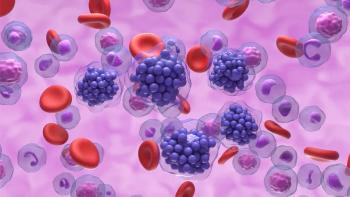
Results show the regimen of epcoritamab plus R-ICE could serve most patients as a bridge to either autologous stem cell transplant or CAR T-cell therapy.

Sessions and posters at the 2025 European Hematology Association Congress evaluated the potential and real-world practices of using artificial intelligence (AI) to predict and improve outcomes for patients with hematological diseases.
At the 30th European Hematology Association (EHA) Congress, hematology experts highlight breakthroughs in treatment, the importance of patient voices, and challenges in making innovations accessible worldwide.
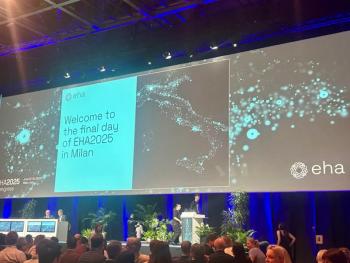
The late-breaking abstracts presented on the last day of the 2025 European Hematology Association (EHA) Congress show “what a vibrant clinical specialty we’re in,” according to session cochair Brian Huntly, PhD.
Unaddressed adverse effects, such as fatigue, significantly reduce patient confidence in care plans and negatively impact quality of life for individuals with lymphoma and chronic lymphocytic leukemia (CLL), according to Lorna Warwick, CEO of Lymphoma Coalition.
At the European Hematology Association (EHA) 2025 Congress, Ashley Yocum, PhD, highlights how the Beat AML Master Trial advances safe, personalized treatment and expands targeted therapy options for patients with acute myeloid leukemia (AML).

Adolescent and young adult (AYA) patients with hematological diseases have unique needs that require a multidisciplinary strategy to ensure their mental and sexual well-being during and beyond treatment, clinicians and patients agreed.
Adding polatuzumab vedotin to rituximab, gemcitabine, and oxaliplatin (R-GemOx) significantly improved overall survival in transplant-ineligible patients with relapsed/refractory diffuse large B-cell lymphoma (R/R DLBCL), according to Matthew Matasar, MD, of Rutgers Cancer institute.
The phase 3 IRAKLIA trial assesses subcutaneous isatuximab via on-body injector vs intravenous (IV) administration, in combination with pomalidomide and dexamethasone, in relapsed/refractory multiple myeloma (RRMM).

Abstracts presented during the plenary session of the 2025 European Hematology Association (EHA) Congress spanned from novel drug regimens for myeloma and lymphoma to investigation of leukemias on the molecular and genetic levels.
Patients with relapsed/refractory (R/R) multiple myeloma and lower socioeconomic status reported significantly worse quality of life and a higher burden of symptoms, according to Francesco Sparano, MSc, of the GIMEMA Foundation.

Our knowledge of the effects of space and low gravity on blood cells, clotting, and anemia continues to expand, but further research is needed as commercial spaceflights are poised to grow in popularity.
Early results from the phase 1 SANRECO trial suggest that divesiran is safe and well tolerated, and may reduce the need for phlebotomy in patients with polycythemia vera by increasing hepcidin levels and improving iron regulation, according to lead investigator Marina Kremyanskaya, MD, PhD.
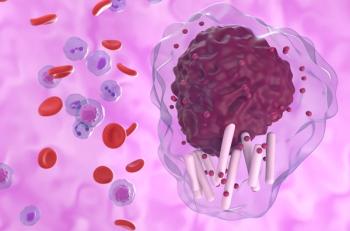
A combination of acalabrutinib and venetoclax showed better results with the addition of obinutuzumab, whereas mixed findings in a cross-trial comparison were complicated by the inclusion of deaths related to COVID-19.

Skepticism still persists around the use of measurable residual disease (MRD) for clinical and regulatory decision-making in the European context, but panelists explained the next steps that are required to advance the use of MRD.
Sundar Jagannath, MBBS, highlights long-term follow-up data from the phase 1b/2 CARTITUDE-1 trial, showing durable responses and potential cures with ciltacabtagene autoleucel in patients with relapsed/refractory multiple myeloma.
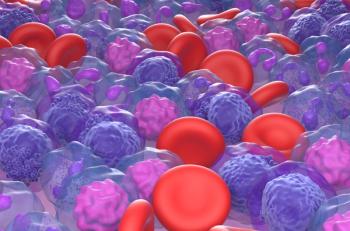
Revumenib shows promise for high-risk patients with acute myeloid leukemia (AML) with specific genetic mutations, demonstrating efficacy with no new safety signals.
An artificial intelligence (AI)-driven machine learning model was refined and validated internationally to accurately classify acute leukemia subtypes from routine laboratory data, according to Merlin Engelke, MS, offering a potential tool for improving diagnosis worldwide.
In this clip, Adela Perolla, MD, PhD, discusses the urgent need to address and destigmatize burnout in hematology, especially among early-career professionals, by promoting self-awareness, work-life balance, and peer support.
Burnout is rising sharply in hematology due to emotional strain, long hours, and high patient demands, according to Adela Perolla, MD, PhD, impacting both physician well-being and patient care.

Ola Landgren, MD, PhD, shares ADVANCE trial results, which show that adding daratumumab to carfilzomib-lenalidomide-dexamethasone (DKRd) improves outcomes in newly diagnosed multiple myeloma.
Ola Landgren, MD, PhD, lead investigator of the ADVANCE clinical trial, outlines the study’s goal of advancing modern, minimal residual disease–guided treatment approaches.

Both monotherapy and combination therapy containing epcoritamab had high response rates and survival benefits when compared with usual care.
Two posters presented at the 2025 European Hematology Association Congress support combination therapy with daratumumab, bortezomib, lenalidomide, and dexamethasone (DVRd) in transplant-ineligible or deferred newly diagnosed multiple myeloma.
Ahead of the 30th European Hematology Association (EHA) Congress in Milan, Ola Landgren, MD, PhD, shares what he is most looking forward to and reflects on key advancements and ongoing challenges in hematology.

The 2025 European Hematology Association (EHA) Congress, convening virtually and in Milan, Italy, from June 12 to June 15, 2025, will feature a revamped program structure for the meeting’s 30th anniversary while maintaining ample opportunities to network, debate, and absorb practice-changing findings in hematology and oncology.
Through interviews and articles infused with expert insight, progress against this cancer that develops in the bone marrow was showcased.