

Amrita Basu, PhD, says AI can transform health care by streamlining data, enhancing decision-making, and unlocking insights to improve patient outcomes.
Amrita Basu, PhD, says AI can transform health care by streamlining data, enhancing decision-making, and unlocking insights to improve patient outcomes.
Eric H. Yang, MD, emphasizes the need for collaboration and interventions to protect patients’ hearts during breast cancer treatment.
Molecular ESR1 changes may signal symptomatic progression before imaging in metastatic breast cancer, supporting camizestrant for improved quality of life.
ASCO GU 2025 had groundbreaking advancements in genitourinary cancer treatments, focusing on prostate cancer, renal cell carcinoma, and health equity.
AI revolutionizes pharmacy by automating workloads, enhancing patient care, and navigating drug pricing challenges amid evolving federal policies.
New therapies and individualized care plans for menopausal women highlighted the most-read 2025 SABCS coverage.
The 2025 Community Oncology Conference, hosted by COA, reflected a commitment to patient-centered care, access, and innovation in community oncology.
ASH 2025 highlighted innovative cancer treatments, including in vivo CAR T therapy and options that enhance quality of life while reducing burdens.
ASCO 2025 highlighted breakthroughs, including improved cancer survival in key trials, new AI guideline tools, and expanding GLP-1 cancer research.

Martha Gulati, MD, explains how bias and underrepresentation in research lead to misdiagnosis of HFpEF in women and delays in care.
Federal policy changes, the push for fair pricing, and growing competition in the drug pipeline were major topics at this year’s meeting.
The San Antonio Breast Cancer Symposium fosters collaboration among experts, enhancing research and treatment strategies for breast cancer's complex landscape.

Experts at SABCS highlighted the aggressive nature of breast cancer in young women, emphasizing tailored management and support strategies.
The meeting included new evidence and expert insights on hormone therapy, AI, and the expanding role of GLP-1 therapies in cardiovascular care.

A novel phase 1 trial explores the safety and efficacy of targeted radiotherapy for leptomeningeal metastases in breast cancer patients.
Phase 1 data presented by Andrew Brenner, MD, PhD, showed RNL-186 improved survival, reduced symptoms, and demonstrated strong safety in patients with leptomeningeal metastases.

Linvoseltamab shows promise as a first-line therapy for multiple myeloma, offering high response rates and a simplified treatment approach.
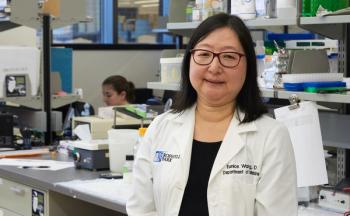
Eunice Wang, MD, highlights breakthroughs in menin inhibitors for acute leukemias, showcasing promising combination therapies and addressing treatment challenges at ASH 2025.
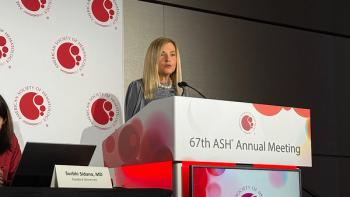
New research reveals teclistamab and daratumumab significantly enhance progression-free survival in multiple myeloma, reshaping treatment standards.
From immunotherapy breakthroughs to early-stage scientific advances shaping the next generation of cancer care, these were the top oncology stories from AACR.
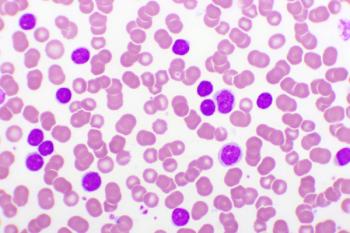
Pirtobrutinib significantly improved progression-free survival in treatment-naïve CLL compared with bendamustine plus rituximab.
Eric H. Yang, MD, warns that lifetime cardiovascular risk for patients with breast cancer may exceed the general population as life expectancies grow, emphasizing the need for early intervention.
Artificial intelligence and lung cancer highlighted the top conference coverage from the Association of Cancer Care Centers Annual Meeting in Washington, DC.
Debra Patt, MD, PhD, MBA, MPH, spoke at SABCS about the importance of patient-investigator collaboration to enhance the clinical trial process.

Genetic risk models and variant tools help to guide intensive interventions for high-risk carriers and personalized management for others.
Adding ianalumab to eltrombopag significantly prolongs time to treatment failure, boosts 6-month response rates, and improves fatigue for adults with primary ITP.
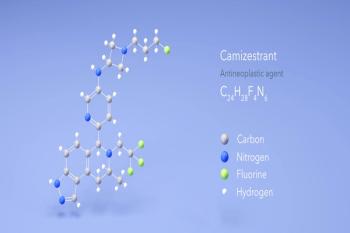
Camizestrant significantly improves progression-free survival in advanced breast cancer patients with ESR1 mutations.
Innovative smart pill bottles significantly enhance adherence to oral adjuvant endocrine therapy in early-stage breast cancer, noted Steven Manobianco, MD.

New findings from 2 abstracts presented at SABCS reveal T-DXd regimens enhance outcomes and tolerability for patients with high-risk HER2-positive early breast cancer.

Early fertility counseling is necessary for young patients before treatment limits options, said Yara Abdou, MD, of the University of North Carolina at Chapel Hill.