





The 64th American Society of Hematology (ASH) Meeting & Exposition will run Saturday through Tuesday in New Orleans, Louisiana, at the Ernest N. Morial Convention Center.

Data Sharing From Cancer Drug Trials Falls Short of Promises, Study Authors Say
The 64th American Society of Hematology (ASH) Meeting & Exposition will run Saturday through Tuesday in New Orleans, Louisiana, at the Ernest N. Morial Convention Center.

Investigators from Fred Hutchison Cancer Research Center hoped to gain insights into what factors can predict success with axi-cel in patients with relapsed or refractory diffuse large B-cell lymphoma (DLBCL).

Coverage from the Institute for Value-Based Medicine® event in Nashville, Tennessee, held November 17, 2022. The event was held in partnership with Vanderbilt-Ingram Cancer Center.

As dean for medical education at the University of Chicago, Vineet Arora, MD, MAPP, takes a longitudinal view of the training pathway with an eye toward equity in opportunity and system-level improvement of processes.

The new law will expand access for Medi-Cal patients who receive a complex cancer diagnosis and represents a critical first step in fulfilling the promise of the California Cancer Patients Bill of Rights, a resolution adopted by the legislature in 2021.

The annual report notes that progress in reducing cancer mortality is uneven among populations, with minority groups not seeing the same benefits from therapeutic advances. Cancers related to obesity are also on the rise.

Prior research has suggested that childhood trauma is linked with a poorer response to psychotherapy and prescription drug treatment for major depressive disorder, but a large meta-analysis suggested otherwise.

Danielle Carnival, PhD, addressed the National Comprehensive Cancer Network Policy Summit on Friday.

As a result of the potential of digital therapeutics to increase access to personalized care, many choose less stringent minimal control than typically seen in randomized controlled trials (RCTs).

Different populations respond differently to drugs and treatments, but without adequate representation in clinical trials, it will be hard to judge the effectiveness of a new treatment, explained Vivienne Hau, MD, clinical assistant professor with the Kaiser Permanente Bernard J. Tyson School of Medicine.

The researchers compiled data from studies of lirentelimab, mepolizumab, reslizumab, and benralizumab, highlighting the difficulties in finding an effective approach with eosinophil-targeted treatments for eosinophilic esophagitis (EoE).

As the feasibility of phase 1 clinical trials for prenatal spinal muscular atrophy (SMA) therapies is explored, patient and parent input on prenatal testing and possibly treatment is a valuable tool for guiding research discussions.



A number of psychologic interventions were assessed to see if they could have an effect on patient confidence in biosimilars to treat psoriasis.

Policy observers and industry stakeholders debate the possible spillover effects of Medicare drug pricing reform in the employer-based insurance market; a California federal judge rules Walgreens could be held liable for not investigating suspicious orders of opioids in San Francisco; a blood test performed the day of a traumatic brain injury (TBI) can predict which patients may die and who may survive with a disability.

Ide-cel is a B-cell maturation antigen (BCMA)-directed CAR T-cell therapy, which uses the process of genetically modifying a patient’s T cells and infusing them back into the patient to attack the cancer.
Facilitating access to treatments for diffuse large B-cell lymphoma (DLBCL) remains a top issue.
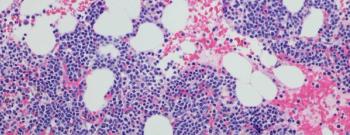
Authors explained how multiple myeloma emerges from earlier clinical phases and the tumor’s microenvironment in the early course of the disease plays a critical role in the survival of myeloma cells.


Results looking at acceptance of minimal residual disease (MRD) status found that 60% of participants “would change at least one decision based on an MRD result,” and 54% would use both MRD status and disease risk to make decisions.

National Institutes of Health (NIH) researchers found a new form of macular dystrophy, which is a cause of central vision loss.

Data presented at ASCO show that after 6 years, patients with advanced Hodgkin lymphoma who were treated with a combination of brentuximab vedotin and chemotherapy had a sharply reduced risk of death and a reduced risk of a secondary cancer.

Findings from the phase 3 SHINE trial could make ibrutinib the standard treatment option for older patients with mantle cell lymphoma (MCL), who often cannot tolerate chemotherapy or transplant strategies, according to study authors.

Encouraging outcomes in recent studies have the authors of a recent review calling for more research on the effect of cannabinoids on sleep disorders.