




Academia
Latest News
Advertisement
Latest Videos








Shorts

2:28
AJMC Research Roundup: April 2026
4 months ago
by
Christina Mattina
Podcasts





Advertisement
More News
Mosunetuzumab, a bispecific, plus polatuzumab vedotin, an antibody-drug conjugate, deliver high response rates in relapsed MCL, potentially enabling outpatient community oncology treatment and wider patient access.
Attempts to refine non–small cell lung cancer treatment selection have been limited by a lack of biomarkers, but recent research is expanding the potential landscape.

Dual inhibition of BIRC5 and MCL-1 showed strong synergistic activity in preclinical models of MCL.

Fewer than half of phase 3 chronic spontaneous urticaria (CSU) trials reported baseline disease duration, a review found.
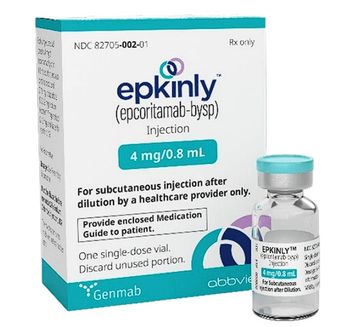
Genmab’s epcoritamab (Epkinly) streamlines bispecific antibody workflows for DLBCL and follicular lymphoma, cutting chair time, waste, and costs.
A prospective study of first-degree relatives of patients with MS found that this high-risk population faces significantly elevated incidence rates and has strong willingness to participate in prevention trials.
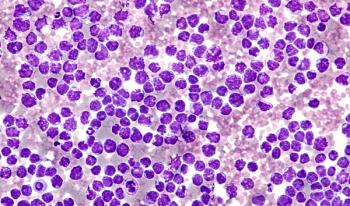
A review article examines questions about sequencing treatments in light of recent developments in relapsed/refractory mantle cell lymphoma.

The visual nature of head and neck cancer calls for treatment strategies that will minimize toxicities related to radiation therapy. Advances in precision radiation techniques, supportive care, and multidisciplinary approaches have improved outcomes, improving quality of life.


How strategic partnerships in oncology can enhance patient care by addressing diverse needs through collaboration.

To mark the 30th anniversary of The American Journal of Managed Care (AJMC), each issue in 2025 includes a special feature: reflections from a thought leader on what has changed—and what has not—over the past 3 decades and what’s next for managed care. The December issue features a conversation with AJMC Co–Editors in Chief A. Mark Fendrick, MD, director of the Center for Value-Based Insurance Design and a professor at the University of Michigan in Ann Arbor; and Michael E. Chernew, PhD, the Leonard D. Schaeffer Professor of Health Care Policy and the director of the Healthcare Markets and Regulation Lab at Harvard Medical School in Boston, Massachusetts.

One-third of F32 grant recipients secure follow-up NIH K awards, fueling new biomedical discoveries and career growth.
Metabolic intermediates were identified as active participants in fibrosis progression and potential targets for next-generation therapies.

A new analysis suggests links between ZRSR2 loss and JAK2 V617R disease progression are indirect and complex.
Dana-Farber researchers have uncovered mutation pathways driving aggressive disease transformation.
LAG-3 expression appears to be significantly elevated in patients with small cell lung cancer (SCLC).
Atomic force microscopy successfully identified nanomechanical changes in fibrotic lung tissue.

Metallomic correlations suggest environmental and metabolic metals act together to accelerate renal damage.

Integrated data suggest higher tryptophan activity is associated with reduced inflammation and improved outcomes in RA.

A Mendelian randomization study suggests Actinomyces plays a role in idiopathic pulmonary fibrosis, mediated by circulating inflammatory proteins.

Researchers developed a first-of-its-kind panel to track receptor expression and predict therapy response.
Early research has identified several antigens that could help facilitate the use of chimeric antigen receptor T cells in small cell lung cancer.

As the hospital-at-home model grows, a consortium is needed to advance scalability, equity, caregiver well-being, and cost efficiency through research and collaboration.

A recent study outlines how artificial intelligence advancements are transforming research and therapeutic strategies for idiopathic pulmonary fibrosis.

As the prevalence of both chronic kidney disease (CKD) and heart failure (HF) increases, therapies targeting shared pathways are one of the most promising strategies to alter the trajectory of these diseases.
Advertisement
Advertisement
Trending on AJMC
1
Tozorakimab Cuts COPD Exacerbations Up to 34% in Phase 3 Trials
2
Trump Admin Awards $106M to Expand Rural Health Care in NY, RI, MI
3
FDA Approves First Disease-Modifying Treatment for AxD
4
Lung Transplant Trends Shift to Older Adults, Sicker Pediatric Cases
5