


Multiple Myeloma
Latest News
Advertisement
Latest Videos
Advertisement
More News

Rahul Banerjee, MD, FACP, assistant professor in the Division of Hematology and Oncology, University of Washington, dissects the limited data on T-cell therapies for multiple myeloma, infectious complications, and access to specialized treatment centers.
Anant Madabhushi, PhD, executive director for the Emory Empathetic AI for Health Institute, proposes AI-based solutions to address health care disparities, emphasizing systemic racism and phenotypic variations.
Rahul Banerjee, MD, FACP, assistant professor in the Division of Hematology and Oncology, at the University of Washington, determines the optimal use of minimal residual disease (MRD) in individual patient management, including decisions about continuing or stopping treatment.
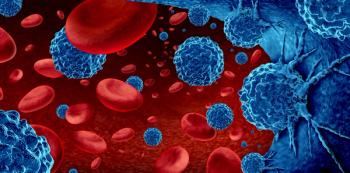
Information on the disease and treatments, assistance with insurance, and transportation are among the types of support needed by patients with multiple myeloma to improve outcomes and overall burden.
The principal goal of therapies for multiple myeloma, which remains incurable, is to extend progression-free survival, but challenges remain bringing chimeric antigen receptor T-cell therapy to the world, explains Leland Metheny, MD, lead investigator for the phase 1 BAFF CAR T clinical trial, University Hospitals Seidman Cancer Center.

The FDA approved the quadruplet regimen on July 30 for induction and consolidation therapies in patients with newly diagnoses multiple myeloma who are eligible for autologous stem cell transplant.
In part 1 of our interview with Leland Metheny, MD, he explained how a new triple-target chimeric antigen receptor (CAR) T-cell therapy works in multiple myeloma.
Leland Metheny, MD, is lead investigator for the Phase 1 BAFF CAR T clinical trial, which is evaluating the safety and effectiveness of a novel approach to chimeric antigen receptor (CAR) T-cell therapy in multiple myeloma (MM) that targets 3 receptors on cancer cells and uses electroporation vs the typical lentiviral vector delivery.
The complete response letter (CRL) was issued based on a pre-approval inspection at a third-party fill/finish manufacturer.
To continue the response they experienced with a first autologous stem‐cell transplant (ASCT) for their multiple myeloma, patients in this analysis received a second ASCT, with French investigators evaluating their outcomes.
Patients who have comorbid relapsed/refractory multiple myeloma (RRMM) and advanced chronic kidney disease (CKD) are often excluded from clinical trials, leaving treatment gaps for these high-risk patients.
Relapsed/refractory multiple myeloma (RRMM) remains an incurable hematologic cancer, often resulting in patients treated with several classes of medications—particularly older patients.

Daratumumab/hyaluronidase-fihj plus bortezomib, lenalidomide, and dexamethasone is now approved by the FDA to treat newly diagnosed multiple myeloma (MM) in patients eligible for autologous stem cell transplant.
Dr. Mikhael discusses EHA 2024 data he found particularly noteworthy to share with colleagues.
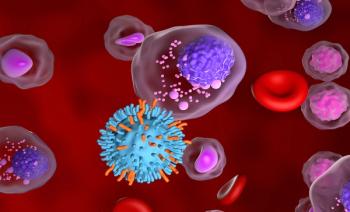
This new analysis examined the investigational chimeric antigen receptor (CAR) T-cell therapy GC012F among patients with newly diagnosed and high-risk multiple myeloma (MM).
Dr. Mikhael outlines the significant hurdles in bispecific antibody therapy, as presented at the European Hematology Association's 2024 conference.
Alfred L. Garfall, MD, discusses his hopes for the future treatment landscape of multiple myeloma.
Alfred L. Garfall, MD, discusses follow-up data from the DREAMM-8 study presented at ASCO 2024.
Dr. Mikhael discusses the safety and usefulness of tesclistimab in patients with high-risk refractory multiple myeloma.
Alfred L. Garfall, MD, discusses long-term follow-up data from the MajesTEC-1 study presented at ASCO 2024.
Dr. Mikhael discusses treatment in early relapse of multiple myeloma.

Peer and survivorship support are lacking for patients living with multiple myeloma, leading investigators to evaluate a group-focused multidisciplinary intervention that encompassed physical and mental activities.
Patient outcomes in this trial were compared between the regimens of lenalidomide, bortezomib, and dexamethasone and daratumumab, lenalidomide, bortezomib, and dexamethasone for use against multiple myeloma (MM).
In the final part of our interview with Joseph Mikhael, MD, MEd, FRCPC, FACP, he addresses how patients who experience an early relapse of their multiple myeloma are predisposed to worse outcomes.
In part 2 of our interview with Suzanne Lentzsch, MD, PhD, Columbia University's College of Physicians and Surgeon, she touches on potential new therapies, important clinical considerations, and treatment challenge for relapsed/refractory multiple myeloma.
Advertisement
Advertisement
Trending on AJMC
1
Upcoming 2026-2027 Vaccine Season: Deals, Data, and an FDA Vote
2
COVID-19 May Follow a Different Seasonal Pattern Than Influenza, RSV
3
House Passes Bill to Ease Medicare ACO Digital Quality Reporting Burden
4
Pediatric Cancer Carries Greater Financial Toxicity Than Adult Disease, Driving Calls for Systemic Change
5