






Multiple Myeloma
Latest News
Advertisement
Latest Videos





Advertisement
More News

Highlights from EHA 2025 included use of bispecific antibodies in more settings and novel approaches for improving outcomes in hard-to-treat patients.

Advances in radiopharmaceuticals, precision medicine, and the importance of diversity in clinical trials for multiple myeloma and cancer care were among the most popular articles with readers in 2025.

AMCP Nexus 2025 explored innovative health care policies, oncology advancements, and the impact of new regulations on patient access and treatment outcomes.

Peter Voorhees, MD, explains how daratumumab and hyaluronidase-fihj show superior efficacy in delaying progression of MM compared with active monitoring.
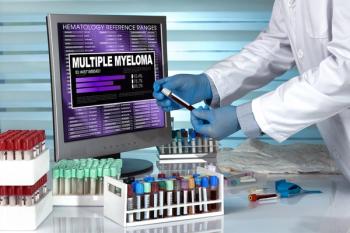
A study reveals a U-shaped relationship between BMI and CAR T-cell therapy outcomes in multiple myeloma (MM), highlighting the impact of overweight status on efficacy.

Key End Points for Providers to Consider With New Multiple Myeloma Therapies: Hearn Jay Cho, MD, PhD
As novel multiple myeloma therapies enter the relapsed and refractory treatment landscape, safety is a key consideration, says Hearn Jay Cho, MD, PhD.
The FDA approved daratumumab and hyaluronidase-fihj (Darzalex Faspro), offering a new treatment for high-risk smoldering multiple myeloma.

Marcus Flores, PharmD, BCPS, BCOP, discusses the vital role of pharmacists in multidisciplinary cancer care, exploring collaboration, patient-centered strategies, and AI.

Exploring Teclistamab’s Potential in Combination Therapy for Multiple Myeloma: Marc S. Raab, MD, PhD
Marc S. Raab, MD, PhD, discusses the different ways that combination therapy that includes teclistamab can benefit patients with multiple myeloma.
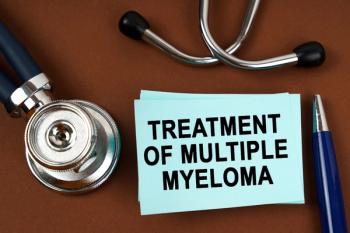
Venetoclax plus bortezomib and dexamethasone improved PFS in relapsed/refractory multiple myeloma, especially in patients with BCL2high disease.

The LINKER-SMM1 trial shows promising results for linvoseltamab in treating high-risk smoldering multiple myeloma with a favorable safety profile, notes Paula Rodríguez-Otero, MD, PhD.

Kelley L. Julian, PharmD, BCOP, discusses optimizing myeloma care, addressing barriers in access to intravenous immunoglobulin and innovative therapies at Huntsman Cancer Institute.
The MajesTEC-5 trial shows teclistamab's impressive efficacy in achieving MRD-negative status in newly diagnosed transplant-eligible patients, explains Marc S. Raab, MD, PhD.

Teclistamab shows promising real-world effectiveness and safety in older adults with relapsed/refractory multiple myeloma (R/R MM), matching clinical trial outcomes.
The LINKER-SMM1 trial evaluates linvoseltamab's safety and efficacy in high-risk smoldering multiple myeloma, aiming to delay disease progression.

Cilta-cel demonstrates superior efficacy and durability in treating high-risk myeloma, balancing effectiveness with safety concerns for patients.

Matias Sanchez, MD, a hematologist-oncologist at University of Illinois Health, discussed the latest advancements in value-based multiple myeloma care, including minimal residual disease strategies and innovative targeted therapies.

Despite reduced immune responses, immunization lowers infection rates and remains central to supportive care in patients with multiple myeloma.
Matias Sanchez, MD, a hematologist-oncologist at University of Illinois Health, discussed strategies to deliver cutting-edge multiple myeloma care while mitigating costs.
Investigators believe the SWIFT-seq system holds potential to replace more invasive bone marrow biopsies.
Emerging data suggest that isatuximab‐KRd and daratumumab‐KRd produce superior depth of response compared with KRd alone, with sustained MRD negativity and encouraging progression‐free survival in NDMM.

Emilie Aschenbrenner, PharmD, BCOP, outlines how Froedtert Health and the Medical College of Wisconsin use outpatient-based care models, standardized protocols, and collaborative partnerships to improve cost-effectiveness, accessibility, and patient experience.
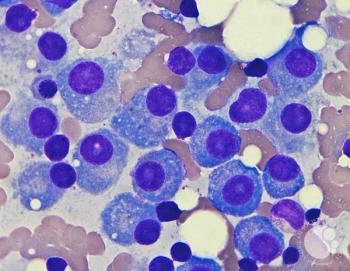
Past efforts to collect data and to understand the relationship between minimal residual disease and outcomes will help researchers in multiple myeloma develop a new generation of targeted therapies, decide when treatment can be stopped, and possibly screen populations for the disease.

Emilie Aschenbrenner, PharmD, BCOP, highlights how measurable residual disease (MRD) testing can support value-based care in multiple myeloma by guiding personalized treatment intensity, potentially reducing costs and improving outcomes.
Emilie Aschenbrenner, PharmD, BCOP, discusses how integrating CD38-targeted therapies into first-line treatment for transplant-ineligible multiple myeloma requires balancing clinical benefit, cost, and insurance coverage.
Advertisement
Advertisement
Trending on AJMC
1
COVID-19 May Follow a Different Seasonal Pattern Than Influenza, RSV
2
Upcoming 2026-2027 Vaccine Season: Deals, Data, and an FDA Vote
3
House Passes Bill to Ease Medicare ACO Digital Quality Reporting Burden
4
Pediatric Cancer Carries Greater Financial Toxicity Than Adult Disease, Driving Calls for Systemic Change
5