



Two abstracts presented at the Transplantation and Cellular Therapy Meetings analyzed the detection of minimal residual disease during and after hematopoietic stem cell transplantation.
Two abstracts presented at the Transplantation and Cellular Therapy Meetings analyzed the detection of minimal residual disease during and after hematopoietic stem cell transplantation.
AstraZeneca and Merck will present full results at a future meeting; Myriad Genetics will file a supplemental application for its companion diagnostic.

A high proportion of patients with acute myeloid leukemia (AML) who achieve a negative minimal residual disease (MRD) status still relapse, indicating a more sensitive method of detecting MRD is needed.

Researchers have used positron emission tomography scans to identify which patients with a type of human epidermal growth factor receptor 2–positive breast cancer might benefit most from targeted agents alone and can be spared chemotherapy.

More than one-third of the therapies the FDA approved in the last 2 years includes information on the label identifying patients would benefit the most or experience fewer side effects, found a recently published report from the Personalized Medicine Coalition.

The update follows a study published in November that found almost no difference in the frequency of mutations between patients with breast cancer who met National Comprehensive Cancer Network guidelines and those who didn't.

Currently, minimal residual disease testing is being used for prognostication not for treatment decisions, explained Thomas G. Martin, MD, clinical professor of medicine, Adult Leukemia and Bone Marrow Transplantation Program, associate director, Myeloma Program, University of California, San Francisco (UCSF); co-leader, Hematopoietic Malignancies Program, Helen Diller Family Comprehensive Cancer Center.

Minimal residual disease (MRD) is a strong prognosticator of cancer outcomes, and recent research found that patients with relapsed/refractory multiple myeloma (MM) are more likely to achieve MRD on daratumumab than on a standard of care alone.

Andrew Pecora, MD, FACP, CPE, recently visited Evidence-Based OncologyTM to discuss the progress of COTA’s, a company created in 2011 to develop technology that Pecora said is poised to transform cancer care delivery by helping oncologists and other specialists make decisions that will yield the best outcomes in the most cost-effective way, all at the point of care.

Molecular minimal residual disease (MRD) testing during the first 4 days of induction therapy does not differentiate responders and nonresponders and should not be used in predicting clinical response for patients with acute myeloid leukemia (AML), according to the results from a recent study.

Foundation Medicine announced that it has won a nationwide contract from the Department of Veterans Affairs National Precision Oncology Program. The contract covers all of Foundation Medicine’s tests.

Abstracts presented at the 60th American Society of Hematology Annual Meeting & Exposition looked at how monitoring minimal residual disease can help predict outcomes in acute myeloid leukemia (AML).

A recent review outlined a vast array of biomarkers that may have clinical implications on the treatment and prognosis of colorectal cancer (CRC).

The biggest barrier to molecular profile testing right now is a financial one, explained Elizabeth Griffiths, MD, associate professor of oncology, department of medicine, Roswell Park Comprehensive Cancer Center

A study of 3 assessments for patients with chronic lymphocytic leukemia treated with fludarabine, cyclophosphamide, and rituximab are examined.
The first and only test authorized by the FDA to detect and monitor minimal residual disease (MRD) in multiple myeloma (MM) and B-cell acute lymphoblastic leukemia (ALL) has received coverage for Medicare patients.

Jeff Sharman, MD, medical oncologist, Willamette Valley Cancer Institute and Research Center; medical director, The US Oncology Network, explains how personalized medicine has changed the way physicians think about treatment for patients with chronic lymphocytic leukemia (CLL).

Minimal residual disease in patients with acute myeloid leukemia (AML) can be a powerful predictor of outcomes and a useful guide of treatment strategies.
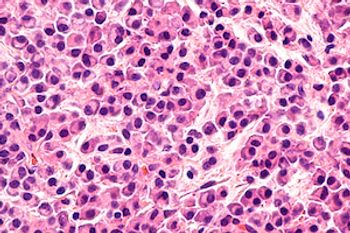
There is a lack in correlation between circulating tumor DNA (ctDNA) and bone marrow for minimal residual disease (MRD) by next generation sequencing (NGS) using immunoglobulin genes in patients with multiple myeloma, according to results of a recent study.
Elizabeth Griffiths, MD, associate professor of oncology, department of medicine, Roswell Park Comprehensive Cancer Center discusses which biomarkers and mutational events help determine if a patient would likely benefit from a traditional therapy or if they are more suitable for a clinical trial or upfront allogeneic transplantation.

A phase 2 trial demonstrated that the regimen of rituximab, bortezomib, bendamustine, and dexamethasone is a viable treatment option for older patients with mantle cell lymphoma (MCL), and highlighted the usefulness of using minimal residual disease (MRD) to guide early and late clinical decisions.

In the past year, there have been tremendous advancements in precision medicine, and the big upfront investments are starting to come to fruition, according to panelists at the 37th Annual JP Morgan Healthcare Conference, held January 7-10 in San Francisco, California.

There has been dramatic growth in the number of labels relevant to precision medicine, but there remains a gap in the number available and what health plans actually cover, explained Kibum Kim, PhD, MSc, research assistant professor, University of Utah.

A test that uses next-generation sequencing (NGS) has been approved to detect and monitor minimal residual disease in patients with multiple myeloma (MM) and B-cell acute lymphoblastic leukemia (ALL).

In June, Syapse—a company that works with health systems to implement precision medicine across its organizations—took the next step in leading the shift toward precision medicine by launching the Syapse Precision Medicine Council.