






Providers
Latest News
Advertisement
Latest Videos



CME Content


Advertisement
More News

A prospective study evaluating the efficacy of an artificial intelligence (AI)–based clinical support system further demonstrated the reliability of AI or machine learning as a diagnostic tool in skin cancer.

HIV testing, treatment, and intervention session delivery were among some areas that saw challenges in properly addressing youth experiencing homelessness during an HIV prevention trial.

The Center on Health Equity and Access covered the burden faced by caregivers, transgender health care, pre-exposure prophylaxis uptake, disparities in postpartum mental health care, and cost-related medication nonadherence among patients with chronic obstructive pulmonary disease.

Raajit Rampal, MD, PhD, of Memorial Sloan Kettering Cancer Center, discusses the potential of a disease-modifying therapy in polycythemia vera, treating high-risk vs low-risk patients, and emerging therapies in the pipeline.

A retrospective study analyzing tissue assays from patients with cutaneous melanoma demonstrated the promise of yes-associated protein (YAP) as a predictive biomarker for melanoma prognosis.

Patients included in the analysis had psoriatic arthritis and had either not been treated with biologic disease-modifying antirheumatic drugs or had an inadequate response or an intolerance to tumor necrosis factor inhibitors.

This study builds on previous evidence for lenalidomide-induced selective advantage for TP53-mutant clones.

A cluster analysis demonstrated the potential for the Multiple Sleep Latency Test (MSLT) to aid in the diagnosis of central hypersomnia and distinguish between idiopathic hypersomnia subgroups.

A retrospective study reveals that measures of cognitive function, specifically processing speeds, decline in individuals with sickle cell disease as they grow older.

Surprisingly, the investigators found people with uncontrolled hypertension before the pandemic actually had a slightly higher chance of getting their blood pressure under control during the crisis.

Eko Health's artificial intelligence (AI) tool can detect low ejection fraction in seconds via an Eko stethoscope, bringing earlier heart failure detection to routine checkups.

This new report helps clarify the ways in which the disease—and its treatment—affects the lives of children.

This analysis found the complex decision-making process of lung cancer screening among eligible individuals is infused with 3 principal themes that may influence how primary care physicians approach patients with comorbidities.

“Policies that require and reimburse universal mental health screening at postpartum visits, ensure connection to care, reduce gaps in postpartum insurance coverage, and require clinician training in culturally responsive resources could improve equity of postpartum depression diagnoses and care in the US,” study authors wrote.

The first-in-class oral factor D inhibitor danicopan (Voydeya) has been approved for the management of extravascular hemolysis in patients with paroxysmal nocturnal hemoglobinuria (PNH).
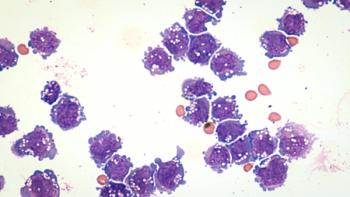
Treatment with R-GemOx was associated with significant health care resource utilization, high costs surrounding treatment, and low overall survival in elderly patients with diffuse large B-cell lymphoma (DLBCL).
Despite being used for decades, there continues to be emerging data on interferons and how they should be used in patients with myeloproliferative neoplasms (MPNs), explains Raajit Rampal, MD, PhD, hematologic oncologist, associate attending physician, Memorial Sloan Kettering Cancer Center.

Part 1 of a 3-part feature series on the history, evolution, and current state of LGBTQ+ health care is focused on the unique needs and journey of transgender patients in the US health system, as well as the policies and social influences that have shaped their access to care.

An artificial intelligence (AI) mode was more accurate in assessing patient risks for skin cancer through the analysis of 2D facial images compared with more traditional risk-factor screening.

An abstract presented at the 2024 Society of Gynecologic Oncology Annual Meeting on Women’s Cancer explored patient-reported health-related quality of life (HRQOL) among patients treated with mirvetuximab soravtansine compared with standard chemotherapy.

The majority of studies evaluating biosimilar-to-biosimilar switching were for rheumatoid arthritis, psoriatic arthritis, axial spondyloarthritis, and ankylosing spondylitis.

A population-based cohort study out of Norway has found that older men have a higher risk of developing second primary invasive melanoma following an initial primary melanoma, suggesting the benefits of increased surveillance in these patients.

Patrick Vermersch, MD, PhD, University of Lille, France details the adverse events observed in the frexalimab trials and the next steps necessary to establish frexalimab as a standard of care in multiple sclerosis (MS) in the third and final part of an interview.

This analysis included 119 patients with advanced lung cancer, who were evaluated on 3 facets of physical activity over 14 days of using the amuelink wearable device from Sony: metabolic equivalent tasks, distance walked, and steps taken.

These insights, explain the researchers of the study, complement observational studies, which have previously indicated a causal relationship between the 2 diseases.
Advertisement
Advertisement
Trending on AJMC
1
TrumpRx Launch Brings Savings—and Uncertainty
2
How Do GLP-1 Agonists Fit Into Stroke Care?
3
Addressing Disparities at Every Step of the Stroke Care Pathway: Luke Messac, MD, PhD
4
5 Things to Know About the Oral GLP-1 Era
5