





Providers
Latest News
Advertisement
Latest Videos







Advertisement
More News

New research reveals that elevated lipoprotein(a) and oxidized phospholipids are independent risk factors for early-stage heart failure progression.

Researchers review the latest developments, challenges, and ongoing research in posttransplant maintenance for acute myeloid leukemia (AML).

New findings show a similar number of injective-related reactions (IRRs) were reported between the use of ofatumumab (Kesimpta) and ocrelizumab (Ocrevus) in the treatment of multiple sclerosis, but less severe reactions have been associated with ofatumumab.
Charlie Borowicz, manager of trans and gender diverse health at Allegheny Health Network, shares how the program offers comprehensive patient-first care to those in the LGBTQ+ and gender diverse community.

The field of sarcoma study is getting more specific, with clinical investigations drilling down to more specific subtypes of soft tissue sarcoma for better targeted therapies.

However, registry data also showed no significant difference in transplant-free survival and time to pulmonary function decline between patients receiving antifibrotics vs placebo.

This new report reveals that the US has made minimal progress in advancing health care equity over the past 2 decades.

More than 80% of pregnant patients with new-onset hypertensive disorder remain hypertensive after hospital discharge.

A 2-sample Mendelian randomization study found a potential connection between dietary intake and multiple sclerosis (MS) risk and severity.

In this fifth, and final, special bonus episode of our Pride Month series, we speak with Lauren Albrecht, director of advocacy and organizing, and Layla Orlando, director of health equity and wellness, at Garden State Equality, the largest lesbian, gay, bisexual, transgender, queer, plus advocacy organization in New Jersey.

An analysis conducted on UK Biobank data suggests a possible association between higher concentrations of serum albumin and a reduced risk of multiple sclerosis (MS).

Patients who received long-acting injectable antipsychotics (LAIs) in the hospital but discontinued them early faced a 22% to 25% higher readmission risk than those who did not receive LAIs.
Low-Sodium Oxybate: An Equally Effective but Safer Alternative to High-Sodium Oxybate for Narcolespy
A prospective study concluded that patients with narcolepsy can safely switch from a high-sodium oxybate to a low-sodium oxybate to manage their symptoms.
Shining the Spotlight on Queer Joy and Resilience in LGBTQ+ Youth
Published: | Updated:
In our fourth Pride Month podcast episode, we are speaking with Domenico Ruggerio, executive director of We Are Family, in Charleston, South Carolina, the state's oldest nonprofit to provide life-affirming and life-saving programs for lesbian, gay, bisexual, transgender, queer, plus (LGBTQ+) youth.

With an effective therapy available for treating postpartum depression, Rachel Dalthorp, MD, believes health care providers need to focus on educating patients and helping them navigate the health system so zuranolone can reach those who need it.

In the clinical practice setting, intensifying treatment for axial spondyloarthritis (axSpA) is associated with a higher Ankylosing Spondylitis Disease Activity Score (ASDAS) cutoff value than recommended, new research found.

The FDA today approved efgartigimod alfa and hyaluronidase-qvfc for the treatment of adult patients with chronic inflammatory demyelinating polyneuropathy (CIDP).

This investigation sought to expand knowledge of the impact of comorbid pulmonary hypertension (PH) on diagnosed non–small cell lung cancer (NSCLC), using data from adult patients treated at military hospital facilities within the US.
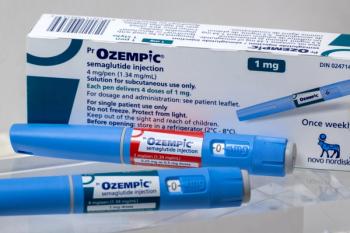
Taking falsified semaglutide (Ozempic; Novo Nordisk) can lead to ineffective treatment due to incorrect dosing, contamination, and the use of unknown ingredients, the World Health Organization (WHO) is warning.

A poster presented at the 2024 American Society of Clinical Oncology annual meeting argued the benefits that Medicaid expansion can bring to patients with melanoma.

People receiving hypomethylating agent (HMA) therapy spent 33 more days at home than people receiving anthracycline-based therapy in the first year after diagnosis.
"As a health care provider and as a psychiatrist, it's something that I think about first—instead of step therapy, when I have a patient with postpartum depression, this is what they need to be on," Rachel Dalthorp, MD, explains.

Older adults who had colorectal surgery were found to have reduced postoperative complications if they started the Geriatric Oncology Service.

This study provides a comprehensive review of both established and emerging prognostic markers in chronic lymphocytic leukemia (CLL), and their role in predicting disease, treatment response, and overall survival.

June 19 is marked as World Sickle Cell Awareness Day, granting the opportunity to reflect on the current state of treatment, access, equity, and more that impacts patients living with sickle cell disease.
Advertisement
Advertisement
Trending on AJMC
1
FDA Clears First Alzheimer Blood Test for Adults as Young as 40
2
MFN Drug Agreements Could Raise Prices Worldwide
3
Dosing, Tolerability, and Formulary Impact: Aripiprazole and Quetiapine XR in MDD
4
Newer Agents, New Advantages: Brexpiprazole, Cariprazine, and Lumateperone in MDD
5