

A panel discussion during the JPMorgan conference earlier this month examined where oncology drug development is headed, driven in part by advances in diagnostic testing.
A panel discussion during the JPMorgan conference earlier this month examined where oncology drug development is headed, driven in part by advances in diagnostic testing.
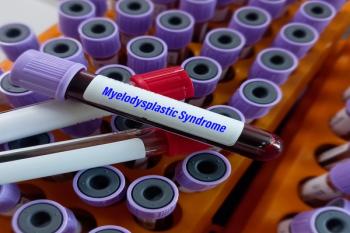
Patients with myelodysplastic syndromes (MDS) who undergo allogeneic hematopoietic stem cell transplantation (allo-HSCT) are older and face worse outcomes compared with non-MDS patients, according to posters presented at the 2024 American Society of Hematology meeting.

New data suggest venetoclax may offset the negative prognostic impact of short telomeres in patients with chronic lymphocytic leukemia (CLL).

Two abstracts presented at the 2024 American Society of Hematology Annual Meeting & Exhibition provided insight into MDS response to hypomethylating agents (HMAs).

Bimekizumab (Bimzelx; UCB Pharma) was approved by the FDA to treat psoriatic arthritis (PsA) on September 23, 2024, based on data from 2 phase 3 trials: BE OPTIMAL and BE COMPLETE.

One study found most—but not all—patients with chronic lymphocytic leukemia disease progression while taking a Bruton tyrosine kinase inhibitor (BTKi) had a key mutation linked to resistance.

The Breast Cancer Index (BCI) may help identify patients with low-risk breast cancer who could potentially benefit from reduced endocrine therapy, leading to improved quality of life and potentially lower health care costs.
A pair of abstracts presented at the 2024 American Society of Hematology (ASH) Annual Meeting & Exhibition suggest that IDH1-targeted treatment may improve survival among patients with myelodysplastic syndromes (MDS) with the mutation.
A new analysis of the Breast Cancer Index (BCI) may help identify women with HR-positive breast cancer who could potentially benefit from shorter or less-intensive treatment.

Quality-of-life (QOL) outcomes vary widely for patients receiving first-line treatment for chronic lymphocytic leukemia (CLL), according to research presented at the 2024 American Society of Hematology (ASH) meeting.

Two posters presented at the 2024 American Society of Hematology meeting reported real-world outcomes data for patients treated for pediatric acute myeloid leukemia (AML).
The Society for Pediatric Dermatology (SPD) Annual Meeting took place in Toronto, Canada, July 11-15, with our top coverage including the hot topics of combating misinformation and improving care for children with dermatologic conditions.
The 66th American Society of Hematology (ASH) Annual Meeting & Exposition took place December 7-10, 2024, in San Diego, California; the 2025 meeting is currently scheduled to take place in Orlando, Florida, December 6-9.
The 2024 World Conference on Lung Cancer (WCLC) took place in San Diego, California, from September 7 to 10, 2024.
Check out this year's top coverage from The Academy of Managed Care Pharmacy (AMCP) Nexus 2024 meeting, which included relevant topics in health care policy, novel pharmaceutical developments, financial considerations across multiple conditions, and more.

The high health care burden faced by individuals with hemophilia underscores the urgent need for innovative treatments and improved diversity in clinical trials.
Through interviews and articles infused with expert insight, progress against this cancer that develops in the bone marrow was showcased.

The 2024 American Urological Association (AUA) annual meeting in San Antonio strongly emphasized diversity, equity, and inclusion, as well as innovations in robotic surgery and research methodologies.
The 2024 American Academy of Dermatology conference was held in San Diego, California March 8 to 11.
Top coverage from the 2024 American Society of Clinical Oncology (ASCO) annual meeting included research topics in non-small cell lung cancer (NSCLC), multiple myeloma, metastatic colorectal cancer (mCRC), and more.
Our top content from the 100th annual American Heart Association (AHA) Scientific Sessions included exclusive expert insights and highlighted promising treatments.

Dan Bloomfield, MD, chief medical officer, Anthos, walks through promising findings demonstrating the efficacy of abelacimab, a factor XI (FXI) inhibitor, to reduce bleeding risk in atrial fibrillation treatment.
Among the most-read coverage for the annual meeting were presentations on the potential and costs of cell and gene therapies, the latest trends in the industry, and pharmacogenomic testing in mental health.
The top 5 most-viewed content from CHEST 2024 included expert interviews and coverage on multiple areas of chest medicine.

A pair of studies from The American Society of Hematology (ASH) Annual Meeting & Exposition provides insights into the prognostic utility of geriatric assessment tools and their role in tailoring therapy to improve patient outcomes.
Check out our top 5 most-viewed pieces of coverage from the 2024 SLEEP meeting.

Two posters presented at the 2024 American Society of Hematology meeting evaluated overall survival and cost-offset of covalent Bruton’s tyrosine kinase inhibitors (cBTKis) in patients with chronic lymphocytic leukemia (CLL).
Health care conferences this year showcased advancements in treatments for chronic obstructive pulmonary disease and sleep apnea, discussions around health policy and economic research, and more.
The expert knowledge presented at this year’s International Myeloma Society (IMS) annual meeting focused on minimal residual disease testing and status, defining and treating high-risk disease, CEPHEUS trial findings, and an investigational off-the-shelf chimeric antigen receptor T-cell therapy.
Experts discussed the great advances and innovations they’ve seen this year in acute myeloid leukemia (AML) and multiple myeloma.