






Center on Health Equity & Access
Latest News
Advertisement
Expert Insights
Hear what thought leaders have to share about the Center on Health Equity & Access.
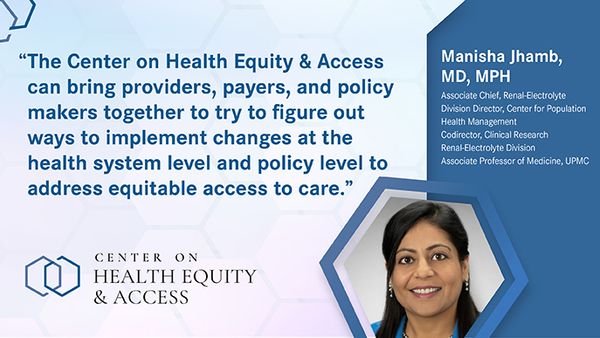
Expert Insights
Hear what thought leaders have to share about the Center on Health Equity & Access.
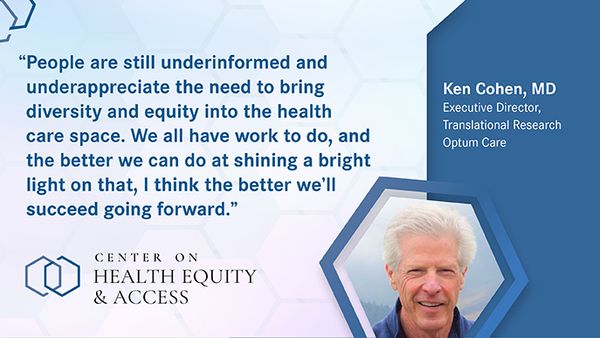
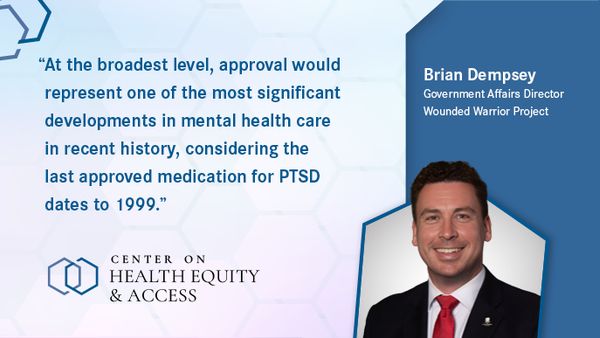
FDA Denies MDMA-Assisted Therapy Despite Promising Trial Results
Leaders respond to the complete response letter issued by the FDA, seeking answers and calling for more progress to aid the veteran community and others experiencing PTSD. Learn more with the full article from AJMC®!
Latest Videos









Advertisement
More News

Dan Nardi, MS, CEO of Reimagine Care, claims that on-demand cancer treatment via telehealth is the future of oncology care delivery.

Findings presented at the American College of Cardiology Annual Scientific Session indicate that finerenone's efficacy in reducing cardiovascular death did not significantly differ across baseline bilirubin tertiles.

A bipartisan letter from lawmakers questions the legality of Robert F. Kennedy Jr's HHS changes and the lack of clear communication regarding their potential impact on American health.

Mobile self-management programs like that offered by Hello Heart can benefit employers and patients alike as they seek to manage and prevent heart disease.

In part 1 of this interview with Katrina Ortblad, ScD, MPH, she addressed bridging gaps in HIV care with pharmacy-based solutions.

Social determinants of health been long understood to influence health outcomes, and this new analysis explores more deeply the link between social risk exposure and rates of health care resource utilization.

STRIDE investigator Marc Bonaca, MD, MPH, University of Colorado School of Medicine, highlights how the data could provide insight into peripheral artery disease and type 2 diabetes treatment options.

Although the widespread adoption of remote patient monitoring during the COVID-19 pandemic expanded care access, particularly for underserved communities, challenges persist in sustaining this access.

Hispanic and Latino adults found that while preserving cultural identity may initially benefit health, socioeconomic factors like education level significantly impact diabetes and hypertension rates, highlighting the need for targeted health interventions across diverse subgroups.

Five abstracts showcase critical insights into women’s cardiovascular health, highlighting rising maternal mortality, elevated heart failure risk after ovary removal, and more.

Experts discuss the role of continuous glucose monitoring (CGM)-derived metrics, particularly glucose management indicator (GMI), in the new Healthcare Effectiveness Data and Information Set (HEDIS) diabetes care measures and ACO quality targets, and how CGM-specific metrics are being incorporated into the National Committee for Quality Assurance (NCQA)’s quality measures and the implications for health plans.

Documentation efficiency was higher among younger and male clinicians.

One study found that Black women were 3 times more likely to die of maternal deaths due to cardiovascular disease than White women.

A new Commonwealth Fund report estimates that states' collective gross domestic products would shrink by $95 billion, with total economic output declining by $157 billion.

The Trump administration has expressed interest in eliminating or changing the Division of HIV Prevention in the CDC, which could introduce gaps in addressing the HIV epidemic.

These results suggest that the rise in avoidable mortality is driven by widespread factors across the entire US.

Inclusion of female and Hispanic/Latino patients has increased over time, but most trials of metabolic dysfunction-associated steatohepatitis (MASH) still take place in high-income countries and have majority-White patient populations.

Non-Hispanic Black populations face the highest risk of death from chronic kidney disease (CKD)–associated cardiac arrest, a study found.

Addressing patients with chronic kidney disease requires a commitment to data, education, and community, specifically in those affected by social determinants of health (SDOH).
Experts discuss the relative value of different continuous glucose monitoring (CGM) metrics (glucose management indicator [GMI], time in range, glucose variability) in assessing glycemic control and how these outcomes vary across different patient populations.

Karen Winkfield, MD, PhD, addresses the importance of meeting patients where they are to expand clinical trial participation and remove barriers to trial access.

Medication costs are only a piece of the puzzle when clinicians think about health care access, explains Leigh Maria Ramos-Platt, MD.

Recent cuts to federal grants are set to have a widespread impact across numerous scientific and medical studies.

Posters presented at the 2025 Muscular Dystrophy Association (MDA) Clinical & Scientific Conference show that therapeutic advances in treating spinal muscular atrophy (SMA) are not uniformly making it into the hands of patients who could benefit.

A new analysis out of England shows a considerable level of uncertainty among adults who think they could have long COVID, as well that levels of the chronic condition are disproportionately higher among certain socially disadvantaged groups.
Advertisement
Advertisement
Trending on AJMC
1
Delayed Dupilumab Raises Asthma Costs 32%: Nicola Hanania, MD
2
Regorafenib Prescribing in Advanced GIST Deviates From Guidelines
3
Oral GLP-1s, Medicare Bridge Reshape Obesity Care: Holly Lofton, MD
4
FDA Expands Finerenone Approval to CKD Associated With Type 1 Diabetes
5