




Center on Health Equity & Access
Latest News
Advertisement
Expert Insights
Hear what thought leaders have to share about the Center on Health Equity & Access.
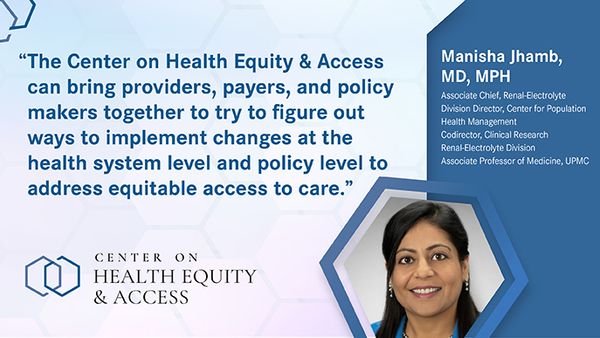
Expert Insights
Hear what thought leaders have to share about the Center on Health Equity & Access.
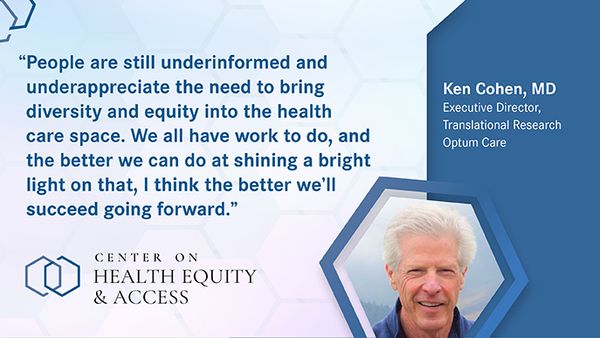
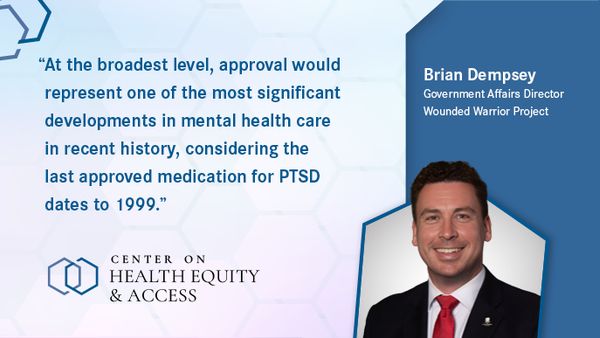
FDA Denies MDMA-Assisted Therapy Despite Promising Trial Results
Leaders respond to the complete response letter issued by the FDA, seeking answers and calling for more progress to aid the veteran community and others experiencing PTSD. Learn more with the full article from AJMC®!
Latest Videos


Advertisement
More News

Pat Van Burkleo, executive director of Feeding Louisiana, shares the key topics addressed during the Ochsner Health IVBM panel discussion on initiatives to increase food access in communities across the state.

“Policies that require and reimburse universal mental health screening at postpartum visits, ensure connection to care, reduce gaps in postpartum insurance coverage, and require clinician training in culturally responsive resources could improve equity of postpartum depression diagnoses and care in the US,” study authors wrote.

"If someone is food insecure for a long period of time, then they may be consuming foods that aren't as nutritious and support their health and growth as they should," Denise Holston, PhD, explains in an interview.

Men who have sex with men (MSM) who primarily spoke Spanish and transgender women who spoke either English or Spanish had positive experiences with a mobile health (mHealth) intervention.

Part 1 of a 3-part feature series on the history, evolution, and current state of LGBTQ+ health care is focused on the unique needs and journey of transgender patients in the US health system, as well as the policies and social influences that have shaped their access to care.

The Center on Health Equity and Access shares up-to-date news, research progress, and ongoing initiatives dedicated to tackling health care disparities and enhancing overall access to quality care.

The often-overlooked perspective of the caregiver was brought to the forefront of a presentation by Julia Cohen Sebastien at the Greater Philadelphia Business Coalition on Health 2024 Women’s Health Summit.

Medicare’s upcoming health equity adjustment in the Hospital Value-Based Purchasing (HVBP) program will reduce disproportionate penalization among safety net hospitals and those serving high proportions of Black patients, according to a recent study.

In this investigation, outcomes of interest were morbidity rate and length of hospital stay or a traumatic injury among a homeless population, and whether age and/or injury severity had an influence on that relationship—with implications for improving the discharge process for these patients.

CMS released a final rule to help patients obtain Children’s Health Insurance Program (CHIP) coverage and issued a proposed rule to update Medicare payment policies and rates for inpatient rehabilitation facilities; debate over if gift card incentives are acceptable in health care marketing.
In this interview, Pat Van Burkleo, the executive director of Feeding Louisiana, the Louisiana Food Bank Association, discusses the outreach dynamics of the organization and food banks.

A presentation at the Greater Philadelphia Business Coalition on Health's 2024 Women’s Health Summit discussed how payers, including employers and public entities, can strategically influence health care purchasing to prioritize maternal health and equity.
The Center on Health Equity and Access covered disparities in hypertension, diabetic eye health, and hidradenitis suppurativa, along with the proposed legislation banning diversity, equity, and inclusion efforts in Alabama schools and the consequences in sickle cell care from the CDC guideline for opioid prescriptions.

Robert Groves, MD, executive vice president and chief medical officer, Banner|Aetna, discussed whether health systems should invest in social determinants of health.

A retrospective, qualitative cohort study concludes that patients with sickle cell disease (SCD) may have been negatively impacted by the 2016 CDC guidance.

Overall rates for lung cancer screening remain low, despite the US Preventive Services Task Force revising its annual screening recommendation in 2021 by lowering the age of initial screening for current or former smokers and their pack-year history.

This poster reported that photoprotection management of lupus is unaffordable for some patients, which may have an impact on sunscreen application frequency.

Physician-scientists play a vital role in bridging research and clinical practice, and ensuring diversity among them has emerged as a critical factor for fostering biomedical innovation and achieving equitable health care.

Based on the findings, investigators acknowledged the critical need to consider racial differences when assessing patients with hidradenitis suppurativa. Health care providers should be vigilant in addressing cardiovascular risk factors in this population, recognizing and addressing racial disparities that may impact disease management.

Breaking Barriers: Partnerships to Improve Diabetic Eye Health in Alabama
ByBryan A. Wilson, PhD, MBA,Danielle Haney, PhD,Risa Reuscher, PharmD,David Tabano, PhD,Kimberly Jinnett, PhD, MSPH,Ayesha Ahmed, PharmD,Andrew Gordon, MD, PhD,Anthony Coleman, BS,Raelle Wilson, MA,Rachel Israel, BS,Jenee Williams, MBA,Marina Pevzner Hennessy, MS,Terri Wiggins, MS,Elizabeth J. Pekas, PhD,Raveendhara R. Bannuru, MD, PhD
This article reviews barriers to diabetic eye health across Alabama and highlights a partnership with Genentech and the American Diabetes Association to address this issue.

Two strategies were tried, but neither outperformed usual care.
This week, the Center on Health Equity and Access highlighted expert opinions on a mental health paradigm shift in the workplace, the impact health care algorithms can have on patient outcomes, and social factors linked with hidradenitis suppurativa severity, in addition to addressing the health needs of justice-involved populations.

Illuminating the critical intersection of substance use and mental health, these findings underscore the urgent need for comprehensive strategies to address alcohol use disorder within suicide prevention efforts.
The fiscal 2025 budget will prioritize investments in rapid tests and antimicrobial drugs; women who were pregnant as teenagers are more likely to die before 31 years; leaders push for reform as part of spending bill for federal health agencies.
In this interview, Pat Van Burkleo, executive director of Feeding Louisiana, explains why food access initiatives are a top priority.
Advertisement
Advertisement
Trending on AJMC
1
Delayed Dupilumab Raises Asthma Costs 32%: Nicola Hanania, MD
2
Regorafenib Prescribing in Advanced GIST Deviates From Guidelines
3
FDA Expands Finerenone Approval to CKD Associated With Type 1 Diabetes
4
Secondary T-Cell Cancers After CAR T: Rare, Real, and Worth Watching
5