





Center on Health Equity & Access
Latest News
Advertisement
Expert Insights
Hear what thought leaders have to share about the Center on Health Equity & Access.
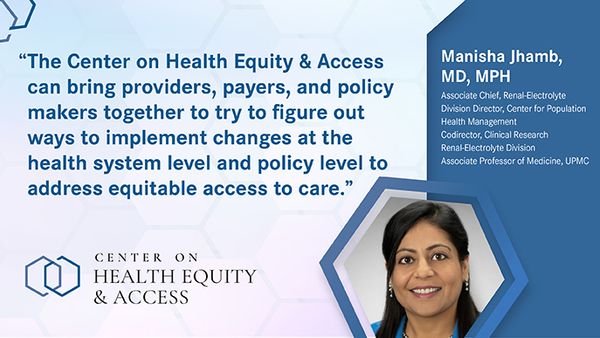
Expert Insights
Hear what thought leaders have to share about the Center on Health Equity & Access.
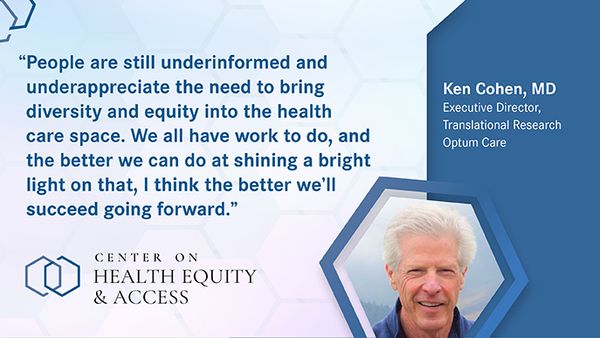
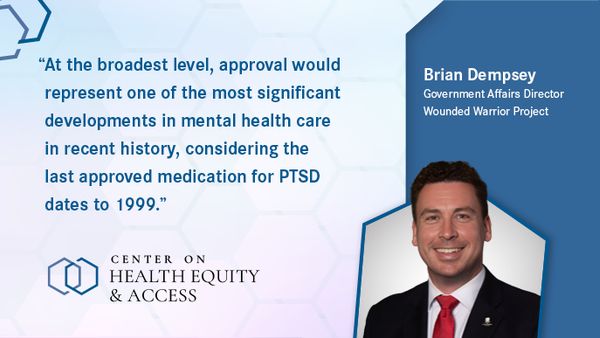
FDA Denies MDMA-Assisted Therapy Despite Promising Trial Results
Leaders respond to the complete response letter issued by the FDA, seeking answers and calling for more progress to aid the veteran community and others experiencing PTSD. Learn more with the full article from AJMC®!
Latest Videos






Advertisement
More News

Rising gun deaths and injuries call for safety measures and research; rise in cases linked to summer travel, gatherings, and emerging variants; a facility will become the largest life sciences investment in North Carolina history

Shining the Spotlight on Queer Joy and Resilience in LGBTQ+ Youth
Published: | Updated:
In our fourth Pride Month podcast episode, we are speaking with Domenico Ruggerio, executive director of We Are Family, in Charleston, South Carolina, the state's oldest nonprofit to provide life-affirming and life-saving programs for lesbian, gay, bisexual, transgender, queer, plus (LGBTQ+) youth.

With an effective therapy available for treating postpartum depression, Rachel Dalthorp, MD, believes health care providers need to focus on educating patients and helping them navigate the health system so zuranolone can reach those who need it.

This week, the Center on Health Equity & Access featured expert perspectives on sickle cell disease, obesity, psychological safety, LGBTQ+ health, and postpartum depression.

The University Hospitals CINEMA program aims to address issues and narrow gaps in obesity management, with a focus on meeting patients where they are and providing them tools for success, says Ian Neeland, MD.

As health care leaders, it’s our responsibility to know the importance of psychological safety and actively promote an environment that supports emotional and mental well-being, no matter one’s position or background, notes Carolyn Tandy of Humana.
"As a health care provider and as a psychiatrist, it's something that I think about first—instead of step therapy, when I have a patient with postpartum depression, this is what they need to be on," Rachel Dalthorp, MD, explains.

June 19 is marked as World Sickle Cell Awareness Day, granting the opportunity to reflect on the current state of treatment, access, equity, and more that impacts patients living with sickle cell disease.
For the third episode in our special Pride Month series, we speak with Patrick McGovern, CEO of Callen-Lorde since August of 2023 and an outspoken advocate for HIV; lesbian, gay, bisexual, transgender, queer, plus (LGBTQ+); and community health.


It’s important for clinicians to listen to patients and know how heart disease may affect women differently than men, said Kathryn Lindley, MD, FACC, Vanderbilt University Medical Center.
The Center on Health Equity & Access shares the latest news, research, and expert insights on developments related to health disparities, gaps in care, and initiatives to address them.

At an Institute for Value-Based Medicine® (IVBM) event cohosted by The American Journal of Managed Care® and Sutter Health, experts illuminated the current state of cardiometabolic health care and offered a glimpse into the future.

Kheir Mugwaneza, the lead project manager of the Immigrant and Refugee Health Program at Allegheny Health Network, discusses how the program is working to address gaps in care for this community.

Ali Khawar, principal deputy assistant secretary with the Employee Benefits Security Administration (EBSA), US Department of Labor, explains how the Mental Health Parity and Addiction Equity Act (MHPAEA) aims to address the mental health crisis in the US.

Data from this new study suggest that tailoring induction therapy for acute myeloid leukemia (AML) based on cytarabine pharmacogenomic 10–single-nucleotide variant score could better treatment for these young patients, particularly those who are Black.

The authors explore the economic impact and accessibility challenges of new Alzheimer disease drugs under the Inflation Reduction Act, with emphasis on Medicare, pricing, and health care equity.

On this episode of Managed Care Cast, an expert from the University of Minnesota discusses the lack of consideration academic medical centers have for equity when developing governance for AI technologies.

New estimations show a historic increase in health spending last year, which is projected to account for 19.7% of the gross domestic product by 2032.

People experiencing homelessness face significant barriers to health care access, leading to higher rates of hypertension even among those with health insurance.

During the CMS Health Equity Conference, health care leaders shared groundbreaking strategies to integrate health equity into value-based care models, aiming to enhance patient outcomes and reduce costs.

Continuing with our Pride Month podcast series, in this episode we speak with Perry Halkitis, PhD, MS, MPH, dean of the Rutgers School of Public Health, and James F. Dougherty, VMD, MS, current member of Rutgers' Board of Governors.

There is widespread interest in understanding the role of health care in meeting social needs. This study examines community-wide activities, resources, and information technology used to manage social care.
This study evaluated whether limited English proficiency modifies the association between cardiovascular risk factors or cardiovascular disease and outcomes in patients hospitalized with COVID-19.
This week, the Center on Health Equity and Access covered the release of the best US hospitals for equitable access, news from the CMS Health Equity conference, biomarker testing legislation, and insights on improving access for queer communities and the disparities in dermatology.
Advertisement
Advertisement
Trending on AJMC
1
Delayed Dupilumab Raises Asthma Costs 32%: Nicola Hanania, MD
2
Regorafenib Prescribing in Advanced GIST Deviates From Guidelines
3
A Patient-Centered Reconstruction of 340B in Oncology: Transparency, Equity, and Site-of-Care Accountability
4
FDA Expands Finerenone Approval to CKD Associated With Type 1 Diabetes
5