




Center on Health Equity & Access
Latest News
Advertisement
Expert Insights
Hear what thought leaders have to share about the Center on Health Equity & Access.
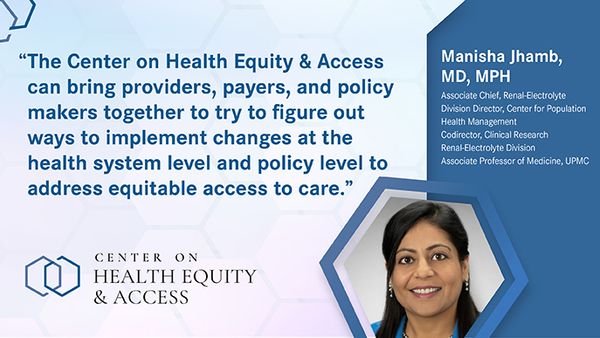
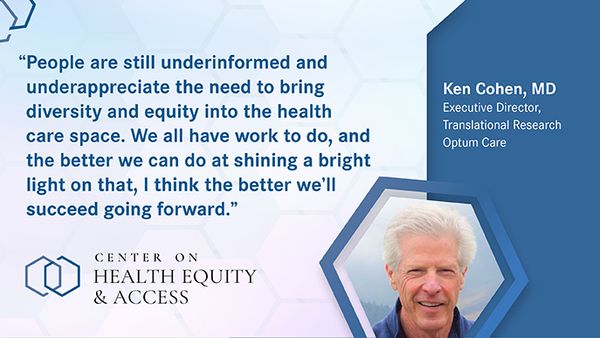
Expert Insights
Hear what thought leaders have to share about the Center on Health Equity & Access.
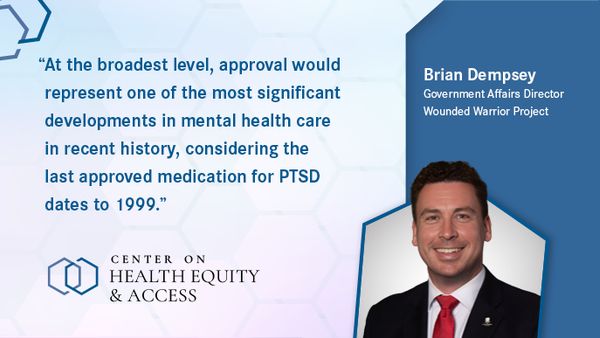
FDA Denies MDMA-Assisted Therapy Despite Promising Trial Results
Leaders respond to the complete response letter issued by the FDA, seeking answers and calling for more progress to aid the veteran community and others experiencing PTSD. Learn more with the full article from AJMC®!
Latest Videos








Advertisement
More News

This interview accompanies the fourth podcast in our National Recovery Month series with Amy Herschell, PhD, associate vice president, Program Implementation and Evaluation, Community Care Behavioral Health Organization, part of the UPMC Insurance Services Division, and Jessica Meyers, MSEd, senior advisor for implementation, UPMC Center for High-Value Health Care.

Andrew Leitner, MD, of City of Hope, discusses the challenges of integrating supportive care into cancer treatment and proposes solutions to improve access for patients from underserved communities.

The South Asian Healthcare Leadership Forum marked its 10th anniversary with a gathering of over 100 prominent physicians, policy makers, and executives at Brigham and Women’s Hospital.

Catalyst for Payment Reform (CPR) explores stakeholder perspectives in Florida, Michigan, and Nevada, revealing both the challenges and opportunities states face in reforming health care pricing structures.

The House of Representatives unanimously passed the bipartisan Seniors’ Access to Critical Medications Act (HR 5526), which would reverse CMS restrictions on mail delivery of cancer medications to Medicare beneficiaries.

Linda Bosserman, MD, PhD, FASCO, FACP, of City of Hope, emphasizes the need for a sustainable health care system that balances cost with care so patients can achieve the best survival and quality of life after a cancer diagnosis.

A poster presented at the Skin of Color Update reported that hidradenitis suppurativa (HS) disproportionately affects Black patients, women, smokers, and those with public insurance or disabilities.

A RAND study explores innovative approaches to alleviate stress, enhance mental health support, and address financial challenges faced by caregivers of military and veteran populations.

Boarding times in the emergency department (ED) have risen nationally, but the implications for health equity have remained understudied. This study investigated whether prolonged ED boarding contributed to perceived racial discrimination and dissatisfaction with care.

Medicaid coverage was able to help some people lower their blood pressure according to a new study.

September is National Recovery Month, and we are bringing you another limited-edition month-long podcast series with our Strategic Alliance Partner, UPMC Health Plan. In our fourth episode, we speak with Amy Herschell, PhD, and Jessica Meyers, MSEd.

"As CMMI continues to test new equity adjustments, it is important that changes be grounded in scientific principles with extensive testing and validation to ensure the tightest linkage to social needs and health outcomes for underserved communities across the entire US," authors wrote.

The Center on Health Equity & Access covers news spanning health policy, politics, and clinical research, while featuring interviews with expert insights.

Domestic and international financial challenges in maternity care highlight the need for payment reforms to reduce out-of-pocket costs and better protect pregnant women from financial strain.

The author discusses a program to prevent kidney decline and progression to dialysis by offering education, support services, and help navigating the health care system to those most at risk.

Rachel Dalthorp, MD, discusses how zuranolone (Zurzuvae) can improve postpartum depression when compared with previous treatment approaches.
On this episode of Managed Care Cast, we're talking with the author of a study published in the September 2024 issue of The American Journal of Managed Care® that explored the factors consumers consider essential for an adequate provider network.

The US health care system is underperforming despite high spending, and reform is needed in areas like insurance coverage, primary care, and equity to improve overall health outcomes and efficiency.
Chris Barton, LCSW, of Horizon Blue Cross Blue Shield of New Jersey, explores how the Youth Behavioral Health Strategy program focuses on addressing the specific needs of youth with mental health and substance use issues through a comprehensive approach.

The principal goal of therapies for multiple myeloma, which remains incurable, is to extend progression-free survival, but challenges remain bringing chimeric antigen receptor T-cell therapy to the world, explains Leland Metheny, MD, lead investigator for the phase 1 BAFF CAR T clinical trial, University Hospitals Seidman Cancer Center.

Valerie M. Harvey, MD, MPH, FAAD, founder of the Hampton Roads Center for Dermatology, highlighted the long-standing underrepresentation of minority populations in dermatology clinical trials at the Skin of Color Update 2024 in New York City on Friday.

The presidential debate showed the candidates’ differing views on women's health care, an area of medicine that currently faces issues related to patient care and outcomes as well as barriers to access.
From the presidential debate, ongoing conferences, and health care deserts in rural America, the Center on Health Equity & Access covers the latest news on population health, managed care, and health policy.

Experts at the Skin of Color Update today in New York City highlighted recent FDA-approved dermatological treatments and emphasized the importance of clinical trial diversity.

The National Comprehensive Cancer Network Policy Summit emphasized the importance of integrating diversity, equity, and inclusion into the oncology workforce to improve cancer care outcomes and address disparities while navigating legal and societal challenges.
Advertisement
Advertisement
Trending on AJMC
1
Delayed Dupilumab Raises Asthma Costs 32%: Nicola Hanania, MD
2
Regorafenib Prescribing in Advanced GIST Deviates From Guidelines
3
FDA Expands Finerenone Approval to CKD Associated With Type 1 Diabetes
4
Secondary T-Cell Cancers After CAR T: Rare, Real, and Worth Watching
5