





Center on Health Equity & Access
Latest News
Advertisement
Expert Insights
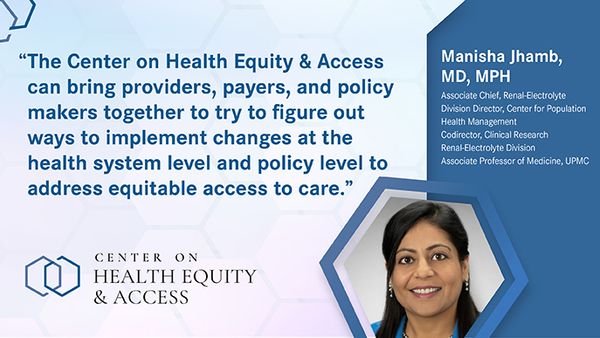
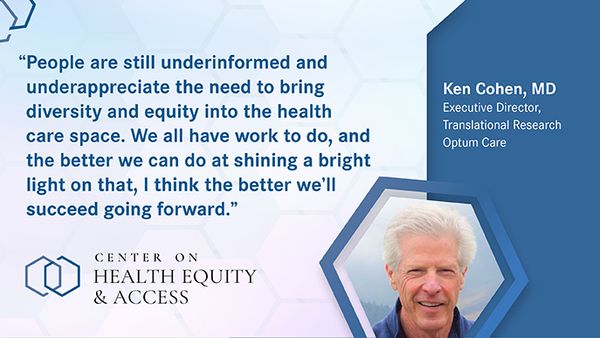
Hear what thought leaders have to share about the Center on Health Equity & Access.
Expert Insights
Hear what thought leaders have to share about the Center on Health Equity & Access.
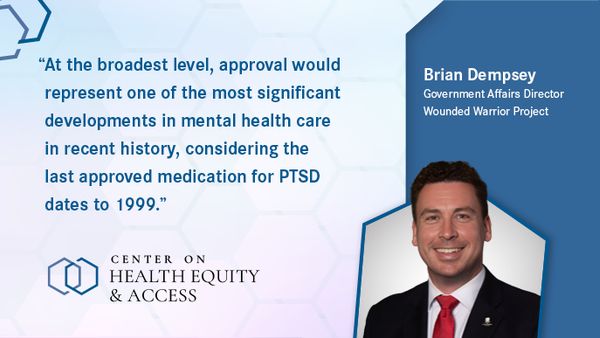
FDA Denies MDMA-Assisted Therapy Despite Promising Trial Results
Leaders respond to the complete response letter issued by the FDA, seeking answers and calling for more progress to aid the veteran community and others experiencing PTSD. Learn more with the full article from AJMC®!
Latest Videos






Advertisement
More News

Chinese adults with a poor socioeconomic status are at a higher risk of developing chronic obstructive pulmonary disease (COPD).

Decoding Rebates: Study Highlights Need for Further Research into Drug Pricing, Employer PBM Choices
In the second part of our interview with John M. O'Brien, PharmD, MPH, of the National Pharmaceutical Council (NPC), he calls for further research into employer choices and the influence of benefit consultants in the pharmacy benefit manager (PBM) and drug rebate landscape.

In part 1 of this interview, Musarrat Perveen, regional coordinator at Coordination of Action Research on AIDS and Mobility in Asia (CARAM Asia), explained the research she presented at the 25th International AIDS Conference and the disparities migrant workers continue to encounter in HIV care.

Accessia Health works with advocacy groups to understand specific needs, such as travel assistance, affordable care, and diagnostic testing, ensuring a personalized and human-centered approach to health equity.

Over 60 bipartisan members of Congress wrote a letter to President Joe Biden stating the urgent need to address the suicide epidemic among veterans, advocating for innovative treatments like therapeutic MDMA.

Minnesota Gov. Tim Walz has been named as Vice President Kamala Harris' Democratic running mate for the 2024 presidential election and has a proven track record in health care reform.

The growing list of insurers dropping coverage for costly GLP-1 weight loss drugs leaves patients to bear even higher out-of-pocket expenses while still struggling to meet their goals.
John M. O'Brien, PharmD, MPH, of the National Pharmaceutical Council, discusses his recent study, which sheds light on how important rebates are when choosing benefits for employers and who advises employers on these choices.

Ochsner Health's Connected Maternity Online Monitoring (MOM) program has been recognized for its innovative approach in managing hypertension during pregnancy and postpartum.

Aravindhan Veerapandiyan, MD, of the Division of Pediatric Neurology at the University of Arkansas for Medical Sciences, discussed the Duchenne muscular dystrophy (DMD) therapy landscape and barriers to treatment access.
We spoke with Musarrat Perveen, regional coordinator at Coordination of Action Research on AIDS and Mobility in Asia (CARAM Asia), who advocates at regional and global levels for policy reform of discriminatory practices that put migrant workers at risk of HIV and AIDS.

Almost half of insured Americans report receiving unexpected medical bills, leading to financial strain and contributing to worsening health outcomes for many patients, The Commonwealth Fund report reveals.

The Center on Health Equity & Access reported on new research in youth mental health, with expert perspectives on HIV, liver cancer, and health outreach.
Trusted community organizations can effectively communicate and connect underserved populations to necessary health services, Tiara Green, MSEd, Accessia Health says in an interview.

This research presented at AIDS 2024 shows that cognitive behavioral therapy (CBT) groups help to fill an unmet need among older persons living with HIV: to overcome the age-related health disparities this group experiences from being in long-term care and improve their health outcomes.

Amit Singal, MD, medical director of the Liver Tumor Program and chief of hepatology at UT Southwestern Medical Center, discusses his research on disparities in hepatocellular carcinoma care in the US.

Those in minority groups face barriers even after they’ve made the hard decision to seek mental health care. The Department of Labor aims to address systemic issues on a personal level.

Roughly 7% of US women of reproductive age have attempted self-induced abortions after the overturning of Roe v Wade in 2022; the FDA announced that the cost to file a drug using clinical data will increase to about $4.3 million in 2025; the suicide rate among US children aged between 8 to 12 years has steadily risen during the past 15 years.

Smokers with diabetes on Ozempic are less likely to receive smoking cessation interventions; initiative incentivizes hospitals to eliminate medical debt for low- and middle-income patients; high costs prevent mental health treatment.

Suicide has emerged as the leading cause of death among Asian American and Pacific Islander (AAPI) youths, a demographic that is rapidly growing in the United States.

Post–hematopoietic cell transplantation (HCT) prophylaxis using cyclophosphamide to stave off graft-vs-host disease had positive results compared with calcineurin inhibitor–based prophylaxis, regardless of whether the patient had a matched or unmatched donor.
This week, the Center on Health Equity & Access delved into the state of equity as it relates to national spending, ovarian cancer care, health technology, insurance coverage, and postpartum depression.
The ending of the 2023 film “Barbie,” where she sees a gynecologist, has increased online search interest in gynecology; yesterday marked 34 years of the Americans With Disabilities Act (ADA); Texas Attorney General Ken Paxton is suing the Biden administration over Title X, a federal contraception program that provides teens birth control without parental consent.
Health care inequity is costing the United States billions of dollars without providing quality outcomes for patients with rare and chronic diseases, Tiara Green, MSEd, president of Accessia Health, tells The American Journal of Managed Care.

In part 2 of our interview, Diane Mahoney, PhD, DNP, FNP-BC, WHNP-BC, APRN, advocates for a multidisciplinary, community-centered approach to reduce ovarian cancer care disparities and stresses the need for ongoing exploration of social, biological, and environmental factors affecting health outcomes.
Advertisement
Advertisement
Trending on AJMC
1
Delayed Dupilumab Raises Asthma Costs 32%: Nicola Hanania, MD
2
Regorafenib Prescribing in Advanced GIST Deviates From Guidelines
3
A Patient-Centered Reconstruction of 340B in Oncology: Transparency, Equity, and Site-of-Care Accountability
4
FDA Expands Finerenone Approval to CKD Associated With Type 1 Diabetes
5