



Center on Health Equity & Access
Latest News

Enhancing Health Equity: The Importance of LGBTQ+ Data Collection in Health Care
By Kyle Munz

What We’re Reading: Native American Health Care Ruling; e-Cigarette Ban Reversal; Health Care Workforce Crisis
By AJMC Staff
Advertisement
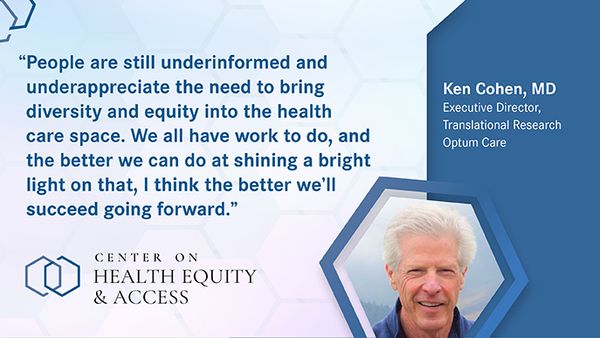
Expert Insights
Hear what thought leaders have to share about the Center on Health Equity & Access.
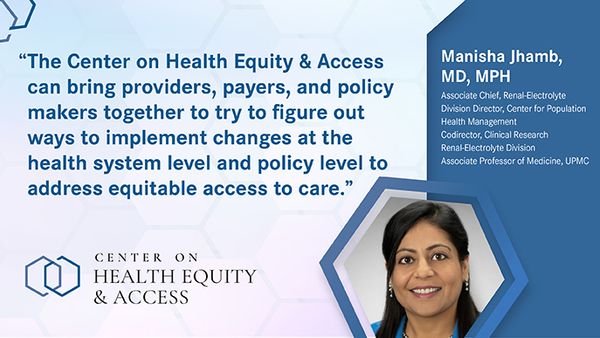
Expert Insights
Hear what thought leaders have to share about the Center on Health Equity & Access.
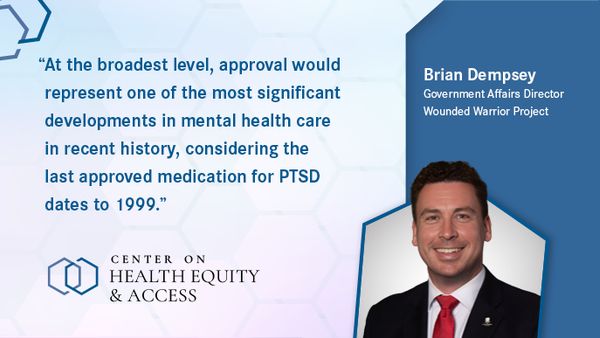
FDA Denies MDMA-Assisted Therapy Despite Promising Trial Results
Leaders respond to the complete response letter issued by the FDA, seeking answers and calling for more progress to aid the veteran community and others experiencing PTSD. Learn more with the full article from AJMC®!
Latest Videos




Advertisement
More News

Thomas Hall, MD, FAAD, of US Dermatology Partners, explains that disparities in dermatological care arise from the uneven distribution of dermatologists, especially in rural areas, causing delayed diagnoses and higher health care costs.

Chief Health Equity Officer and Senior Vice President Aletha Maybank, MD, MPH, of the American Medical Association (AMA), delivered a powerful plenary session at the CMS Health Equity conference exploring the changes sparked by pivotal moments within the last 5 years.

When patients are treated in primary care for high blood pressure, sociodemographic factors sway the rates at which they access patient portals, investigators found. This could influence their hypertension outcomes.

Expansion of Medicaid coverage will now include all-in-one mental health and substance use clinics; 61% of adults are estimated to have cardiovascular disease (CVD) by 2050; the FDA has taken a historic step in potential psychedelic drug approval.

An analysis drawing on data from the 2021 Medical Expenditure Panel Survey (MEPS) highlights that a significant portion of telehealth visits were for mental health services despite the overall telehealth utilization being relatively low.

For June and Pride Month, we are bringing you our newest limited-edition podcast series. In this first episode, we speak with Lancaster, Pennsylvania, native and president of Lancaster Pride, Tiffany Shirley.

Attendees packed a session on multicancer early detection (MCED) on the first day of the 2024 American Society of Clinical Oncology annual meeting.

This week, the Center on Health Equity and Access covers news related to AI integration, disparities in pediatric hospitalizations, new advancements presented at the 2024 CMS Health Equity Conference, and an expert discussion on the cardiovascular field.

There are effective strategies that can be employed concurrently to promote adherence to medications for schizophrenia, including but not limited to pharmacological, technological, and psychosocial interventions.

Data presented at the recent American Thoracic Society 2024 international conference identified the top barriers to lung cancer screening in Asian Americans, and common risk factors among this population.

Ronesh Sinha, MD, attributes the rising rates of heart disease to sedentary lifestyles, stress, and health inequities, while advocating for digital health solutions to improve preventive care.

Presenters from CMS and the CDC explored the importance of standardizing health equity data collection at the 2024 CMS Health Equity Conference.

Black children with asthma are disproportionately exposed to asthma triggers and access barriers, according to one study.

This study identifies limited engagement with equity among academic medical centers as they develop governance processes for artificial intelligence (AI)/machine learning and predictive technologies.
This editorial discusses positions for academic medical centers to consider when designing and implementing artificial intelligence (AI) tools.

What We’re Reading: Clinical Trial Diversity; Nicotine-Like Vape Chemicals; Weight-Loss Drug Tracker
Despite diversity enrollment goals, clinical trials funded by the National Institutes of Health (NIH) often enroll fewer patients among underrepresented racial groups; nicotine alternatives used in vapes may be more potent and addictive than nicotine itself; telehealth company Ro built a drug supply tracker to help patients find available doses of GLP-1 drugs.

In this episode of Managed Care Cast, Nihar Desai, MD, MPH, cardiologist and vice chief of Cardiology at the Yale School of Medicine, discusses therapies for cardiovascular conditions as they relate to patient adherence, polypharmacy, and health access.

A US study found that a commercially available artificial intelligence (AI) algorithm for breast cancer screening produced more false-positives in Black patients and people with denser breasts, highlighting the importance of diverse datasets in training AI algorithms to reduce health care disparities.
Scientists are worried that fertilized hen eggs remain the main ingredient for the H5N1 bird flu vaccine; an increased risk of preterm delivery and stillbirth exists in the US due to the worsening climate; health care executives are discussing whether they should bring in outside consultants or hire more employees in preparation for cyberattacks.

Among the many topics discussed at the American Thoracic Society 2024 International Conference (ATS 2024), the majority touched on barriers to health equity and access, regardless of the key focus of each talk or study. Experts examined this within the field, emphasizing the importance of enhancing data diversity, modernizing diagnostic tools, and revising regulatory standards to promote equitable health outcomes for diverse populations.

According to data from HHS' Office of Minority Health, Asian Americans are 60% less likely to utilize mental health services, even though 16.8% of those in the community experience mental illness.
The Center on Health Equity & Access offered novel insights on transgender health and pulmonary medicine with late-breaking data and expert interviews from the American Thoracic Society annual meeting.
HHS officials are moving forward with a plan to produce 4.8 million doses of H5N1 avian flu vaccine; Novo Nordisk’s long-acting insulin had a greater risk of excessively lowering patients’ blood sugar without offering better sugar level management; Los Angeles County launched an ambitious effort to tackle medical debt.

The data refute the rapid-onset gender dysphoria hypothesis by showing that the initially higher depressive symptoms reported by youths transitioning from cisgender to transgender or gender diverse were not significant after accounting for exposure to LGBT violence, the researchers wrote.

In a scientific session at the American Thoracic Society (ATS) 2024 International Conference titled "An Inconvenient Truth: Health Disparities and Health Care Inequality in Respiratory Medicine," a number of experts discussed the various areas within the field that are impacted by disparities.
Advertisement
Advertisement
Trending on AJMC
1
Delayed Dupilumab Raises Asthma Costs 32%: Nicola Hanania, MD
2
Regorafenib Prescribing in Advanced GIST Deviates From Guidelines
3
A Patient-Centered Reconstruction of 340B in Oncology: Transparency, Equity, and Site-of-Care Accountability
4
FDA Expands Finerenone Approval to CKD Associated With Type 1 Diabetes
5