



Center on Health Equity & Access
Latest News
Advertisement
Expert Insights
Hear what thought leaders have to share about the Center on Health Equity & Access.
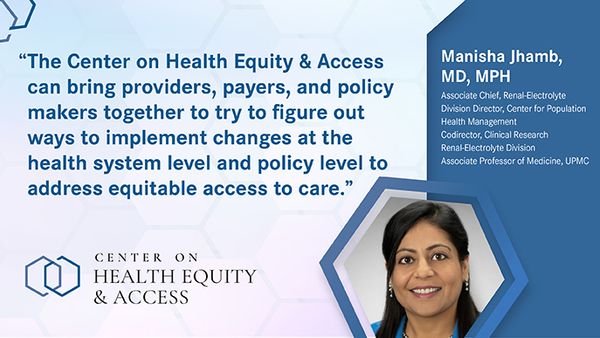
Expert Insights
Hear what thought leaders have to share about the Center on Health Equity & Access.
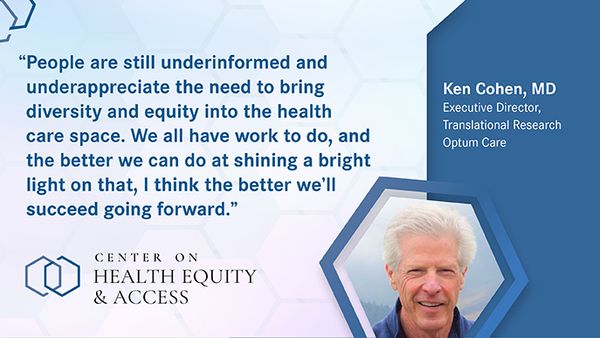
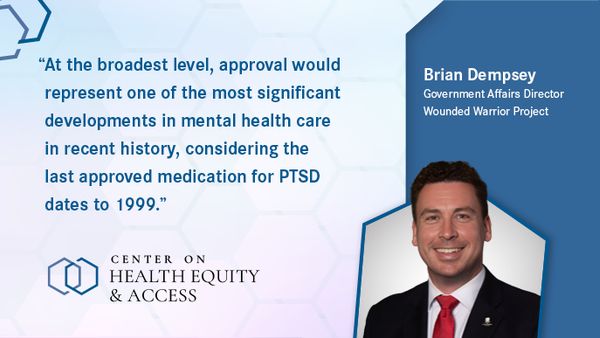
FDA Denies MDMA-Assisted Therapy Despite Promising Trial Results
Leaders respond to the complete response letter issued by the FDA, seeking answers and calling for more progress to aid the veteran community and others experiencing PTSD. Learn more with the full article from AJMC®!
Latest Videos





Advertisement
More News

In addition to sharing research related to disparities and inequities in the cardiometabolic space, Rashon Lane, PhD, MA, Sutter Health, discussed “how we might need to think differently about how we are intervening on disparities.”

With the high burden of metabolic disease increasing in the US, Sophia Humphreys, PharmD, Sutter Health, explains how this impacts health equity.

At the Academy of Managed Care Pharmacy (AMCP) 2024 annual meeting, multiple poster presentations concerned with health equity, data collection, glucagon-like peptide-1 agonists, and more were acknowledged for their originality, relevance, clarity, bias, and quality.

To help celebrate and recognize National Minority Health Month, we are bringing you a special month-long podcast series with our Strategic Alliance Partner, UPMC Health Plan. In the third episode, Camille Clarke-Smith, EdD, MS, CHES, CPT, discusses approaching community health holistically through spiritual and community engagement.

Non-Hispanic Black (NHB) patients with ovarian cancer (OC) receive lower-quality end of life (EOL) care compared to their non-Hispanic White (NHW) counterparts, according to a study.

In an interview during The American Journal of Managed Care®'s Institute for Value-Based Medicine® event, held with Sutter Health, Ryan Stice, PharmD, BCPS, explains the impact virtual population health teams can have on improving access to care for patients with cardiometabolic conditions.

The Center on Health Equity and Access provides the latest developments related to the progress, challenges and gaps in health care with new research, ongoing meetings, and expert insights.

The findings suggest there are ongoing disparities between Black and White patients with hepatocellular carcinoma (HCC) in terms of both outcomes and health care resource utilization.

In this interview, Ronesh Sinha, MD, explains how he's addressing the burden of cardiometabolic disease with the initiation of his continuous glucose monitor program at Sutter Health.
At the Academy of Managed Care Pharmacy (AMCP) 2024 annual meeting, a panel of presenters explored changes coming to Medicare that incorporate social determinants of health (SDOH) data to improve patient and health system outcomes.

Commonwealth Fund Report Details Pervasive Racial and Ethnic Disparities in US Health Care, Outcomes
Using 25 health system performance indicators, the Commonwealth Fund 2024 State Health Disparities Report evaluated racial and ethnic disparities in health care and health outcomes both within and across US states and highlighted the urgent need for equitable health care policies and practices in the US.

Public health campaigns are imperative to alleviating food insecurity, Pat Van Burkleo, executive director of Feeding Louisiana, the Louisiana Food Bank Association, explained in an interview.

While health plans often employ reimbursement rates as a tool to incentivize provider participation within their networks, study results showed reimbursement rates for office visits with medical/surgical clinicians were on average 22% higher than behavioral health clinicians.

Screening completion increased when using sequential automated and personalized strategies for colorectal cancer (CRC) in different demographic groups.

To help celebrate and recognize National Minority Health Month, we are bringing you a special month-long podcast series with our Strategic Alliance Partner, UPMC Health Plan. Welcome to our second episode, in which we learn all about Freedom House 2.0 and the Pathways to Work program.

This week the Center on Health Equity and Access spotlighted National Minority Health Month with the launch of a podcast and feature series. Also, new data on "deaths of despair," medication, and clinical access.

By prioritizing well-being, both the public and private sectors can come together in partnerships to address social needs and social determinants of health.

New research examining treatment initiation patterns among patients with axial spondyloarthritis revealed significant sex-based disparities, shedding light on the process from diagnosis to therapeutic intervention.

This feature series delves into how biases shed light on deeply ingrained stereotypes and prejudices that exist within the structure of US maternal health care, according to experts.

Contrary to previous assumptions, the analysis found that mortality rates from deaths of despair among middle-aged Black Americans exceeded those of their White counterparts in 2022.
Pat Van Burkleo, the executive director of Feeding Louisiana, the Louisiana Food Bank Association, shares insight on legislative priorities and the impact food insecurity can have on health.

Lawmakers are under pressure to decide the fate of COVID-era telehealth payment changes; the CDC reports an alarming increase in sexually transmitted disease (STD) cases among Americans 55 years and older; new regulations aim to reduce harmful exposure to per- and polyfluoroalkyl substances (PFAS), also known as “forever chemicals.”

Analysis of a patient sample enrolled in charitable care at an academic medical center revealed that chronic medications were variably filled at a significant cost.
Advertisement
Advertisement
Trending on AJMC
1
Delayed Dupilumab Raises Asthma Costs 32%: Nicola Hanania, MD
2
Regorafenib Prescribing in Advanced GIST Deviates From Guidelines
3
FDA Expands Finerenone Approval to CKD Associated With Type 1 Diabetes
4
Secondary T-Cell Cancers After CAR T: Rare, Real, and Worth Watching
5