





Promoting health equity isn’t only about consideration of underlying health risks; it’s also about using that data to inform population care as well as give clinicians and their teams more time with the patient in front of them.

Hear what thought leaders have to share about the Center on Health Equity & Access.
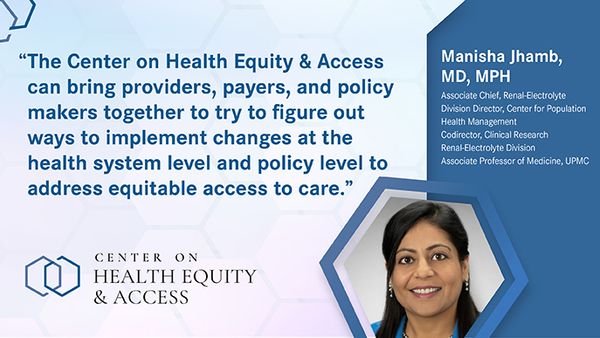
Hear what thought leaders have to share about the Center on Health Equity & Access.
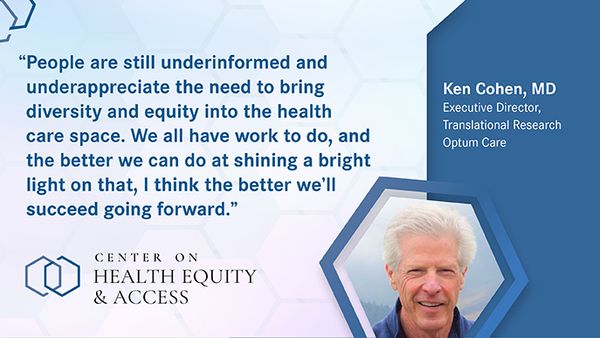
Leaders respond to the complete response letter issued by the FDA, seeking answers and calling for more progress to aid the veteran community and others experiencing PTSD. Learn more with the full article from AJMC®!
Promoting health equity isn’t only about consideration of underlying health risks; it’s also about using that data to inform population care as well as give clinicians and their teams more time with the patient in front of them.

US women in low-income regions are experiencing a steep increase in cervical cancer diagnosis and death despite medical improvements; a Senate committee launches an assisted living examination, its first hearing on the industry in 2 decades; the CDC urges health care providers to be alert for patients who have fever, rashes, an traveled abroad following reports of 23 measles cases since December 1.
A claims-based study analyzing Medicare beneficiaries with multiple myeloma found that racial disparities still impact treatment in this patient population.

A comprehensive report exhibits how in-person, telephone-, and video-based care has trended from 2020-2023 within the US Department of Veterans Affairs health care system.

Melinda Aldrich, PhD, MHE, associate professor in the Vanderbilt University School of Medicine in the division of genetic medicine, discussed her ongoing research aiming to identify the drivers of disparities in lung cancer outcomes in the US.

A recent study found that use of optimal guideline-directed medical therapies after heart failure with reduced ejection fraction (HFrEF) diagnosis is low overall, but especially among female patients compared with male patients.

David Adamson, MD, emphasizes the need for continuous education and building relationships with colleagues to navigate the complexities of reproductive rights and evolving care standards.


The findings demonstrate the critical need for immediate policy reforms to tackle structural racism and promote equitable pediatric care in the US for children regardless of race or ethnicity.
Families with workplace health insurance may have missed out on $125,000 in earnings over the past 3 decades due to rising premiums; so far, there have been about 600 drug price hikes in January; experts worry that minority and low-income people will not have easy access to zuranolone, the first FDA-approved postpartum depression pill.

Sandra Stein, MD, of Banner Health Plans, details how she provides clinical and medical leadership in her role as chief medical officer.
According to Sandra Stein, MD, of Banner Health Plans, the event highlighted the significant influence of social determinants of health on health care costs and outcomes, emphasizing the shift in focus from traditional medical care to addressing crucial factors like housing, food, transportation, and utilities for positive health outcomes.

A US study found alopecia areata (AA) is more common in non-White patients, likely due to underrepresentation in dermatology, leading to less consideration of AA as a diagnosis for non-White individuals.

The Center on Health Equity and Access provides up-to-date news, showcases research advancements, and ongoing initiatives dedicated to tackling healthcare disparities and enhancing overall accessibility to outstanding care.

Michael Gieske, MD, director of lung cancer screening at St. Elizabeth Health Care, speaks to the success of the Rural Appalachian Lung Cancer Screening Initiative, along with challenges to implementing increased lung cancer screening.

Results revealed current cut points may lead to a high false-positive rate, prompting a call for lower thresholds in both language versions to enhance diagnostic accuracy.

Amrish Selvam is a fourth-year medical student at the University of Pittsburgh whose research and career interests lay in ophthalmology and who volunteers with the UPMC Vision Institute’s mobile eye clinic, the eyeVan.
Health insurance enrollment through the Affordable Care Act (ACA) insurance marketplace has broken a record for the third consecutive year; attention-deficit/hyperactivity disorder (ADHD) treatment prescriptions for adults surged during the COVID-19 pandemic, contributing to lingering shortages; paying high rent can shorten your lifespan.

While individual interventions have become popular among employers to enhance workplace well-being, a new study shows interventions may have to take place on an organizational level to be effective.

A social-impact startup, Pittsburgh-based Fabric Health is adept at using community engagement to help members and their families navigate the complex world of health care—meeting customers where they are at, knowing time is often their most valuable resource.

David Adamson, MD, founder and CEO of ARC Fertility, discusses how physicians should consider moral and ethical variations of patients when adhering to professional guidelines in fertility care.

Ed Clarke, MD, of Banner Health weighs in on whether health systems should invest in the social determinants of health.

“These autosomal diseases, from an inheritance standpoint, affect men and women equally, but because of their impact on the gynecological system and menses, women are often affected much more than men," hematologist Donna DiMichele, MD, explains.
COVID-19 subvariant JN.1 accounts for about 62% of US cases, resulting in mask mandates being reinstated in cities across the United States; sugary drink sales fell dramatically across 5 US cities after implementing taxes on them; it is difficult for Special Supplement Nutrition Program for Women and Children (WIC) participants to find approved items.