





Despite there being a great demand for data collection on sexual orientation and gender identity in the cancer space, individuals who identify as a sexual and gender minority remain poorly represented.
Hear what thought leaders have to share about the Center on Health Equity & Access.
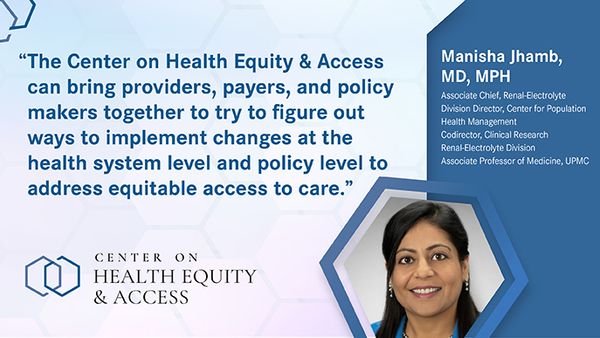
Hear what thought leaders have to share about the Center on Health Equity & Access.
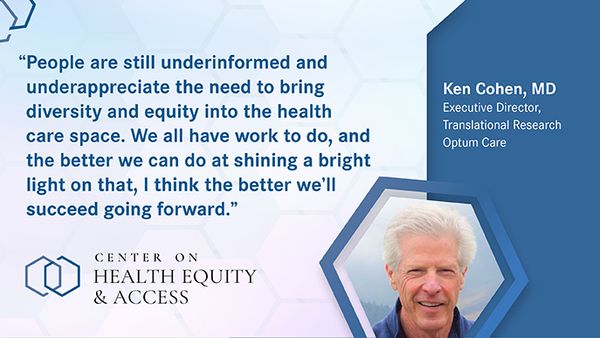
Leaders respond to the complete response letter issued by the FDA, seeking answers and calling for more progress to aid the veteran community and others experiencing PTSD. Learn more with the full article from AJMC®!
Despite there being a great demand for data collection on sexual orientation and gender identity in the cancer space, individuals who identify as a sexual and gender minority remain poorly represented.

Spanning 22 studies, the analysis illuminated housing disparities, occupational hazards, unequal health care access, economic inequality, and discriminatory industry practices and how they collectively contribute to heightened lung cancer risks.

Disparities in 10-year local recurrence following breast-conserving surgery were seen among women with ductal carcinoma in situ (DCIS) treated over a nearly 4-decade span at Memorial Sloan Kettering Cancer Center, with Black women having the highest rate.

Data analysis showed that 40% of patients who filled a prescription for Wegovy in 2021 or 2022 were still taking it a year later; both Democrats and reproductive rights organizations are pressuring the Biden administration to ensure health insurers fully cover contraception; CMS implemented Medicare changes in March that limited access to blood tests that help transplant recipients ensure their organs remain healthy.

A trio of speakers addressed the importance of social determinants of health (SDOH) in cancer care on day 1 of the 46th annual San Antonio Breast Cancer Symposium in the session, “Social Determinants of Health: Impact on Cancer Care.”

The Obesity Action Coalition and other organizations are urging the FDA to address critical gaps in drug testing, emphasizing the need for specific testing in individuals with obesity to ensure safety and efficacy, as current practices expose this population to unnecessary risks.

The initiative emphasizes equal partnerships between research institutions and community organizations.

The Center on Health Equity and Access highlights the most recent updates in the realm of health equity, including news, research findings, and initiatives focused on mitigating health care disparities and enhancing overall access to quality care.

Researchers found that core oncology services were less likely to be available at hospitals serving racial and ethnic minority groups compared with other hospitals in the United States.

Alvaro Pascual-Leone, MD, PhD, addresses the role of the gene variant APOE4 in Alzheimer disease and dementia, noting its influence on risk factors and the significance of early diagnosis for effective intervention across all racial groups.

Safety-net programs need to not only be budgeted for but also aimed at the right people to ensure receipt of proper health care.

Health-related quality of life was found to be associated with poverty status through parenting stress in children with sickle cell disease (SCD).

Jeffrey Sippel, MD, MPH, addresses the increasing denial of insurance claims for non-invasive ventilators (NIV) in Medicare Advantage plans, particularly impacting ALS patients, emphasizing the time crunch on patients, and criticizing the financial focus over patients' well-being.

A new study presented at this year’s American College of Allergy, Asthma and Immunology Annual Scientific Meeting highlights the need for mental health support in patients with atopic dermatitis (AD).

Geri Landman, MD, MPH, cofounder and chair of Moonshots for Unicorns, talks about how the lack of government funding for PGAP3 research led her to take it upon herself to work toward a cure for her daughter.
Jeffrey Sippel, MD, MPH, discusses the trend of insurance claim denials related to non-invasive ventilators for patients with ALS.

Patients with diverse skin types can experience diagnostic delays, access to care issues, and quality-of-life burdens that a navigator program may be able to help alleviate.

In this interview with The American Journal of Managed Care®, Katie Queen, MD, addresses the complexity of obesity as a medical condition, pivoting to virtual care while ensuring that patients who lived in a rural location continued to receive adequate care, and the importance of integrating awareness of obesity and chronic disease prevention into local food culture.

The Center on Health Equity and Access spotlights the latest health equity news, research, and initiatives to reduce health care disparities and improve access to care.
Due to the frequent rejection of claims for noninvasive ventilators by Medicare Advantage plans, individuals with amyotrophic lateral sclerosis (ALS) are experiencing disproportionately high rates of hospital admissions.

Patients with chronic obstructive pulmonary disease (COPD) who were from minority ethnic backgrounds were found to have lower adherence to treatment interventions compared with the general population.

New research highlights racial disparities in hemophilia care, revealing that Black and Hispanic patients are significantly less likely to receive immune tolerance induction treatment compared with White patients, even after considering clinical factors.
Amal Trivedi, MD, MPH, professor at Brown University, discusses the qualities that led him to nominate David J. Meyers, PhD, to receive the Seema S. Sonnad Emerging Leader in Managed Care Research Award. The American Journal of Managed Care® presented the award to Dr Meyers at the 2023 Patient-Centered Oncology Care® meeting.

The strongest associations between diabetes and colorectal cancer risk were observed in participants with a recent diabetes diagnosis and those who had not undergone recent colonoscopy, underscoring the significance of cancer screening.

“The silencing of Black cancer patient voices impacted patients’ health care utilization and had implications for their physical health,” the authors wrote.