



Jonathan Silverberg, MD, PhD, MPH, of George Washington University School of Medicine and Health Sciences, explains the benefits of using Janus kinase (JAK) inhibitors to treat patients with atopic dermatitis (AD).
Hear what thought leaders have to share about the Center on Health Equity & Access.
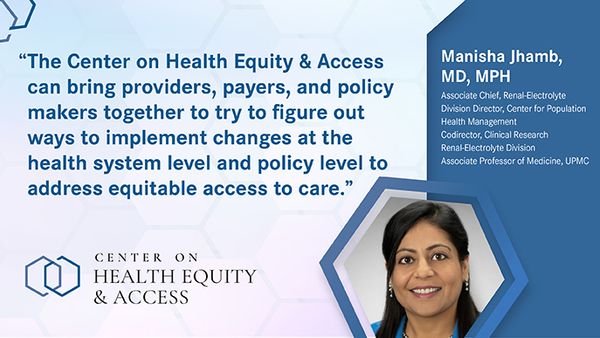
Hear what thought leaders have to share about the Center on Health Equity & Access.
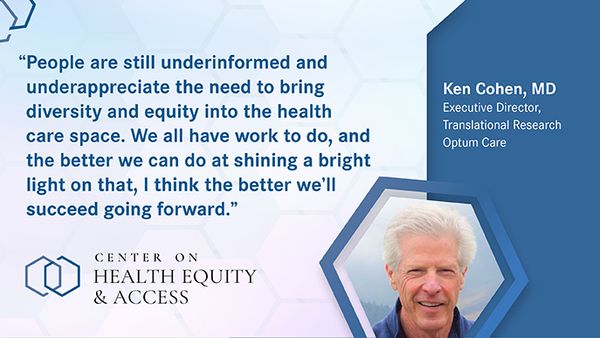
Leaders respond to the complete response letter issued by the FDA, seeking answers and calling for more progress to aid the veteran community and others experiencing PTSD. Learn more with the full article from AJMC®!
Jonathan Silverberg, MD, PhD, MPH, of George Washington University School of Medicine and Health Sciences, explains the benefits of using Janus kinase (JAK) inhibitors to treat patients with atopic dermatitis (AD).

Outcomes between 2 patients groups affected by uncontrolled type 2 diabetes and food insecurity were compared for change in hemoglobin A1C after 1 year of participation.

Amy Laughlin, MD, MSHP, of Orlando Health commented on at-home cancer care costs and shared her predictions on how at-home cancer care will evolve.

Drugmakers are expected to increase prices on more than 500 drugs early this month; the FDA approved nearly 50% more novel drugs in 2023 than in 2022; the number of Americans who were not pregnant and wanted abortion pills increased by nearly 10 times after the Supreme Court’s 2022 Roe v Wade decision leaked.

The most popular content from our Asembia coverage largely covered biosimilars.

This year’s top content from the annual San Antonino Breast Cancer Symposium (SABCS) is concentrated in 3 areas: health equity, benign breast disease, and fertility preservation following diagnosis.

In the wake of the 2023 American Society of Hematology Annual Meeting and Exposition, Raymond Thertulien, MD, PhD, of Novant Health, and Joseph Mikhael, MD, MEd, FRCPC, FACP, chief medical officer of the International Myeloma Foundation, discussed health equity research highlights from the meeting and drivers of racial disparities in multiple myeloma outcomes.

The top articles of 2023 addressed key issues such as representation gaps in aRCC research, concerns about the 340B program's impact on asthma disparities, slow adoption of equity innovations, potential biases in type 2 diabetes risk models, and addressing disparities in psoriasis treatment based on race and culture.

Employers, recognized as pivotal contributors to health equity, are urged to prioritize equitable benefits, address the complexity of health plans, and engage in education, data-driven interventions, and systematic measurements to comprehensively improve outcomes for diverse employee populations.
As many as 116 million patients were impacted by large health data breaches this year; grassroots groups have begun leading the push to re-enroll patients denied Medicare coverage for bureaucratic reasons; a nationwide shortage of primary care clinicians is causing more distrust in the health care system.

In September, The American Journal of Managed Care® joined 4 individuals whose involvement with UPMC Health Plan, a Strategic Alliance Partner of AJMC®, has proved to be instrumental in furthering health equity and providing high-quality care in Pennsylvania, Ohio, West Virginia, and Maryland.

At this year’s Community Oncology Alliance Payer Exchange Summit on Oncology Payment Reform, leaders from across all facets of the cancer care space engaged in thought-provoking panel discussions and debates. They have a common aim: to optimize cancer care delivery and ensure patients have a positive experience throughout their cancer care journey.

“Unfortunately, limited access to these therapies worldwide appears to be a major challenge,” the researchers wrote.

Coverage from The US Oncology Network Payer Transformation Summit, held September 27-29, 2023, in Atlanta, Georgia.
Coverage from The US Oncology Network Payer Transformation Summit, held September 27-29, 2023, in Atlanta, Georgia.
Coverage from The US Oncology Network Payer Transformation Summit, held September 27-29, 2023, in Atlanta, Georgia.

Peter Katzmarzyk discusses contributing factors to obesity and the chronic disease preventions and implementations collaborative care teams like nutritionists, psychologists, and physical therapists should support.

A new survey from the National Alliance of Healthcare Purchaser Coalitions found that employers are planning to place a larger focus on obesity management, women’s health, and health equity in 2024 and beyond.

These findings suggest that addressing socioeconomic disparities and inequities that impact access to health care and services may help improve survival outcomes across racial/ethnic groups of male patients with early breast cancer.

David Fajgenbaum, MD, MBA, MSc, cofounder of Every Cure, shared that the organization is able to reduce clinical trial costs to $1 to $5 million per drug trial, and that clinical trials are not always necessary to expand a drug's indication.

The Center on Health Equity and Access offers updates on recent news, breakthroughs in research, and ongoing initiatives aimed at tackling health care disparities and enhancing overall access to top-notch care.

"From a health benefit standpoint, specifically, the employees have to be able to access care, they have to be able to afford the care that they are going to receive, and the benefits also have to be relevant to employees," Bruce Sherman, MD explains.

Robert Groves, MD, of Banner | Aetna discusses the challenges primary care practitioners (PCPs) face when addressing social determinants of health (SDOH).

The results indicated that a substantial proportion of patients, particularly in rural, less educated, and elderly demographics, are insufficiently informed about novel MM treatments, including chimeric antigen receptor (CAR) T-cell therapies and bispecific antibody alternatives.
The rate of invasive pneumococcal disease in children plummeted by 72% from 2002 to 2021; health care spending in the United States rose 4.1% in 2022 to $4.5 trillion; roughly two-thirds of Americans who have a mental health condition were unable to access treatment in 2021 despite having health insurance.