



Center on Health Equity & Access
Latest News
Advertisement
Expert Insights
Hear what thought leaders have to share about the Center on Health Equity & Access.
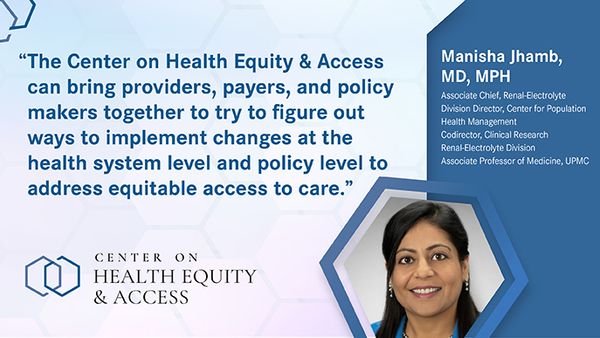
Expert Insights
Hear what thought leaders have to share about the Center on Health Equity & Access.
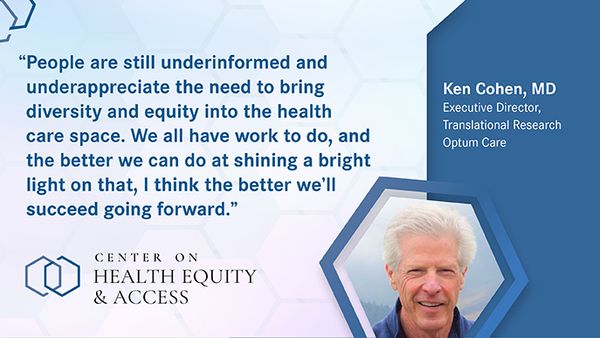
FDA Denies MDMA-Assisted Therapy Despite Promising Trial Results
Leaders respond to the complete response letter issued by the FDA, seeking answers and calling for more progress to aid the veteran community and others experiencing PTSD. Learn more with the full article from AJMC®!
Latest Videos







Advertisement
More News

At our recent Institute for Value-Based Medicine® event hosted with NYU Langone Health, Brita Roy, MD, MPH, MHS, spoke on improving cancer health outcomes through community-clinical partnerships.

Latest data from the CDC shows signs that the number of sexually transmitted infections (STIs) is declining.

Researchers found significant differences in ovarian cancer survival among Asian American subgroups, emphasizing the importance of analyzing these groups separately.

There are significant financial and psychological burdens of abortion care in the US, especially for those traveling out of state due to local restrictions in the increasingly restrictive post-Dobbs landscape.

In this clip from our interview with Oscar B. Lahoud, MD, cochair of our Institute for Value-Based Medicine® evening hosted with NYU Langone Health, he addressed medical mistrust in underrepresented communities.

Care delivery innovations to help patients with cancer avoid emergency department visits are underused. The authors interviewed English- and Spanish-preferring patients at 2 diverse health systems to understand why.
Emergency department (ED) visits and hospitalizations for ambulatory care–sensitive conditions (ACSCs) among Medicaid patients constitute almost 40% of all ED visits and hospitalizations, with lower rates observed in areas with greater proximity to urgent care facilities and density of rural health clinics.

The US government is tackling veteran homelessness through housing programs. A recent study found that temporary financial assistance (TFA) through the Supportive Services for Veteran Families (SSVF) program is associated with positive health effects and lower health care costs.
The health policy implications and ballot measures in the wake of the presidential election, new trends in physician compensation, lessons from the Medicaid unwinding, disparities in cancer mortality, and privately negotiated hospital fees.

The Quadruple Aim—a framework originally rooted in improving patient experience, enhancing population health, and achieving cost savings—has evolved to include a fourth dimension: provider well-being.

Researchers introduce a telemedicine system powered by artificial intelligence (AI) that automatically scores neuromuscular examinations, offering the potential to enhance patient monitoring, reduce variability in clinical trials, and improve access to care for neuromuscular disorders like myasthenia gravis.

Low- and high-income countries had significant disparities in screening for colorectal cancer (CRC) due to limited access to screening and treatment in low-income countries.

Medicaid and CHIP enrollment surged from 71 million in February 2020 to 94 million by April 2023. However, with the pandemic emergency ending in May 2023, states resumed eligibility reviews, initiating a process termed “unwinding.”

Bonnie Qin, PhD, assistant professor at Rutgers Cancer institute, discusses factors that may influence adherence to dietary guidelines and improve survival for Black women with ovarian cancer.

The future of hemophilia care lies not only in technological advancements but also in the pursuit of health equity, ensuring that all patients have access to effective, affordable treatments.

Former President Donald J. Trump’s return to the White House portends a significant shakeup of health policy.
Bonnie Qin, PhD, of Rutgers Cancer Institute, emphasizes that moderate improvements in prediagnosis dietary quality can significantly enhance survival rates among Black women diagnosed with high-grade serous ovarian cancer.

Researchers identified discrepancies between standard geographic market definitions and actual patient travel patterns, emphasizing the need for more accurate metrics to evaluate health care access and provider competition.

Combining a digital intervention with health behavior counseling improved weight trajectories and lowered obesity risk in racially and ethnically diverse children over 24 months.

Despite an overall decline in cancer-specific mortality, death rates from certain cancer types are rising among Asian American and Pacific Islander populations.

As presidential candidates Kamala Harris and Donald Trump diverge on health care reform paths, contrasting futures hinge on the outcome of the presidential election.

Being married and having insurance can offer emotional support and financial stability to lead to early diagnosis and effective treatment, the authors found.
This week’s Center on Health Equity & Access highlights emphasize the role of social determinants of health in policy-making and underscore the importance of addressing rising costs and challenges employers face.

The COVID-19 pandemic required an evolution of traditional nursing practices, but the unpredictability led to increased stress, burnout, and job dissatisfaction.

As health care costs escalate, a new survey reveals that 74% of employers are grappling with the impact on employee wages and benefits, with many anticipating further cost-shifting to their workforce.
Advertisement
Advertisement
Trending on AJMC
1
Delayed Dupilumab Raises Asthma Costs 32%: Nicola Hanania, MD
2
Regorafenib Prescribing in Advanced GIST Deviates From Guidelines
3
FDA Expands Finerenone Approval to CKD Associated With Type 1 Diabetes
4
Secondary T-Cell Cancers After CAR T: Rare, Real, and Worth Watching
5