






Center on Health Equity & Access
Latest News
Advertisement
Expert Insights
Hear what thought leaders have to share about the Center on Health Equity & Access.
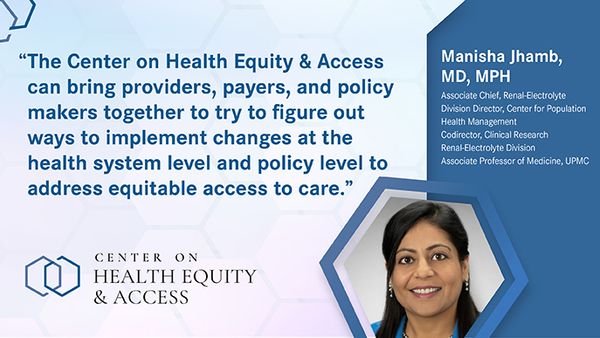
Expert Insights
Hear what thought leaders have to share about the Center on Health Equity & Access.
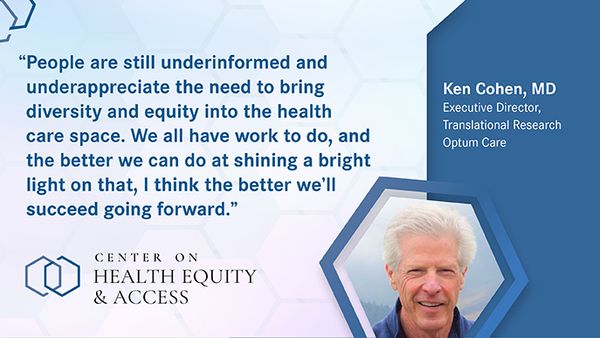
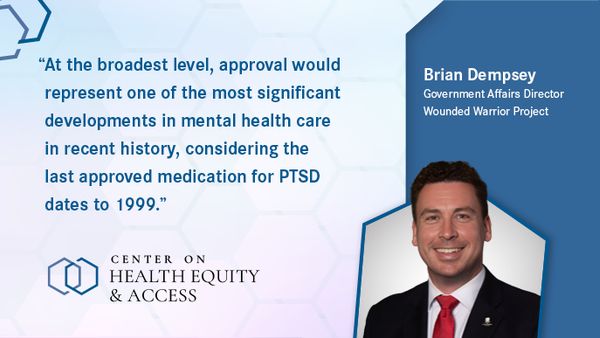
FDA Denies MDMA-Assisted Therapy Despite Promising Trial Results
Leaders respond to the complete response letter issued by the FDA, seeking answers and calling for more progress to aid the veteran community and others experiencing PTSD. Learn more with the full article from AJMC®!
Latest Videos








Advertisement
More News

Some populations face significant disparities in accessing lung cancer screening facilities, with American Indian/Alaska Native (AI/AN)-majority and rural census tracts facing the greatest travel distances.

New research examines how ethnicity impacts colorectal cancer diagnosis, early-onset colorectal cancer (CRC) prevalence, and stage at diagnosis.

In the second half of our interview with Brita Roy, MD, MPH, MHS, NYU Grossman School of Medicine, she discusses effective engagement of minoritized populations in discussion of medical mistrust.

Latine individuals in the US face higher morbidity and mortality in skin cancer outcomes despite lower lifetime risk.

ACA enrollment rate hits a milestone, though IRA subsidies may not extend beyond 2025; network adequacy standards fail to translate into efficient access to mental health care for Medicaid enrollees; research examines racial disparities in postpartum hypertension and vaccine uptake.

The increased urgency for vasectomy follow-through among men post-Dobbs aligns with previous administrative data indicating a rise in vasectomy procedure volumes after the decision.

Outcomes and care related to stroke in London, United Kingdom, were notably different based on ethnicity, with major inequalities persisting.

Mistrust in health care, concerns over safety, and ineffective communication surrounding vaccines were among the themes explaining hesitation in vaccines for Black women in the United States.

Acts of discrimination, including subtle microaggressions, during pregnancy and childbirth contribute to higher maternal mortality rates, especially among Black women, and are linked to increased postpartum blood pressure, highlighting the need for improved health care interventions and racial equity in maternity care.

Trend tracking and harm reduction policies may help alleviate the high rate of overdose deaths in the US, according to one study.

Record numbers have enrolled in Affordable Care Act (ACA) coverage as open enrollment continues through January 15, 2025.

Study highlights barriers to care, treatment preferences, and interest in research participation in psoriasis in the Latine community.

Quantitative Medicaid managed care network adequacy standards were not associated with improved mental health (MH) care access among adults and those with MH conditions.

Robin Glasco, MBA, Spencer Stuart, examines the crucial role of data in addressing urgent challenges in health care while inherent and systemic biases coexist, complicating efforts to achieve equity.

Acknowledging the disparity in pulse oximetry implicates a $2 billion industry that has faced stricter regulations in recent years in an attempt to address bias in the development and testing of these devices, the authors stated.

In this second part of our interview with Kasey Bond, MPH, NYU Langone Health, we discuss the contributions of community health workers to increasing clinical trial access and how technology—artificial intelligence (AI), in particular—can help to facilitate the process.

Song Park, MD, University of Washington Medicine, advocates for more user-friendly technology to support equitable skin cancer care access.

The 66th American Society of Hematology (ASH) Annual Meeting & Exposition took place December 7-10, 2024, in San Diego, California; the 2025 meeting is currently scheduled to take place in Orlando, Florida, December 6-9.

The high health care burden faced by individuals with hemophilia underscores the urgent need for innovative treatments and improved diversity in clinical trials.

Sarah Ahmad, MBA, CEO of the Coalition for Affordable Quality Healthcare (CAQH), dives into the financial, physical, and emotional toll of neglecting women's health in an interview.

Through interviews and articles infused with expert insight, progress against this cancer that develops in the bone marrow was showcased.

The approval of concizumab-mtci (Alhemo) injection marks a significant milestone in managing hemophilia A and B with inhibitors by preventing or reducing bleeding episodes in adults and children 12 years and older.

Racial and ethnic disparities are found among Asian individuals as they experience the highest lifetime incidence of alopecia areata, and Black individuals face a disproportionately higher risk of anxiety disorders associated with the condition.

Ryan Nguyen, DO, physician and researcher at the University of Illinois Chicago, emphasizes the transformative impact of immunotherapy in non–small cell lung cancer (NSCLC) and the need for precise biomarkers and equitable access to advanced treatments through systemic testing protocols.

The 2024 American Urological Association (AUA) annual meeting in San Antonio strongly emphasized diversity, equity, and inclusion, as well as innovations in robotic surgery and research methodologies.
Advertisement
Advertisement
Trending on AJMC
1
Delayed Dupilumab Raises Asthma Costs 32%: Nicola Hanania, MD
2
Regorafenib Prescribing in Advanced GIST Deviates From Guidelines
3
FDA Expands Finerenone Approval to CKD Associated With Type 1 Diabetes
4
Secondary T-Cell Cancers After CAR T: Rare, Real, and Worth Watching
5