






Black children with sickle cell disease (SCD) face a disproportionate burden of social determinants of health (SDOH), the study found.
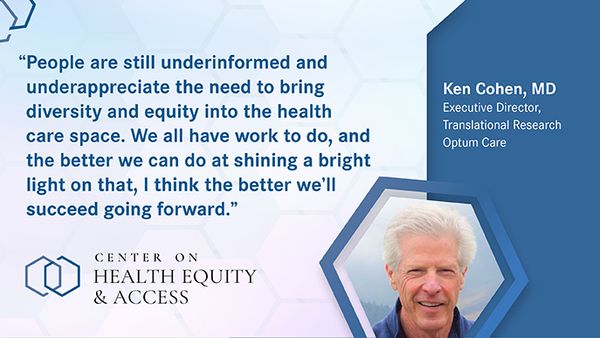
Hear what thought leaders have to share about the Center on Health Equity & Access.
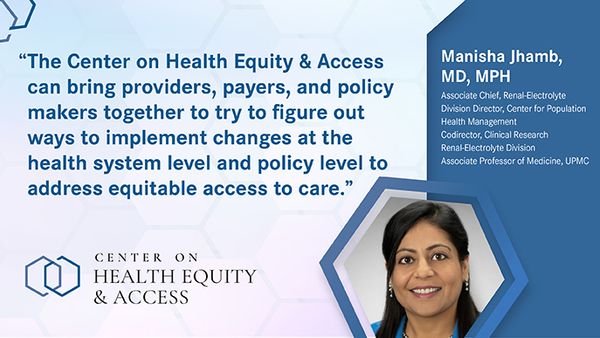
Hear what thought leaders have to share about the Center on Health Equity & Access.
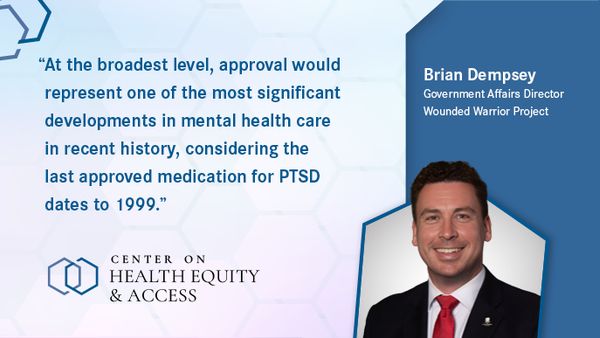
Leaders respond to the complete response letter issued by the FDA, seeking answers and calling for more progress to aid the veteran community and others experiencing PTSD. Learn more with the full article from AJMC®!
Black children with sickle cell disease (SCD) face a disproportionate burden of social determinants of health (SDOH), the study found.

Medication formulary policies represent a key determinant of access to medication and can be leveraged to advance pharmacoequity and health equity writ large.

This small study showed that individuals who used an app designed specifically for smokers ambivalent about quitting used the app more often and exhibited greater changes in behavior compared with those using a similar nontailored app.

Investigators stress the importance of ongoing research on the association between depression and pain in patients with sickle cell disease (SCD).
The rare autoimmune disorder generalized myasthenia gravis can cause muscle weakness in the limbs and face.

Improving culturally responsive care and practicing cultural humility can help health care providers deliver equitable care for all patients living with multiple myeloma (MM).

Judite Blanc, PhD, University of Miami Miller School of Medicine, discusses how total sleep needs vary among ages and the consequences of these changing hourly totals.

Researchers discovered age, race, and ethnicity representation disparities in patients taking part in research on advanced renal cell carcinoma (aRCC), further exemplifying how certain groups are underrepresented in clinical studies.

Speakers elaborated on health care delivery and regulatory policy posters presented at the 2023 American Society of Clinical Oncology (ASCO) Annual Meeting. This article will appear in the ASCO recap edition of Evidence-Based Oncology.

Maternal mortality remains "unacceptably" high across all racial and ethnic groups in the US, but disproportionately affects American Indian and Alaska Native and Black individuals, according to a new study.

Unless all populations are represented adequately in trials, it will be hard to know if a drug works the same in all populations as it does in one specific one, explained Robert Dellavalle, MD, PhD, MSPH, of University of Colorado School of Medicine and Rocky Mountain Regional VA Medical Center.

The Center on Health Equity and Access spotlights the latest health equity news, research, and initiatives to reduce health care disparities and improve access to care.

Medicare will negotiate drug prices directly with companies; medical leaders react to the Supreme Court ruling on affirmative action; the European Commission (EC) announces deals with Pfizer and select European companies to reserve space to manufacture vaccines for future health emergencies.

Andrew Bolibol, a PhD candidate in Harvard University’s Health Policy Program, highlights trends and gaps in health insurance coverage between LGBT and non-LGBT adults.

Nationwide bans on transition-related health care could have negative implications for the overall health of transgender youth.

Interpreting spirometry with race-specific reference equations led to a lower Lung Allocation Score (LAS) for Black patients and higher LAS among White patients, which could potentially contribute to racially biased allocation of lung transplants.

Three accountable care organizations (ACOs) received recognition for their efforts by the National Association of ACOs (NAACOS), which named them this year’s Leaders in Quality Excellence.

A new artificial intelligence (AI) model may improve patient diagnosis and care among specialized epilepsy centers in underserved areas.

Health disparities likely exist in youth epilepsy but few studies have focused on these disparities.

Black veterans continue to encounter benefits disparities; health workers feel capable of handling future surges after the pandemic; the COVAX initiative aims to redirect remaining vaccine spending

Latina women at risk of hereditary breast and ovarian cancer are less likely to be referred for genetic counseling and testing.

Matthew Mansh, MD, FAAD, discusses inequities faced by transgender and gender-diverse patient populations.

A panel of experts at the American Society of Clinical Oncology Annual Meeting presented the latest research and equity considerations for chimeric antigen receptor (CAR) T-cell therapy in hematological cancers.

New estimates predict that type 2 diabetes prevalence will more than double in the next 30 years, from 529 million people in 2021 to at least 1.3 billion in 2050.

The US federal government is finally updating its standards for reporting data on race and ethnicity – and it’s an urgently needed chance to enable a national overview of crucial data on health inequities