






Clinical
Latest News
Advertisement
Latest Videos



CME Content


Advertisement
More News

Syma Iqbal, MD, provides insights pertaining to various types of upper GI cancers, as well as primary characteristics and risk factors for these diseases.

Leptin merely correlated with body mass index, the study found.
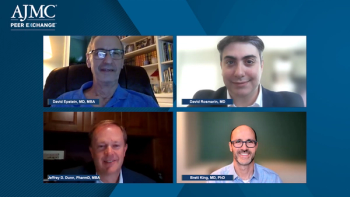
Dr King presents interleukin-15, a non-JAK inhibitor therapy option for the treatment of vitiligo.
Safety considerations, particularly surrounding JAK inhibitors in vitiligo treatment, are emphasized by the panelists.
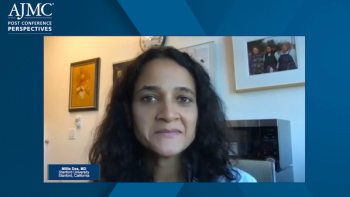
Millie Das, MD, shares key takeaways from her presentation regarding cost-effective strategies and payer considerations related to the treatment of NSCLC.

Patients in the highest risk category had a 65% chance of recurrence of their perihilar cholangiocarcinoma (PHCC) within 1 year, this new study has found.

Overall, 65% of patients went into remission throughout the observation period, with those with concurrent eczema and pollen food syndrome (PFS) having favorable responses.

The CDC this week noted what providers and parents have been seeing across the country: rising cases of a non-polio enterovirus causing severe respiratory illness and acute flaccid myelitis (AFM).

An FDA advisory committee recently issued a positive vote for Ferring’s RBX2660, an investigational microbiota-based live biotherapeutic, for its potential in reducing recurrent Clostridioides difficile infection after antibiotic treatment.

Dr Bertram Pitt explains the possibility of combining SGLT2 inhibitors and MRAs when treating CKD and CV, and Paul Sapia, MHA, discusses how payers balance cost of care with disease progression and health disparities.
Dr Jeffrey Feldman discusses finerenone trial data and the role that it and SGLT2 inhibitors have played in patients with CKD.

The topline results showed the phase 3 trial met both the primary endpoint and all secondary endpoints.
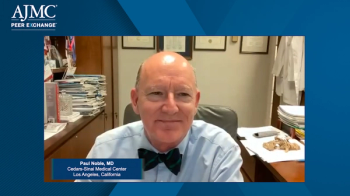
Dr Noble discusses recent ATS guidelines regarding the use of pirfenidone in ILD.
ILD treatment options approved by the FDA are explored by Dr Noble, MD.

Key opinion leaders discuss the impact MDS can have on the quality of life for patients compared with other hematologic disease states.
A panel of experts open a discussion on the expanding awareness of myelodysplastic syndromes (MDS).

There has been a sea change in how retina specialists treat retinal diseases, with a progressive shift toward more utilization of anti–vascular endothelial growth factor (VEGF), said Paul Hahn, MD, vitreoretinal surgeon at NJRetina.

A recent review details strategies for mitigating the risks faced by pregnant patients with hemophilia or von Willebrand disease and their children.

This review describes the impact of nonmedical switching of biologic therapies on US patients and providers, with a focus on switching to in-class alternatives.

When converting a patient to a biosimilar, having clear and consistent messaging will reduce confusion and prevent patients from having a lack of trust in the process, said Paul Forsberg, PharmD, director of pharmacy, Minnesota Oncology.

However, patient-reported scores were not significantly better in the tocilizumab group.

A small study suggests that comprehensive genomic profiling can help with clinical decision-making and predicting clinical outcomes in advanced biliary tract cancer, but further research is needed.

Despite some differences in the frequency of dermoscopic features between basal cell carcinoma (BCC) and benign skin tumors, dermoscopy alone is not sufficient for a reliable diagnosis, according to a recent study.

Genomic testing can benefit patients with chronic kidney disease (CKD) as more causative genes are identified and evidence for clinical utility is discovered.

The rare condition can easily be confused with hepatocellular carcinoma, but immunohistochemical studies can help accurately diagnose intrahepatic sarcomatoid cholangiocarcinoma.
Advertisement
Advertisement
Trending on AJMC
1
TrumpRx Launch Brings Savings—and Uncertainty
2
How Do GLP-1 Agonists Fit Into Stroke Care?
3
Addressing Disparities at Every Step of the Stroke Care Pathway: Luke Messac, MD, PhD
4
Aligning Treatment Goals in IgA Nephropathy: Applying KDIGO’s Dual-Pathway Framework to Clinical Decision-Making
5