



Clinical
Latest News

Advertisement
Latest Videos





CME Content


Advertisement
More News

Participants in a digital acute musculoskeletal (MSK) program experienced better pain and function outcomes vs nonparticipants, demonstrating benefits for acute and subacute MSK conditions.

The study is one of the first to analyze the negative impact of particulate matter and the use of biomass fuel on lung function for young adults in lower–middle income countries.

Researchers of this new study found that treatment with venetoclax may be able to restore activation and proliferation of these cells, suggesting their plasticity can be leveraged for autologous T-cell–based treatments.

Few data exist on how right ventricular fractional area change (RVFAC) may contribute to outcomes among patients hospitalized for heart failure, so that potential relationship was investigated in this new study from Japan.
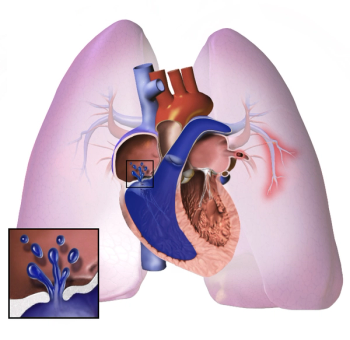
Researchers have found that patients who have idiopathic pulmonary arterial hypertension (IPAH) with a phenotype characterized by a smoking history and low diffusion capacity for carbon monoxide had little in common with patients with classical IPAH.

The oncology space has seen successful adoption of biosimilars thanks to processes and formulary decisions driving conversion rates.

Successful comprehensive genomic profiling of tissue samples among patients with lung cancer was more likely to occur when samples were extracted via resections vs fluid cytology, biopsy, or fine-needle aspirations.

A recent study found that older age, male sex, residence in a long-term care home, and chronic kidney disease were shared predictors of increased mortality for patients hospitalized with influenza, respiratory syncytial virus, or SARS-CoV-2.

Although the autoimmune response that reduces β cell numbers has often been the focus of research in type 1 diabetes (T1D), findings from a new study suggest proinflammatory signaling in islet β cells may play a significant role in disease progression.

Researchers have found that resistance to the BCL2 inhibitor was driven by methylation and epigenetic silencing of PUMA.

Dr Sabari highlights typical outcomes for patients with NSCLC vs KRAS G12C-mutated NSCLC, as well as challenges associated with targeted treatments.

Martin Dietrich, MD, PhD, explains what KRAS G12C mutations in NSCLC are and how common they are within the NSCLC landscape.

Knowing that insulin requirements vary widely among persons who have type 1 diabetes, 3-month effectiveness of the Omnipod 5 Automated Insulin Delivery System was evaluated across 6 daily insulin doses.

Drs Podesta and Brixner discuss possible ways to improve access to PDTs for every party involved—patient, payer, and provider.

Two medical experts relay their ideas on how to better improve the payer-provider relationship surrounding PDT use.

Daniel Culver, DO, details how COVID-19 has impacted the treatment of ILD.
Kristin Highland, MD, and Ryan Haumschild, PharmD, MS, MBA, compare management tools to self-regulation for the best ILD treatment outcome, as well as patient access to nintedanib, pirfenidone, and tocilizumab through special pharmacies.

A majority of patients with moderate or severe atopic dermatitis (AD) reported moderate-to-high negative impacts on quality of life.

New data show the types of malignancies, such as leukemias and myeloproliferative disorders, that are most common in children with Langerhans cell histiocytosis (LCH).
Hypomethylating Agents Can Produce Long Remission of MPNs but May Contribute to Morbidity, Mortality
Hypomethylating agents are a widely used treatment option in acute myeloid leukemia secondary to myeloproliferative neoplasms (MPNs), but careful monitoring of thromboembolic risk is needed for optimal outcomes.

Simplified treatments and patient-specific and systemic interventions can reduce nonadherence in patients.

A narrative review shows that diagnosing systemic lupus erythematosus (SLE) requires physicians to keep an open and inquisitive mind.

Publishing their findings on the earliest treated infants to date, the researchers detailed the outcomes of 2 patients treated with nusinersen in their first week of life after receiving a spinal muscular atrophy (SMA) prenatal diagnosis.

Investigators note that the most recent systemic lupus erythematosus (SLE) classification system has quickly become the gold standard, but disease classification remains challenging.

Real-world patients often differ from those eligible for clinical trials, and comparing results in both populations is a key step in fine-tuning treatment strategies for multiple myeloma.
Advertisement
Advertisement
Trending on AJMC
1
TrumpRx Launch Brings Savings—and Uncertainty
2
How Do GLP-1 Agonists Fit Into Stroke Care?
3
5 Things to Know About the Oral GLP-1 Era
4
Aligning Treatment Goals in IgA Nephropathy: Applying KDIGO’s Dual-Pathway Framework to Clinical Decision-Making
5