




Clinical
Latest News
Advertisement
Latest Videos




Advertisement
More News
The most-read chronic obstructive pulmonary disease (COPD) articles of the year covered use of inhaled corticosteroids, palliative care for advanced COPD, and off-label prescribing of COPD therapies.

With a top treatment recommendation for obese women with polycystic ovary syndrome (PCOS) comprising lifestyle changes via diet changes and physical activity, this study’s investigators evaluated the effects of a ketogenic diet among this patient population.

Robert Rifkin, MD, FACP, a medical oncologist and hematologist at Rocky Mountain Cancer Centers, outlines the importance of studying treatment resistant patients with multiple myeloma.

Researchers found 18 novel and 21 known variants of SMPD1 with disease-causing potential, providing data that may be helpful in prenatal diagnosis of acid sphingomyelinase deficiency in India.
Recent studies show that glucagon-like peptide-1 receptor agonists have anti-inflammatory effects in human and rodent pathological models, making them a potential therapeutic strategy for treating pulmonary arterial hypertension after COVID-19 infection.

Results of a cross-sectional study highlight features linked with high myopia in Dutch individuals.
The top 5 most-read multiple sclerosis articles of 2021 focused on artificial intelligence, sunlight exposure, and COVID-19 risk factors, responses, and guidance for people with multiple sclerosis.
In a year that saw conferences return to in-person venues, the most popular conference coverage on AJMC.com included articles and videos from meetings on oncology, cardiology, dermatology, and more.

David Yeomans, PhD, associate professor of anesthesiology, perioperative, and pain medicine at Stanford University School of Medicine, explains how sodium levels can affect migraine.
An analysis of data on patients with hidradenitis suppurativa and COVID-19 found that biologic use was not associated with worse COVID-19 outcomes in this population.
In 2021, there were some changes to recommendations and an important FDA approval for patients with heart failure or who are at risk of heart disease.
Articles on treating and protecting patients with blood cancers from COVID-19 and the positive results of zanubrutinib to treat leukemia and lymphoma were among the most read of the year.
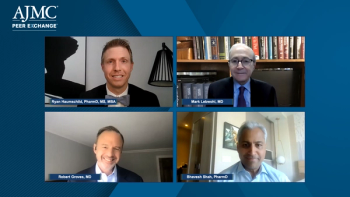
Drs Lebwohl and Groves comment on what they factor in when deciding to switch agents and provide targeted treatments for psoriasis and metabolic syndrome.

Ryan Haumschild, PharmD, MS, MBA discusses the potential to lower total costs through care pathways designed to start patients with plaque psoriasis and metabolic syndrome on treatments that have shown to have better overall outcomes, such as tildrakizumab.
This year's most-read inflammation articles included ones about Janus kinase inhibitors and the impact of biologics or systemic corticosteroids on severe COVID-19.
This year’s most-read articles on Fabry disease touched on advancements in therapy, health risks of the disease, and keys to improved diagnosis.

Data from the GLOW study of minimal residual disease evaluation following chemotherapy for chronic lymphocytic leukemia (CLL) show the kinase inhibitor/B-cell lymphoma-2 inhibitor pair produced superior outcomes compared with the alkylating agent/monoclonal antibody combination.

Results of a meta-analysis and systematic review indicate rosacea is significantly associated with depression and anxiety.

Despite being the seventh adalimumab biosimilar approved in the United States, there are none on the market yet.
Readers were most interested in articles about cost of therapy, drug efficacy, and a unique case related to COVID-19.

Epigenetics has a role in choosing the right medicine in lung cancer, artificial intelligence can predict outcomes in a highly aggressive cancer, and more.

A study of the adult Korean population found high salt intake was associated with an increase in major adverse cardiovascular events (MACE) in patients with rheumatoid arthritis (RA).

Research using data from the ASH Research Collaborative COVID-19 Registry for Hematology identified risk factors for severe infection and mortality for patients with blood cancers who were infected with COVID-19.
Risk factors for more severe COVID-19 and potentially protective factors appear on this year’s list of most-read clinical COVID-19 articles.
This year’s most-read articles on endocrinology posted at AJMC.com were concentrated in 3 areas: hormone therapy, treatment for growth hormone deficiency among pediatric patients, and outcomes among women with polycystic ovary syndrome.
Advertisement
Advertisement
Trending on AJMC
1
TrumpRx Launch Brings Savings—and Uncertainty
2
As Cencora Closes With OneOncology, Patton Says Terms Show “Trust”
3
Benefits, Tradeoffs of Medically Integrated Dispensing in Oncology Care: Katherine Tobon, PharmD, BCOP
4
Asundexian Reduces Risk of Stroke Recurrence in Phase 3 OCEANIC-STROKE Trial
5