






Clinical
Latest News
Advertisement
Latest Videos





Advertisement
More News

New legislation would clarify rules around value-based contracts in Medicaid, and a new model is expanding access to gene therapies, explained Adam Colborn, JD, of AMCP.

US drug shortages have decreased from 323 to 277 as of September 2024, yet many essential drugs remain scarce, with 50% of shortages lasting over 2 years due to ongoing supply and manufacturing issues.

Toby Maher, MD, PhD, discusses the various barriers that frequently hinder patients with idiopathic pulmonary fibrosis (IPF) from receiving appropriate treatment and shares effective strategies he has implemented to overcome these challenges.

Novel evidence has emerged from a 16-year study that hidradenitis suppurativa can elevate risks of not only pregnancy and postpartum complications, but of morbidity—particularly metabolic- and immunology-related morbidity—for mother and child in the long term.

Patients with transfusion-dependent β-thalassemia experienced 14.8 hospitalizations annually, according to the findings.
Despite proven benefits, referrals to pulmonary rehabilitation and palliative care for patients with idiopathic pulmonary fibrosis (IPF) in England remain significantly lower than for other respiratory conditions.

The machine learning model shows promise in detecting paroxysmal nocturnal hemoglobinuria (PNH) by assessing electronic health records (EHR) data, potentially transforming the diagnostic landscape for rare diseases.

The long-term response rate for zanubrutinib was better than ibrutinib in patients with relapsed/refractory chronic lymphocytic leukemia (CLL) and small lymphocytic lymphoma (SLL).

When resistance to or failure of hypomethylating agents (HMAs) occurs in acute myeloid leukemia (AML), depleting a ligase called TOPORS may help.

A panel of industry experts discussed the complexities of biosimilars and interchangeability, emphasizing the challenges in adoption, the need for regulatory and legislative solutions, and the importance of education to combat misinformation.

Therapy selection for younger patients with myeloproliferative neoplasms (MPNs) may be different based on the desire for fertility preservation, but they are also at greater risk of their disease progressing, explained Ruben Mesa, MD, FACP, of Atrium Health.

Research presented at CHEST 2024 examined the effect of steroid choice on individuals who have a dual diagnosis of heart failure and chronic obstructive pulmonary disease (COPD).

In a recent meta-analysis, the prevalence of human papillomavirus (HPV), especially types 16 and 18, was significantly increased among patients with ovarian cancer (OC) vs controls.

With new therapies available to treat early stages of Alzheimer disease, recognizing the symptoms earlier is increasingly important.

Prompt care supports mental well-being, as hidradenitis suppurativa is often associated with depression and anxiety due to its physical and social challenges.

UCB submitted a supplemental biologics license application for bimekuzimab (Bimzelyx) to the FDA in April for the drug’s approval in moderate to severe hidradenitis suppurativa (HS).

The Noninvasive Ventilation Outcomes (NIVO) score is a reliable predictor of intensive care unit (ICU) mortality, 1-year mortality, and NIV failure in patients with acute exacerbations of COPD (AECOPD), offering valuable guidance for personalized patient management.

Global respiratory leaders at the CHEST 2024 annual meeting underscored the ongoing clinical burden of tuberculosis, emphasizing that it remains a significant global health challenge that requires ongoing attention and awareness.

Panelists conclude by highlighting key takeaways in the management of NSCLC.
Panelists discuss how real-world evidence plays a crucial role in shaping both clinical decision-making and coverage policies for HER2-directed therapies in NSCLC, while exploring collaborative strategies between payers, providers, and manufacturers to balance equitable access with cost management.

There are a few unmet needs in schizophrenia that can make a big difference in the prognosis and quality of life of patients.

New research helps explain why a subset of patients with relapsing/remitting multiple sclerosis (MS) experience long-term heart rate slowing after taking fingolimod.

These authors investigated the potential influence of gut microbiota on ankylosing spondylitis pathophysiology.

New phase 3b data reveal significant skin clearance in historically underserved patients with moderate plaque psoriasis, offering hope for improved treatment outcomes.
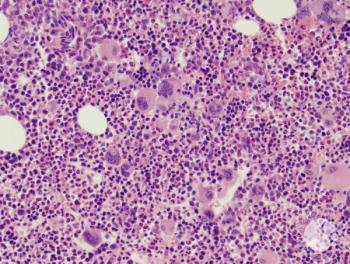
Experts are asking whether the study and treatment of myeloproliferative neoplasms (MPNs) is ready for a new era with new end points, with data that show how survival benefits are biologically linked to changes in the spleen, reduction in fibrosis, or other responses.
Advertisement
Advertisement
Trending on AJMC
1
Coroner Reports Pennsylvania's Sixth Measles-Associated Death
2
CMS Rule Ends Medicaid, CHIP Funding for Pediatric Gender Care
3
Oral JAK Inhibitors Boost Hair Regrowth Odds in Alopecia Areata
4
Panel Calls for Earlier Detection, Clearer Pathways in Rare Glomerular Disease
5