




Health Care Delivery
Latest News
Advertisement
Latest Videos






Advertisement
More News
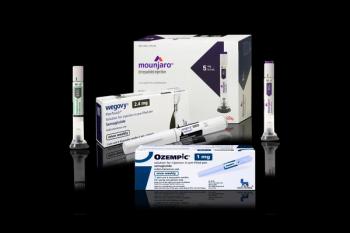
The European Association for the Study of Obesity now recommends the 2 treatments for obesity and most associated complications.

Adverse events related to the immune system tended to accumulate over time when patients used immune checkpoint inhibitors (ICIs) over time.

Programs such as Meds to Bed can work in tandem with retail pharmacies to offer accessible medications for patients.

Timothy W. Cutler, PharmD, associate chief of ambulatory care at UC Davis Health, describes how pharmacy services patients healthy and out of the hospital.

The risk of pneumonia-related hospitalization increased the most for patients using non-TNFi biologics, climbing by 257% compared with controls.

Oncology pharmacists now work alongside providers to improve efficiency, patient education, and treatment outcomes, according to Scott Soefje, PharmD, MBA, BCOP.

Immune gene signatures were linked to illness severity and treatment response in sepsis and other critical conditions.

Emma Guttman-Yassky, MD, PhD, discusses the long-term efficacy of deuruxolitinib in alopecia areata.

Hope Krebill of the Masonic Cancer Alliance at the University of Kansas Medical Center outlines patient navigation models that improve outcomes and reduce missed appointments.

Cardiopulmonary risk is high and persistent across the entire COPD disease course, making early recognition and integrated care crucial.

Research reveals strong connections between muscle strength and cognitive function in patients with COPD, highlighting the potential for rehabilitation strategies.
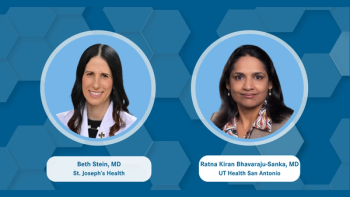
Ratna Kiran Bhavaraju-Sanka, MD, and Beth Stein, MD, explore how understanding MG subtypes and patient characteristics enhances targeted therapy and personalized treatment.

Nerandomilast for idiopathic pulmonary fibrosis potentially improves survival and slows disease progression, explains Justin Oldham, MD, PhD, MS, FIBRONEER steering committee member.

Laxmi Patel urges rural hospitals to align leadership early and build logic models to show how transformation funds can drive access, equity, and sustainability.

Expanding community-based cancer services brings advanced treatments closer to home and addresses social determinants of health, says Kathy Oubre, MS.
Hope Krebill, MSW, BSN, RN, discusses the challenges rural hospitals face in delivering therapies like CAR T and bispecifics.

Integrating these care services can enhance patient QOL and address unmet needs in serious respiratory illnesses, explains Natasha Smallwood, BMedSci, MBBS, MSc, Monash University.

Teamwork between primary care providers and oncologists helps patients get needed care and achieve better results, according to Mark Fendrick, MD, at the Patient-Centered Oncology Care (PCOC) conference.
Kathy Oubre, MS, discusses opportunities for community cancer centers to expand service lines without sacrificing care quality.

Oncology utilization management often frustrates patients and payers, but collaboration and artificial intelligence can streamline processes and improve care quality, according to Vishnukamal Golla, MD, MPH.

The program works by embedding Medbridge’s Pathways platform into Marathon’s MoveWell MSK program and advanced primary care model.

Adherence can lead to better outcomes, higher starts for Medicare Advantage plans, and stronger financial performance.
From proactive recruitment to academic-community partnerships, Hope Krebill highlights ways to improve clinical trial participation.
The availability of retail pharmacies throughout the country have changed the health system in terms of accessibility and treatment, explains Mark Riggle, PharmD.

These patients had a higher spleen-to-liver stiffness ratio than those with alcohol-related liver disease, warranting a closer look at testing.
Advertisement
Advertisement
Trending on AJMC
1
FDA Expands Finerenone Approval to CKD Associated With Type 1 Diabetes
2
Twice-Yearly CD19 Therapy Targets MG Root Cause: Richard Nowak, MD, MS
3
GLP-1 Receptor Agonists Cut Ascites, Mortality in MASH
4
Hepatitis A Vaccine Prevents 96% of Infections Given Before Exposure
5