



Oncology
Latest News
Advertisement
Latest Videos



Advertisement
More News

John Schorge, MD, associate editor of The Green Journal, and Gynecologic Oncologist at Tufts Medical Center, discusses the findings of his study on neoadjuvant chemotherapy treatment of patients with advanced ovarian cancer.

Current standard of care treatment for rectal cancer, which recommends combining surgery with chemotherapy and radiation, fails to prolong survival in patients younger than 50 years of age, according to findings published early online in the journal Cancer.

Ixazomib taken twice weekly with lenalidomide and dexamethasone resulted in high overall response rate (ORR) and a durable response among patients with newly diagnosed multiple myeloma (MM).
Experts at the National Comprehensive Cancer Network Policy Summit discussed the present challenges of transitioning to alternative payment models at a time when the costs of many cancer therapies are rising.

Experts recently proposed 3 steps to promote targeted cancer drugs that yield clinical benefits while reducing overall price growth.
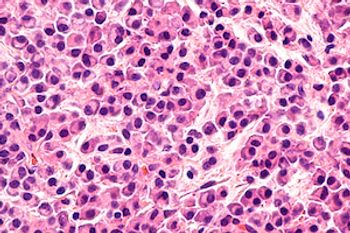
Research presented at the 2018 American Society of Clinical Oncology Annual Meeting identified predictors of long-term survival and health-related quality of life (QoL) in patients with newly diagnosed multiple myeloma (MM).
Peter Paul Yu, MD, FASCO, FACP, physician-in-chief, Hartford HealthCare Cancer Center, discusses the shift toward interoperability among electronic health record systems and efforts needed to accelerate this shift.
The Community Oncology Alliance (COA) has filed a lawsuit in the US District Court for the District of Columbia, stating that the 2% sequester cut to Medicare Part B drug reimbursement is unconstitutional and illegal, and that it can harm patient care and have a huge impact on the communityc ancer care system.

During the first round of screening, a human papillomavirus (HPV) test detected more abnormal cells grade 3 or worse in the cervix than a Papanicolau (Pap) smear, resulting in a lower liklihood of abnormal cells grade 3 or worse at 48 months.

The trial is designed to test chimeric antigen receptor (CAR) T-cell therapy in children and young adults with relapsed/refractory brain and central nervous system (CNS) tumors, wherein the modified CAR T cells will be directly injected at the site of tumor resection or into the ventricular system of the CNS.
Michael Thompson, MD, PhD, FASCO, Aurora Advanced Healthcare, discusses challenges associated with conducting precision medicine trials in the community setting.

A review of studies found that the time from symptom onset to confirmation of diagnosis of multiple myeloma can be significantly reduced. Currently, many patients experience a more than 3-month delay until their diagnosis is confirmed.
Although most practices participating in CMS' Oncology Care Model (OCM) are among the most sophisticated in the country, they've run into challenges and have identified areas for adjustment in the 5-year pilot.

Atezolizumab, in combination with chemotherapy, significantly reduced the risk of disease progression and mortality in patients with metastatic triple-negative breast cancer.
Advertisement
Advertisement
Trending on AJMC
1
5 Things to Know About the One Big Beautiful Bill Act
2
Coroner Reports Pennsylvania's Sixth Measles-Associated Death
3
PBM Reform and Supportive Care Needs: Nicolas Ferreyros
4
Genetic Analysis Links Insomnia Liability to Higher Inflammation Marker
5