Medicaid expansion was associated with lower colorectal cancer mortality, with the largest reductions in Hispanic patients and stage IV disease.
A phase 1 clinical trial specialist, Nancy L. Lewis, MD, MBS, FACP, most recently spent more than a decade at Novartis and was previously a faculty member at Fox Chase Cancer Center and Thomas Jefferson University Hospital.
Her career has taken her from treating patients to developing new medicines for biopharma, and now Nancy L. Lewis, MD, MBS, FACP, is ready for a new role: chief scientific officer (CSO) for the National Comprehensive Cancer Network (NCCN), which announced her appointment on April 9, 2026.
Calling Lewis “the perfect person to oversee the work we do to foster innovation and knowledge discovery that improves the lives of people with cancer,” NCCN CEO Crystal S. Denlinger, MD, said in a statement that the new CSO would be “an important asset to our leadership team as she helps us ensure our research and clinical programs continue to advance outcomes in oncology around the world.”1
According to a statement from NCCN, Lewis holds degrees from Penn State University, Temple University School of Medicine, and Rutgers University. She completed her residency at the University of Rochester and fellowship at Fox Chase Cancer Center, one of NCCN’s founding members. Lewis has been honored by the American Association for Cancer Research, the American Society of Clinical Oncology, and the American Cancer Society. She will join NCCN in May.1
NCCN is best known for its
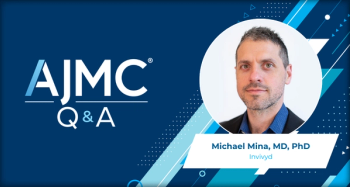
Just days ago, Lewis concluded more than a decade with Novartis, where she was senior clinical program leader after serving many years as an associate professor at Fox Chase and later with Thomas Jefferson University Hospital. A specialist in phase 1 clinical trials, Lewis spoke with The American Journal of Managed Care® about how the move to NCCN “allowed me to bring my career full circle.”
“In the first part of my career, I was taking care of patients in the clinic in the hospital, and I found it to be a pretty humbling experience,” Lewis said. When she could offer a patient the opportunity to join a phase 1 trial, which might provide access to a promising drug, “that was really one of the most rewarding parts of my patient care experience.”
Lewis saw how much work it took to get a new drug from bench to bedside, which prompted her decision to move into industry. “That was a really rewarding part of my career as well. I worked on developing clinical trials. I worked with a huge number of investigators, whether they were bench scientists discovering new drugs, whether they were statisticians that were helping me design the trials, the preclinical safety groups. It was just an amazing experience in terms of understanding just what it took and how many people touch that protocol before it ever got to a patient,” she said.
She is “most passionate” about giving patients access to new therapies, which makes her new role at NCCN so appealing. Lewis looks forward to “working with NCCN to help establish the standard of care based on evidence, and I’m looking forward to working with the patient advocacy groups and the policy makers to ensure that all patients are granted access to these newer drugs.”
Lewis comes to her position at a crucial time. The FDA is taking historic steps to shorten the time and reduce the number of trials needed to gain a drug approval, which could make NCCN’s role more important than ever.2 As one who has seen the clinical trial process from many vantage points—and the difference that access to a trial can make in patients’ lives—Lewis agrees with assessments that the approval process could take less time and cost much less money than it does.
“It takes about 10 to 15 years and about $2 billion to identify a new drug and get it through the clinical trial process. And I would really like to see that streamlined,” she said. “When I look at the amount of expertise and work and time and money that it actually takes for this process to come to fruition, we have to do better. And I think that we’ve got some tools that will enable us to do that in the not-too-distant future.”
Where does artificial intelligence (AI) fit in among the solutions? “It’s going to be an incredible tool for every process of the drug development pathway, from identifying new targets to predicting toxicities, to helping us design clinical trials that will give us appropriate end points to incorporating large, large data sets from the medical record, [such as] genetic registries,” she said. “It’s going to really streamline how we develop drugs and how we interpret the data. So I’m looking forward to this new era, but cautiously.”
References