
Opinion|Videos|June 12, 2024
Clinical Decision-Making for Alzheimer Disease Management
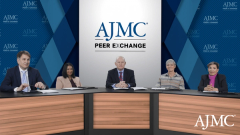
Experts provide their perspectives on clinical factors taken into consideration when deciding on a treatment plan for a patient with Alzheimer disease.
Advertisement
Episodes in this series
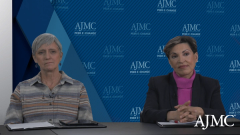
Video content above is prompted by the following question(s):
- When deciding on a treatment plan for a patient with AD, what clinical factors do you take into consideration? (eg, results of testing, time since diagnosis, severity of symptoms, impact on patient/family/caregivers, efficacy, mechanism of action, monitoring requirements)
Advertisement
Related to this article

CRC diagnoses after endoscopic mucosal resection (EMR) were uncommon in a real-world cohort, though racial and ethnic differences remain unclear.

San Francisco experts say earlier IgA nephropathy and FSGS detection depends on primary care education and care coordinators.

The FDA has approved secukinumab for PMR after the REPLENISH trial showed doubled sustained remission and lower steroid use vs a steroid taper alone.
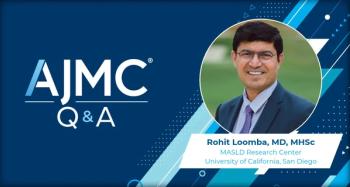
Earlier MASH fibrosis detection is more urgent now that treatments exist, and automating FIB-4 in EHRs could help primary care, says Rohit Loomba, MD.

In this Q&A, Jesús Corral Jaime, MD, discusses real-world CEMI-LUNG data on cemiplimab in advanced NSCLC presented at the ESMO 2026 Congress.

Neladalkib earned accelerated approval for previously treated ALK-positive NSCLC, with ORRs of 49% and 32%.

Non-US-born adults had higher CRC screening nonadherence than US-born adults, particularly those with less than 15 years of US residence.

The once weekly self-injected treatment is the first dual-binding nanobody C5 inhibitor approved for adults with AChR antibody-positive gMG.
Advertisement
Advertisement
Trending on AJMC
1
FDA Approves Oral Giredestrant Regimen for ESR1-Mutated Breast Cancer
2
Hepatitis B Screening Gaps Persist as Functional Cure Option Arrives
3
Complicated UTI Care Strained by Unclear Goals, Access Gaps
4
IgA Nephropathy, FSGS Care Needs Coordinators, Not Just New Drugs
5