
Opinion|Videos|December 29, 2025
First- and Second-Generation Antipsychotic Therapies and Treatment Sequencing
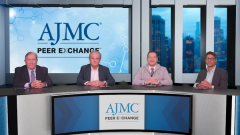
Panelists discuss how thoughtful sequencing of antipsychotics enhances adherence, safety, and long-term efficacy.
Advertisement
Episodes in this series
Panelists discuss how first-generation antipsychotics primarily manage positive symptoms but often cause extrapyramidal adverse effects, while second-generation options offer broader efficacy with improved tolerability.
Panelists discuss how choosing between oral and long-acting injectable formulations depends on patient adherence history, preference, and adverse effect risk.
Panelists discuss how careful sequencing and cycling through medications should minimize relapse risk while balancing safety, efficacy, and patient satisfaction.
Advertisement
Related to this article

CRC diagnoses after endoscopic mucosal resection (EMR) were uncommon in a real-world cohort, though racial and ethnic differences remain unclear.

San Francisco experts say earlier IgA nephropathy and FSGS detection depends on primary care education and care coordinators.

The FDA has approved secukinumab for PMR after the REPLENISH trial showed doubled sustained remission and lower steroid use vs a steroid taper alone.
Earlier MASH fibrosis detection is more urgent now that treatments exist, and automating FIB-4 in EHRs could help primary care, says Rohit Loomba, MD.

In this Q&A, Jesús Corral Jaime, MD, discusses real-world CEMI-LUNG data on cemiplimab in advanced NSCLC presented at the ESMO 2026 Congress.

Neladalkib earned accelerated approval for previously treated ALK-positive NSCLC, with ORRs of 49% and 32%.

FDA approved adrabetadex for infantile-onset Niemann-Pick disease type C after survival data showed 84% vs 42% 5-year survival with treatment.
Advertisement
Advertisement