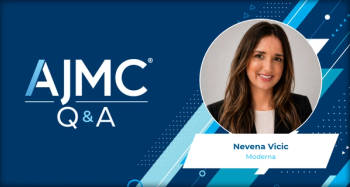
Nevena Vicic, MSc, discusses first real-world data showing mRNA-1283 protected adults 65 and older from COVID-19 hospitalization in 2025-2026.
Jordan Feld, MD, MPH, discusses bepirovirsen's approval and how capsid assembly modulators and gene editing could lead to a true hepatitis B cure.
Captions are auto-generated.
The FDA
The approval made waves at
It is the first therapy approved with a primary endpoint of functional cure in the hepatitis B space, and a significant proportion of patients achieved a functional cure after 6 months of treatment, something that hasn't been seen with previous therapy, Jordan Feld, MD, MPH, professor of medicine at the University of Toronto and section head of hepatology at University Health Network, said in an interview with The American Journal of Managed Care®.
“This is a very exciting time to be able to have this option available. But the whole field is exciting because it's not just antisense oligonucleotides like bepirovirsen that look promising. There's a whole host of therapies,” he said.
More advanced capsid assembly modulators, which inhibit replication, are also in development. These investigational therapies are expected to be more potent than nucleoside or nucleotide analogues, or “nukes,” as Feld referred to them, and are taken as oral once-daily tablets.
Other therapies directly target covalently closed circular DNA, the reservoir of hepatitis B in the liver.
“By targeting that directly, that's taking away the source of hep[atitis] B,” he explained. “And there are a few therapies now with gene editing or gene silencing that look really exciting. Still early days, but the idea of those therapies is that you could actually get to a true cure.”
References
1. FDA approves first-of-its-kind chronic hepatitis B treatment. FDA. October 20, 2026. Accessed October 26, 2026.