
Opinion|Videos|September 30, 2026
Limited-Stage SCLC: Chemoradiotherapy Standards and Scheduling Decisions
Concurrent chemoradiotherapy remains curative-intent therapy for limited-stage disease, yet cure rates without immunotherapy stall near thirty percent, a ceiling that scheduling choices and careful monitoring can only partly raise on their own.
Advertisement
Episodes in this series
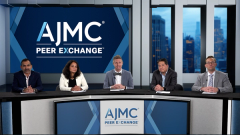
This episode, "Limited-Stage SCLC: Chemoradiotherapy Standards and Scheduling Decisions," features the panel detailing the chemotherapy and radiation regimens that define curative-intent treatment today.
This episode centers on the current standard of care for limited-stage small cell lung cancer: concurrent platinum-doublet chemotherapy combined with thoracic radiation, delivered with curative intent. The panel describes a typical regimen of four cycles of platinum plus etoposide, noting that recent data show cisplatin and carboplatin perform comparably, making the two platinum agents largely interchangeable in this setting. Radiation is usually layered in starting with cycle two or three of chemotherapy, allowing time for cytoreduction first, unless a clinical emergency such as superior vena cava syndrome demands radiation sooner. Even with this approach, cure rates without immunotherapy hover around 30%, with median overall survival of two to three years for all comers.
Scheduling choices come next, and the group works through the trade-offs between daily, twice-daily, and sequential chemoradiotherapy. Twice-daily radiation may offer a modest efficacy edge, but it is not always logistically feasible for patients balancing work, caregiving, or travel. Frailer patients, or those less able to tolerate concurrent treatment, may instead receive sequential chemotherapy and radiation, even though outcomes are generally better when the two are delivered together. The panel stresses that these decisions have to be individualized, weighing performance status and life circumstances alongside efficacy data, and made collaboratively with radiation oncology as part of a multidisciplinary team.
The episode closes with a discussion of how treatment success is monitored. Before consolidation immunotherapy became available, clinicians relied on CT scans roughly a month after chemoradiotherapy to confirm response, then continued surveillance scans every few months, watching for eventual disease progression that would prompt second-line therapy. That surveillance-only approach set the stage for the practice-changing data on consolidation therapy discussed in the episodes that follow.
Our next episode, "The ADRIATIC Trial: Consolidation Immunotherapy in Limited-Stage SCLC," examines the trial data that the panel credits with reshaping the standard of care.
Advertisement
Related to this article
Insmed’s once-daily TPIP prodrug shows sustained lung vasodilation in PAH and PH-ILD, improving walk distance, PALM outcomes, and quality of life.

ASPEN links green sputum to neutrophils and exacerbations; brensocatib (DPP1) lowers purulence, while meta-analysis supports fewer flare-ups in bronchiectasis.

Experts at CHEST 2026 urge pulmonologists to keep lung cancer in mind for younger patients who never smoked, to order screening and biomarker testing themselves, and to advocate for patients' access to care.

Phentolamine 0.75% (Ryzumvi) won FDA approval for presbyopia based on the phase 3 VEGA-2 and VEGA-3 trials.

Satralizumab, a first-in-class IL-6 receptor inhibitor, was approved for adults with thyroid eye disease based on the phase 3 SatraGO program.

A higher PNR is associated with lower odds of MASLD and advanced liver fibrosis, but further studies are needed to validate findings.

Speakers at CHEST 2026 walked through the first CHEST guideline for non-CF adult bronchiectasis, including which preventive therapy to start first.

SaTScan detects an acute HCV outbreak cluster in California, showing the potential of automated surveillance, though real-time testing is needed.
Advertisement
Advertisement
Trending on AJMC
1
Patents, Rebates, and a Policy Patchwork Keep Inhalers Costly, Panelists Say
2
How Flatiron Health’s Network Chief Is Building the Future For (and With) Community Oncology Practices
3
Administrative Burden Keeps Clinicians From Bedside: Amy Morris, MD
4
CHEST: The Face of Lung Cancer Has Changed, but Screening, Care Have Gaps
5