
Opinion|Videos|November 23, 2026
Why HS Patients Stop Therapy: Fatigue, Side Effects, and Pregnancy
Author(s)Jennifer Hsiao, MD
Patients discontinue HS therapy for reasons that are often preventable. Anticipatory counseling about chronicity, side effects, and pregnancy helps keep patients on effective treatment.
Advertisement
Episodes in this series

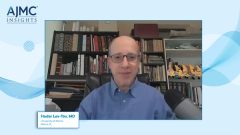
In "Why HS Patients Stop Therapy: Fatigue, Side Effects, and Pregnancy," our expert looks at why patients walk away from treatment.
Dr. Hsiao begins with treatment fatigue. A patient who has achieved disease control may feel tired of taking medications and decide to stop. A patient education gap is another cause. Some patients never learned that the medication was meant to be long term, and they stop once they feel better.
She links this to the paradigm many patients lived in before diagnosis, in which a flare meant a one- to two-week course of antibiotics from urgent care or the emergency room. They did not hear that HS is a chronic condition that needs chronic management to maintain symptom control.
For biologics, patients can develop injection fatigue over time. This is especially true for those on a two-injection regimen for HS. Side effects can also prompt people to stop, even when the medication is otherwise working. Some patients develop frustrating rashes on injectable HS therapies, and the rashes can become so bothersome that a patient says the treatment is no longer worth it because it bothers them more than the HS.
Dr. Hsiao emphasizes anticipatory counseling when therapy starts. Patients should understand the benefit of the medication and learn to recognize adverse events early. Clinicians can then treat through them so patients stay on therapy.
Finally, many patients with HS are women in their childbearing years, and many pregnancies are unplanned. A common knee-jerk reaction is to stop medications on learning of a pregnancy. She says this makes counseling on family planning essential, because clinicians can offer disease control and management during pregnancy. Working with patients on those plans is part of keeping them on effective therapy, rather than letting an unplanned pregnancy end treatment by default.
Our next episode, "HS Unmet Needs: Deeper Responses, Procedures, Flare Definitions, and Symptoms," turns to what Dr. Hsiao would most like to see improve in HS care.
Advertisement
Related to this article
In this Q&A, Konstantin Dmitrievich Penkov, MD, discusses delayed quality-of-life decline with cemiplimab plus chemotherapy in aNSCLC.

CRC diagnoses after endoscopic mucosal resection (EMR) were uncommon in a real-world cohort, though racial and ethnic differences remain unclear.

San Francisco experts say earlier IgA nephropathy and FSGS detection depends on primary care education and care coordinators.

The FDA has approved secukinumab for PMR after the REPLENISH trial showed doubled sustained remission and lower steroid use vs a steroid taper alone.

Earlier MASH fibrosis detection is more urgent now that treatments exist, and automating FIB-4 in EHRs could help primary care, says Rohit Loomba, MD.

In this Q&A, Jesús Corral Jaime, MD, discusses real-world CEMI-LUNG data on cemiplimab in advanced NSCLC presented at the ESMO 2026 Congress.

Neladalkib earned accelerated approval for previously treated ALK-positive NSCLC, with ORRs of 49% and 32%.

FDA approved adrabetadex for infantile-onset Niemann-Pick disease type C after survival data showed 84% vs 42% 5-year survival with treatment.
Advertisement
Advertisement
Trending on AJMC
1
Value-Based Pilot for Medicaid Members With Substance Use Disorder
2
Cemiplimab Response Tied to Longer Quality-of-Life Benefit in aNSCLC
3
Acne Treatment Adherence Ranges From 6% to 84% in Real-World Studies
4
Bridging the Divide: Unveiling an Opportunity for Biosimilar Development
5