

The authors say delivering FOLFOX via transarterial infusion could be a “perfect option for treating intrahepatic cholangiocarcinoma before patients receive targeted therapy, immunotherapy, or radiotherapy.
Mary Caffrey is the Executive Editor for The American Journal of Managed Care® (AJMC®). She joined AJMC® in 2013 and is the primary staff editor for Evidence-Based Oncology, the multistakeholder publication that reaches 22,000+ oncology providers, policy makers and formulary decision makers. She is also part of the team that oversees speaker recruitment and panel preparations for AJMC®'s premier annual oncology meeting, Patient-Centered Oncology Care®. For more than a decade, Mary has covered ASCO, ASH, ACC and other leading scientific meetings for AJMC readers.
Mary has a BA in communications and philosophy from Loyola University New Orleans. You can connect with Mary on LinkedIn.
The authors say delivering FOLFOX via transarterial infusion could be a “perfect option for treating intrahepatic cholangiocarcinoma before patients receive targeted therapy, immunotherapy, or radiotherapy.
The study by the Veneto Institute of Oncology (IOV) in Padua, Italy, examined 286 patients for genomic mutations in cholangiocarcinoma as well as survival status.

A recommendation to test for the mutation aligns with calls to identify biomarkers in cholangiocarcinoma to guide treatment.
Quality measures are the lifeblood of practice transformation, but learning which ones make a difference—and how to use them to drive change—is as much an art as a science, according to 3 oncology care leaders who discussed the topic Friday at the 2022 Community Oncology Conference, presented by the Community Oncology Alliance.

During a panel at the Community Oncology Alliance’s Community Oncology Conference, speakers discuss practice-level efforts to reduce cancer care disparities.
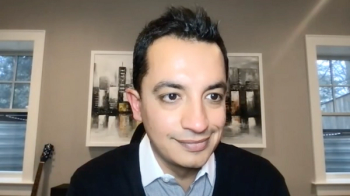
Sunil Verma, MD, senior vice president and global head of oncology, medical, at AstraZeneca, talks about advancements in standards of care for uncommon cancers, including cholangiocarcinoma.
Barbara McAneny, MD, CEO of the New Mexico Cancer Center, who served as president of the American Medical Association (AMA) in 2018, said the AMA has engaged a law firm to take on the issue of curtailing prior authorization, which oncologists say has become worse with increased vertical integration among health plans and pharmacy benefit managers.
A panel on the first day of the Community Oncology Alliance 2022 Community Oncology Conference examines issues that will affect oncology practices in the future.
The first in-person Community Oncology Alliance (COA) meeting in 2 years will feature sessions on practice management, health disparities, and more. A virtual option is available.

A study from Japan identifies markers for a presurgical staging system in intrahepatic cholangiocarcinoma, with results on par with an existing postsurgical staging system.

A session moderated by the president of the Association of Community Cancer Centers (ACCC) examined the business case for having oncology pharmacists and oncology social workers on community cancer care teams.
Sunil Verma, MD, senior vice president and global head of oncology, medical, at AstraZeneca, discusses safety findings of the TOPAZ-1 trial.
The panel said the prior authorization system was intended not just to make sure treatments are necessary but also to ensure that practices get paid; however, it needs a lot of work.
A session on industry reconfiguration covered differed business models for oncology, including payer acquisition of networks and collaboration with academic centers and primary care.
The session opened the 48th Annual Meeting and Cancer Center Business Summit, which is the first in-person meeting in 2 years for the Association of Community Cancer Centers. The meeting is taking place March 2-4 in Washington, DC.

Camille Hertzka, vice president, head of oncology, US Medical, AstraZeneca, discusses why it is important to test for HRR gene mutation status and appropriateness of olaparib use in patients with metastatic castrate-resistant prostate cancer (mCRPC).

Debra Patt, MD, PhD, MBA, executive vice president of Texas Oncology, addresses roadblocks to cancer screenings first thrown up by the COVID-19 pandemic in 2020 and that continue to reverberate today.
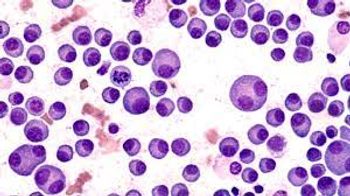
FDA approval is based on CARTITUDE-1, a phase 1b/2 trial in which investigators reported that cilta-cel produced an objective response rate (ORR) of 98% and a stringent complete response rate of 78%.

Rachna Shroff, MD, associate dean of clinical and translational research and associate professor of medicine at the University of Arizona, offered a review of early-stage research in her talk, “The Hottest Targeted Therapies on the Horizon for Cholangiocarcinoma.”

The co-chairs of the Cholangiocarcinoma Foundation 2022 meeting, Lipika Goyal, MD, MPhil, of Harvard and Massachusetts General Hospital, and Jesper B, Andersen, PhD, of the University of Copenhagen, Denmark, reviewed clinical and scientific developments.
Camille Hertzka, vice president, head of oncology, US Medical, AstraZeneca, discusses principal findings of the PROpel trial, which compared outcomes between olaparib plus abiraterone vs abiraterone alone in men with metastatic castration-resistant prostate cancer (mCRPC).
Sunil Verma, MD, senior vice president and global head of oncology, medical, at AstraZeneca, discusses the addition of durvalumab to a chemotherapy regimen of gemcitabine and cisplatin for biliary duct cancer.
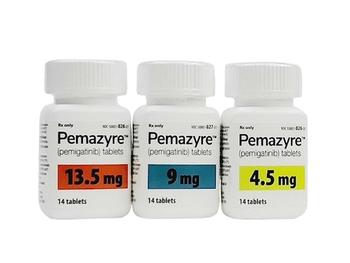
Drugs targeting FGFR mutations, which are seen in patients with intrahepatic cholangiocarcinoma (CCA), have generated particular excitement; the authors note that prior to the approval of pemigatinib, the first targeted therapy approved by FDA, only 15% to 25% of patients with CCA were “fit enough to receive second-line chemotherapy.”
Purva Rawal, PhD, senior advisor and chief strategy officer, Center for Medicare and Medicaid Innovation, addressed attendees at the Association for Accessible Medicines' Access! annual meeting, held in Orlando, Florida, February 15-16.
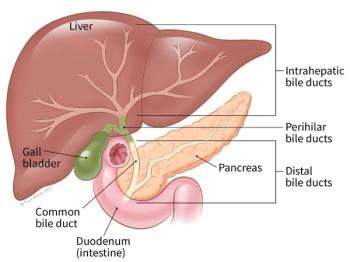
A new study in the Annals of Surgical Oncology finds that recurrence of intrahepatic cholangiocarinoma after hepatectomy can be 50% to 70%, and about half these recurrences happen within 2 years. The review sought to identify the factors that can predict the return of cancer within a 2-year span.
Kenneth Cohen, MD, FACP, executive director of clinical research at UnitedHealth Group Research and Development and senior national medical director at OptumCare, discusses areas where low-value care is more prevalent and the shift to high-value care.
Lessons from the early days of chimeric antigen receptor (CAR) T-cell therapy remain fresh as Kite Pharma prepares for the FDA to act on its supplemental biologics license application for use of axi-cel as second-line therapy in relapsed or refractory large B-cell lymphoma. A target action date is set for April 1, 2022.
Rajini Katipamula-Malisetti, MD, a medical oncologist and hematologist with Minnesota Oncology who practices in Coon Rapids, has seen telehealth’s usefulness up close. During a pandemic, it can increase the number of touch points in areas such as survivorship care and nutrition, which would otherwise require a separate visit to the office.
AccessHope is a program that allows patients and community oncologists to tap into the expertise of City of Hope, often through electronic sharing of records so the patient does not have to travel.
The changes come as Tennessee Oncology must now plan for a gap between the Oncology Care Model and a future alternative payment model from CMS.